
Professor of Integrative Medicine, specialist in pediatric hematology, oncology, and endocrinology-pediatrics, and a researcher and pioneer in evidence-based integrative pediatrics.
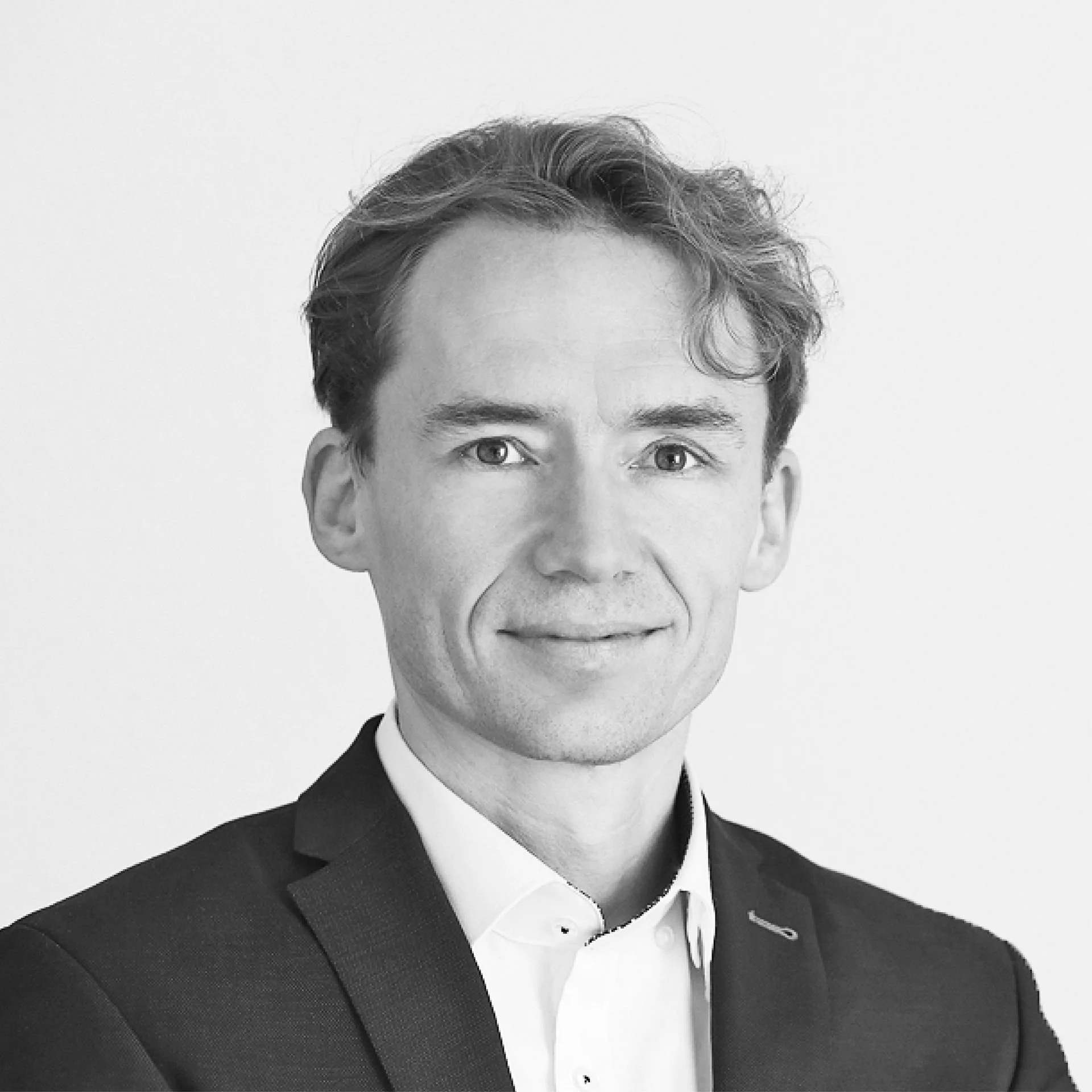
“The future of medicine does not lie in choosing between conventional and integrative approaches, but in intelligently combining the two. Especially when it comes to treating children, we need the courage to think outside the box—without losing sight of the scientific evidence.”
This vision shapes the work of Univ.-Prof. Dr. med. David Martin—a pediatrician and scientist who, like few others, understands how to combine cutting-edge conventional medicine with integrative and anthroposophical approaches while maintaining the highest scientific standards.
David Martin’s academic career was marked by excellence from the very beginning. In 2004, he earned his doctorate from the University of Tübingen with magna cum laude—an honor bestowed on only a select few. His dissertation on the “Interaction Between Pupil Size and Perimetry” already demonstrated what would come to define his later work: a deep interest in complex physiological relationships that are often overlooked but are of fundamental importance for understanding the human organism. In 2011, he completed his habilitation at the renowned University of Tübingen—another milestone on a path that would make him one of Europe’s most distinguished pediatric specialists.
From an early age, he developed a passion for understanding how the child’s body functions and how different therapeutic traditions can work together. His international academic career was built on this vision.
Professor Martin’s training also took him far beyond Europe. As a research and clinical fellow at the Princess Margaret Hospital for Children in Perth, Western Australia, he gained valuable international experience. This 18-month fellowship was made possible by a highly competitive Novo Nordisk grant, which the German Society of Endocrinology had awarded him in recognition of his exceptional research potential. This time in Australia was more than just a professional assignment—it broadened his horizons to include diverse therapeutic traditions and medical philosophies. His exposure to other healing cultures and treatment approaches would profoundly influence his later work in integrative medicine.
Throughout his career, Professor Martin has acquired an impressive range of specializations: He is a board-certified pediatrician with further specializations in pediatric hematology and oncology, as well as diabetology and endocrinology. He is also certified in Advanced Pediatric Life Support. This breadth of expertise reflects a deep understanding that children are not simply “little adults” and that pediatric medicine requires a holistic understanding of a wide variety of organ systems and metabolic processes.
In his professional work, he focuses on integrating various medical traditions on a scientifically sound basis. Professor Martin’s scientific achievements have been recognized on multiple occasions. Twice—in 2006 and 2009—he received the prestigious Jürgen Bierich Prize from the German Society for Pediatric Endocrinology and Diabetology, one of the highest honors in this field.
These honors recognize his groundbreaking contributions to clinical research, which have fundamentally advanced our understanding of metabolic and endocrine disorders in children. His extensive research portfolio and his role as a certified clinical investigator for several international Phase II, III, and IV pharmaceutical trials demonstrate his commitment to evidence-based therapeutic interventions.
In addition to his academic work, Professor Martin served as a senior physician at the renowned Filderklinik—an anthroposophic hospital known for integrating conventional medicine with anthroposophic medicine. There, he was able to put his vision into practice in his daily clinical work and demonstrate that integrative approaches are not only theoretically interesting but also practically effective. In treating children with complex conditions—ranging from cancer and autoimmune diseases to metabolic disorders—he gained valuable experience in how conventional treatments can be supplemented and supported by complementary approaches.
A central focus of his work is the integration of evidence-based conventional medicine with proven integrative healing methods and anthroposophic therapeutic principles. Since 2017, Professor Martin has held the prestigious Chair of Medical Theory, Integrative and Anthroposophic Medicine at Witten/Herdecke University—a position that epitomizes his approach.
At this unique university, known for its innovative blend of scientific excellence and a holistic view of humanity, Professor Martin develops approaches that integrate various medical traditions on a scientifically sound basis. This chair is more than just an academic position—it is a platform for a vision. Here, the focus is not on ideological debate, but on researching, teaching, and clinically applying what works—regardless of which tradition it comes from.
His work currently focuses on advancing integrative medicine in pediatrics. As scientific director and co-organizer of the International Congress for Integrative Health & Medicine in 2016, Professor Martin demonstrated his ability to bring together people who often work in separate worlds. He created a space for meaningful dialogue between conventional physicians and specialists in integrative healthcare—a bridge that is urgently needed and that he built with scientific rigor and human openness.
He knows how to combine rigorous scientific methodology with an openness to innovative approaches and advocates an integrative understanding of pediatrics—as the interplay between the highest scientific standards and a holistic view of human beings. His work makes it clear that the future of medicine lies not in competition, but in the cooperation of different approaches.
What sets Professor Martin apart is his ability to combine rigorous scientific methodology with an openness to innovative approaches. He is not a dogmatist—neither on the side of conventional medicine nor on the side of uncritical naturopathy. His approach is pragmatic and patient-centered: What helps the sick child? What evidence is there? How can we meaningfully combine different therapeutic approaches? These questions guide his work—and this is precisely the attitude mycotherapy needs in order to continue evolving.
His role as a clinical investigator in international studies demonstrates that he understands and adheres to the standards of evidence-based medicine. At the same time, his work in anthroposophic medicine shows that he is willing to think beyond these standards when it serves the patients’ recovery. This ability to foster dialogue between different medical traditions makes him a key player in the transformation of our healthcare system.
At the Mycoverse Foundation, Professor David Martin, M.D., brings a perspective that is central to the development of mycotherapy: the combination of the highest scientific standards with an openness to integrative approaches, particularly in the sensitive field of pediatrics.
Professor Martin’s specialization in pediatrics brings a unique perspective to the field. Children are not simply small adults—their bodies are still developing, their immune systems are maturing, and their metabolic processes differ fundamentally. In pediatrics in particular, a holistic, gentle approach is of special importance. Here, medicinal mushrooms—with their immunomodulatory, metabolism-supporting, and adaptogenic properties—can play an important role: as a complement to conventional therapies, to strengthen the immune system, and to provide support during stressful treatments such as chemotherapy.
His expertise in pediatric hematology and oncology is invaluable in this regard: He understands the unique challenges of treating cancer in children and can assess how medicinal mushrooms can be used safely and effectively in this sensitive context. His expertise in immunomodulation is particularly relevant, as many medicinal mushrooms contain polysaccharide-based active compounds that influence the immune system in complex ways.
His expertise in diabetology and endocrinology is particularly important for mycotherapy. Many medicinal mushrooms have metabolism-regulating properties—they can influence blood sugar levels, modulate lipid metabolism, and support hormonal balance. Especially for children with metabolic disorders or diabetes, this expertise can be crucial for understanding how medicinal mushrooms can be safely integrated into treatment plans.
His experience with anthroposophic medicine adds new dimensions: In the anthroposophic tradition, natural remedies—including mushrooms—are not evaluated solely on the basis of their biochemical active ingredients, but are considered in their entirety and in relation to the human being. This holistic perspective perfectly complements biochemical research.
The life’s work of Univ.-Prof. Dr. med. David Martins is a compelling example of how the future of medicine lies not in competition, but in the cooperation of different approaches. He demonstrates that it is possible to be an outstanding scientist while remaining open to healing traditions that lie outside the conventional mainstream. His work makes a significant contribution to a future that is scientifically excellent, integrative, patient-centered, and interconnected like a mycelium—especially for the sensitive care of children.
Mycoverse Foundation
, Marktgass 11,
, 9490 Vaduz,
, Principality of Liechtenstein
Home | Vision | Projekte | Artikel | Vorstand/Beirat | Shop | Kontakt | Impressum/Datenschutz | Manage Cookie Settings