
From Nigeria’s mushroom forests to research laboratories around the world.
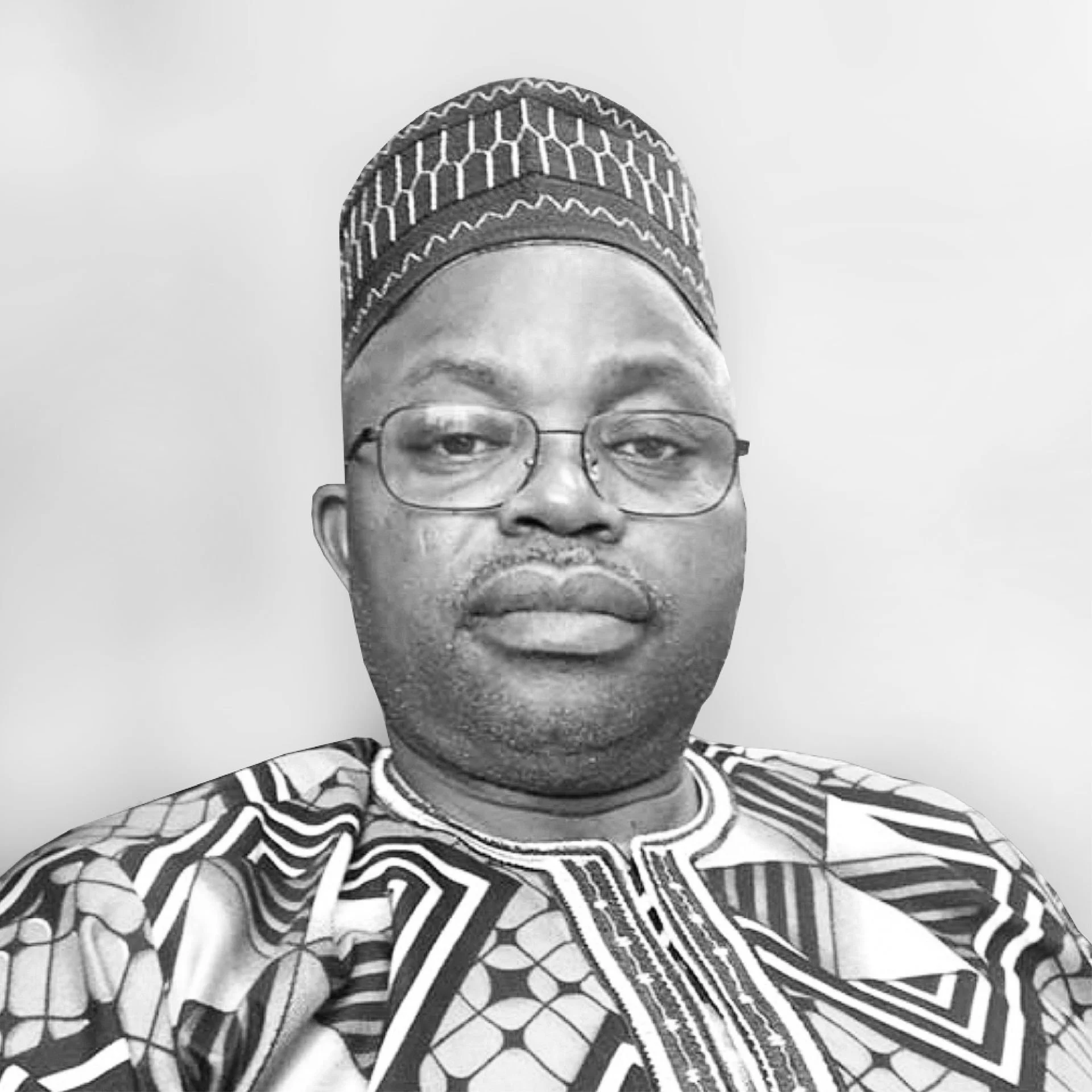
“Education was the only way out of the ghetto. But I never would have thought that this path would lead me back to what I had learned as a child in the forests of Nigeria—the world of mushrooms. It was fate.”
This conviction shapes the work of Prof. Dr. Omoanghe S. Isikhuemhen—affectionately known as “Dr. Omon”—a professor of fungal biology and fungal biotechnology who is now regarded as one of the world’s leading mycologists in the fields of mushroom cultivation, medicinal mushrooms, and mycoremediation. With the largest shiitake culture bank in North and South America, his breakthrough in commercial truffle cultivation (documented in Smithsonian Magazine 2021), and over 124 peer-reviewed publications with more than 2,692 citations, he has elevated the fields of fungal biotechnology and the practical applications of fungi to a level of both scientific excellence and commercial viability.
Born on October 30, 1967, into a family of subsistence farmers in rural Nigeria, he developed a deep connection to mushrooms even as a child. His father, a forestry official, took the family into the woods to gather mushrooms, which were sold at the market and contributed to the family’s income. His academic career was built on his father’s urgent encouragement—“Education is the only passport out of the ghetto”—and he became the first in his family to study botany at the University of Benin, where he found his calling in mycology. His academic journey took him to Germany, where, in 1995, he received training in industrial biotechnology in Braunschweig through a prestigious scholarship from the German Academic Exchange Service (DAAD), followed by a UNESCO scholarship in biotechnology (1995) and a UNESCO/ROSTE scholarship in Prague on modern problems in microbiology and microbiological techniques (1996). He earned his Ph.D. in microbiology in the Czech Republic—an impressive academic rise from a Nigerian village to the forefront of international research.
In his professional career, he has spent over 17 years as a professor at North Carolina Agricultural and Technical State University (NC A&T) in Greensboro, focusing on the biology and cultivation of edible and medicinal mushrooms, the application of mushrooms for animal and human health, and the use of mushrooms to remediate environmental contaminants (mycoremediation). He directs the Mushroom Biology and Fungal Biotechnology Laboratory in the Department of Natural Resources and Environmental Design. As a co-founder of Blend Mushrooms, he works to make functional mushrooms for health and well-being accessible to a wider audience. In doing so, he places great emphasis on combining traditional knowledge from his childhood with cutting-edge biotechnology and translating academic research into practical applications.
A central focus of his work is the development of innovative cultivation methods and the exploration of new applications for mushrooms. He works with the largest shiitake culture bank in the Americas—a genetic treasure trove for breeding, research, and commercial applications—as well as with revolutionary approaches to animal feed and environmental remediation.
His current scientific work is focused on several breakthroughs: His development of a method for the commercial cultivation of truffles in North America—using a proprietary growth medium that allows truffles to grow five times faster than any other medium and enables harvests in just two to three years instead of the traditional seven to ten years—was recognized by Smithsonian Magazine in 2021. In collaboration with Mycorrhiza Biotech and Burwell Farms, he harvested an estimated 200 pounds of truffles from a 2-acre plot. His research on fungus-fermented feed demonstrates how Pleurotus ostreatus (oyster mushroom) increases the nutrient availability of corn stover and can serve as a natural alternative to antibiotics in poultry and cattle farming. His work on mycoremediation explores how fungi can break down various environmental pollutants and demonstrates innovative approaches to utilizing waste products in mushroom cultivation.
His academic output is impressive: over 124 peer-reviewed publications, more than 2,692 citations, and ongoing research that makes him one of the most cited mycologists of his generation. As a member of the editorial board of the International Journal of Medicinal Mushrooms and through numerous studies on the antimicrobial and antifungal activities of medicinal mushrooms such as Pleurotus tuberregium, he has significantly shaped medicinal mushroom research. At NC A&T, he has not only established an impressive research program but has also trained and mentored numerous students, many of whom are now successful mycologists, growers, and entrepreneurs in the mushroom industry.
He knows how to combine practical knowledge from his childhood in Nigeria with cutting-edge academic research and advocates for an integrative understanding of mycology—as an interplay of traditional knowledge, scientific rigor, and commercial application. His work makes it clear that, for him, fungi are not merely objects of research but solutions to fundamental challenges: from food security and animal husbandry to environmental remediation. At the Mycoverse Foundation, he contributes his expertise in mushroom cultivation, medicinal mushrooms, animal feed applications, mycoremediation, and the commercialization of research findings, helping to unlock the full spectrum of fungi’s potential—and demonstrating that innovation often arises in unexpected places, at the intersection of childhood memories and modern science.
His life story—from a child selling mushrooms at the market to a professor with the largest shiitake culture bank in the Americas—is living proof that dreams can come true and that mushrooms can indeed change the world. His truffle research, his work on mushrooms as animal feed, and his mycoremediation projects demonstrate the courage to think differently and push the boundaries of what is possible. In doing so, he is making a significant contribution to a future that is scientifically excellent, practically innovative, and globally significant—and in which the power of mushrooms is understood and harnessed to help people, animals, and the environment.
Mycoverse Foundation
, Marktgass 11,
, 9490 Vaduz,
, Principality of Liechtenstein
Home | Vision | Projekte | Artikel | Vorstand/Beirat | Shop | Kontakt | Impressum/Datenschutz | Manage Cookie Settings