
A pioneer in epilepsy research and a board-certified neurologist
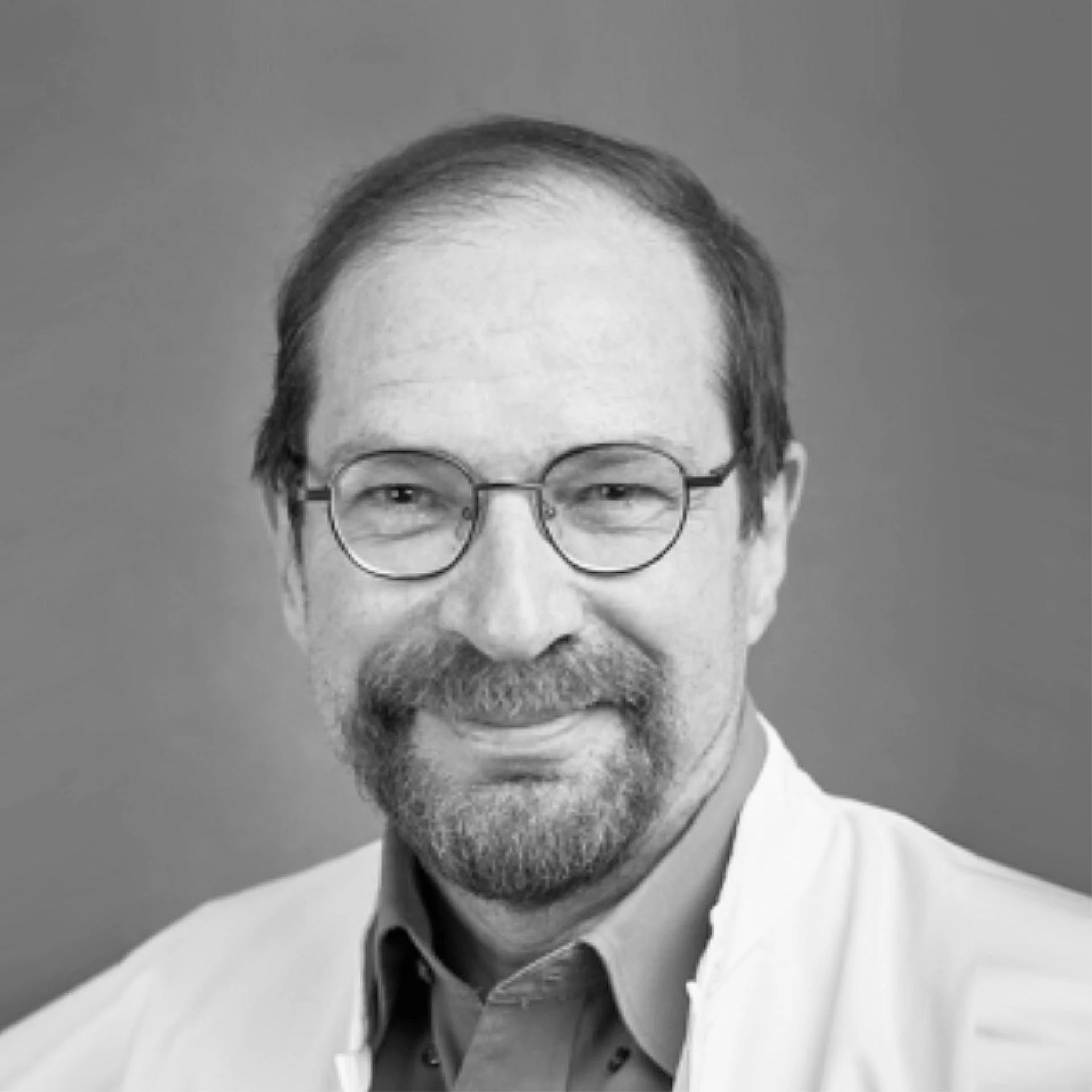
“The treatment of neurological disorders should not stop at suppressing symptoms. True healing requires an understanding of the underlying causes and the courage to look beyond conventional approaches in search of natural, holistic solutions—ones that are scientifically sound while also addressing the whole person.”
This conviction shapes the work of Dr. Siegward Elsas—a neurologist who combines the rigor of conventional medicine with the wisdom of anthroposophic medicine and an openness to natural remedies.
Dr. Siegward Elsas’ professional journey took him from the innovative research laboratories at Oregon Health & Science University in Portland, USA, to one of Europe’s most renowned anthroposophic clinics—the Arlesheim Clinic in Switzerland. This journey was more than just a geographical move. It was the conscious decision of a scientist trained in conventional neurology who chose an approach that views the human being as a whole and integrates therapeutic traditions that go beyond conventional medicine.
Even during his time at Oregon Health & Science University, he developed a passion for understanding how alternative and complementary treatments might work for neurological disorders. His research career was built on this vision, and he dedicated himself to epilepsy research—a field in which conventional medicine has made progress but still cannot provide satisfactory treatment for many patients.
Dr. Elsas received a competitive research grant from the National Institutes of Health (NIH) in the form of a “Mentored Patient-Oriented Research Career Development Award” to establish himself as an independent clinical researcher in the field of complementary and alternative medicine for epilepsy. This prestigious grant enabled him to conduct clinical trials on botanical treatments for epilepsy.
A particular focus of his research was passionflower (Passiflora incarnata)—a medicinal plant with anticonvulsant and anxiolytic properties. In collaboration with Oregon’s Wild Harvest, he investigated the safety and efficacy of passionflower extracts in patients with epilepsy. His research demonstrated how passionflower extracts can trigger GABA currents in hippocampal neurons, thereby producing anticonvulsant effects. This work was groundbreaking because it scientifically validated what traditional healing systems had known for centuries—that certain plants possess therapeutic potential for neurological disorders.
In his professional work, he focuses intensively on the connection between mind and body, and between mental states and neurological processes. Another focus of his research was the Andrews/Reiter behavioral intervention for epilepsy—an approach that uses mind-body techniques to reduce seizure frequency. Dr. Elsas conducted retrospective studies documenting changes in seizure frequency among epilepsy patients who participated in this behavioral intervention.
This research demonstrates his deep understanding that neurological disorders are not purely physical problems, but that the mind, emotions, and behavior can play a decisive role—an understanding that perfectly prepared him for his later work in anthroposophic medicine.
Today, Dr. Elsas works as a neurologist at the Arlesheim Clinic—an institution with a unique history and significance. Founded in 1921, the clinic is the oldest anthroposophical hospital in the world and was developed by Ita Wegman in close collaboration with Rudolf Steiner. Here, Dr. Elsas combines his conventional neurological expertise with anthroposophical therapeutic approaches.
A central focus of his work is the integration of traditional healing knowledge with scientific methods. A particular area of research focuses on the medicinal plant Mucuna pruriens in the context of Parkinson’s disease. Mucuna pruriens, also known as velvet bean or itch bean, contains natural L-DOPA—the same substance that is used in synthetic form as a standard medication for Parkinson’s disease.
Dr. Elsas is researching how this natural source of L-DOPA can be used to treat Parkinson’s patients and what advantages it might have over synthetic medications. He organizes seminars for people with Parkinson’s, their families, and interested members of the public, where he shares his knowledge about the therapeutic potential of this medicinal plant. This work exemplifies his approach: he takes traditional healing knowledge seriously, examines it using scientific methods, and makes it practically applicable for patients.
Currently, his work focuses on integrating conventional medicine and anthroposophic medicine at the Arlesheim Clinic. There, Dr. Elsas is able to offer his patients a range of treatment options that goes far beyond standard neurology: from conventional drug therapies and anthroposophic remedies to art therapy, eurythmy, and other holistic approaches.
He knows how to combine conventional neurological expertise with anthroposophical approaches and natural remedies, and advocates for an integrative understanding of neurology—as the interplay of body, mind, and spirit. His work makes it clear that, for him, neurological health is not merely the absence of symptoms, but a dynamic process of healing on all levels.
What sets Dr. Elsas apart is his ability to be at home in both worlds: he is a conventionally trained neurologist with extensive scientific research experience, and at the same time a physician who has recognized the limitations of conventional neurology and is willing to go beyond them. His work with botanical treatments, mind-body interventions, and anthroposophic approaches demonstrates that he views people not as “neurological cases,” but as complex beings who can and should be treated on many levels.
At the Mycoverse Foundation, Dr. Siegward Elsas brings his expertise in neurology, his understanding of neuroprotective and neuroregenerative approaches, and his experience with botanical treatments and anthroposophic medicine.
His work with Mucuna pruriens in Parkinson’s disease demonstrates his understanding of neuroprotective and neuroregenerative approaches—precisely the areas in which certain medicinal mushrooms also exhibit promising properties. Hericium erinaceus, for example, is being studied for its ability to stimulate the production of nerve growth factors (NGF) and thereby potentially slow down or reverse neurodegenerative processes. Dr. Elsas’s neurological expertise is crucial for clinically evaluating such effects and integrating them into therapeutic approaches.
Anthroposophic medicine has a long tradition of working with natural remedies, including mushrooms. Dr. Elsas’s experience in this field brings an additional dimension to mycotherapy: an understanding of the “signature” and essential qualities of medicinal mushrooms that goes beyond their biochemical active ingredients. In the anthroposophical tradition, remedies are evaluated not only based on their measurable constituents, but also on their relationship to the human being as a whole—physically, emotionally, and spiritually.
Dr. Elsas’ research on behavioral interventions for epilepsy demonstrates his understanding of the connection between mind and body. This perspective is particularly relevant for understanding adaptogenic medicinal mushrooms such as reishi and cordyceps, which act at the intersection of the nervous system, the immune system, and stress regulation.
His scientific training gives him the tools to rigorously research natural remedies. His openness to anthroposophic and complementary approaches gives him the perspective to think beyond the boundaries of conventional treatments. His experience with clinical research on botanical treatments shows us how medicinal mushrooms can also be scientifically researched without losing their traditional wisdom and holistic effects.
Dr. Siegward Elsas’ life’s work shows us that the future of neurology does not lie in choosing between conventional and alternative approaches, but rather in the intelligent integration of both. His work makes a significant contribution to a future that unites scientific rigor, holistic healing, and the wisdom of traditional healing systems—interconnected like a mycelium, neurologically grounded, and at the same time focused on the whole person.
Mycoverse Foundation
, Marktgass 11,
, 9490 Vaduz,
, Principality of Liechtenstein
Home | Vision | Projekte | Artikel | Vorstand/Beirat | Shop | Kontakt | Impressum/Datenschutz | Manage Cookie Settings