
Professor of Zoology
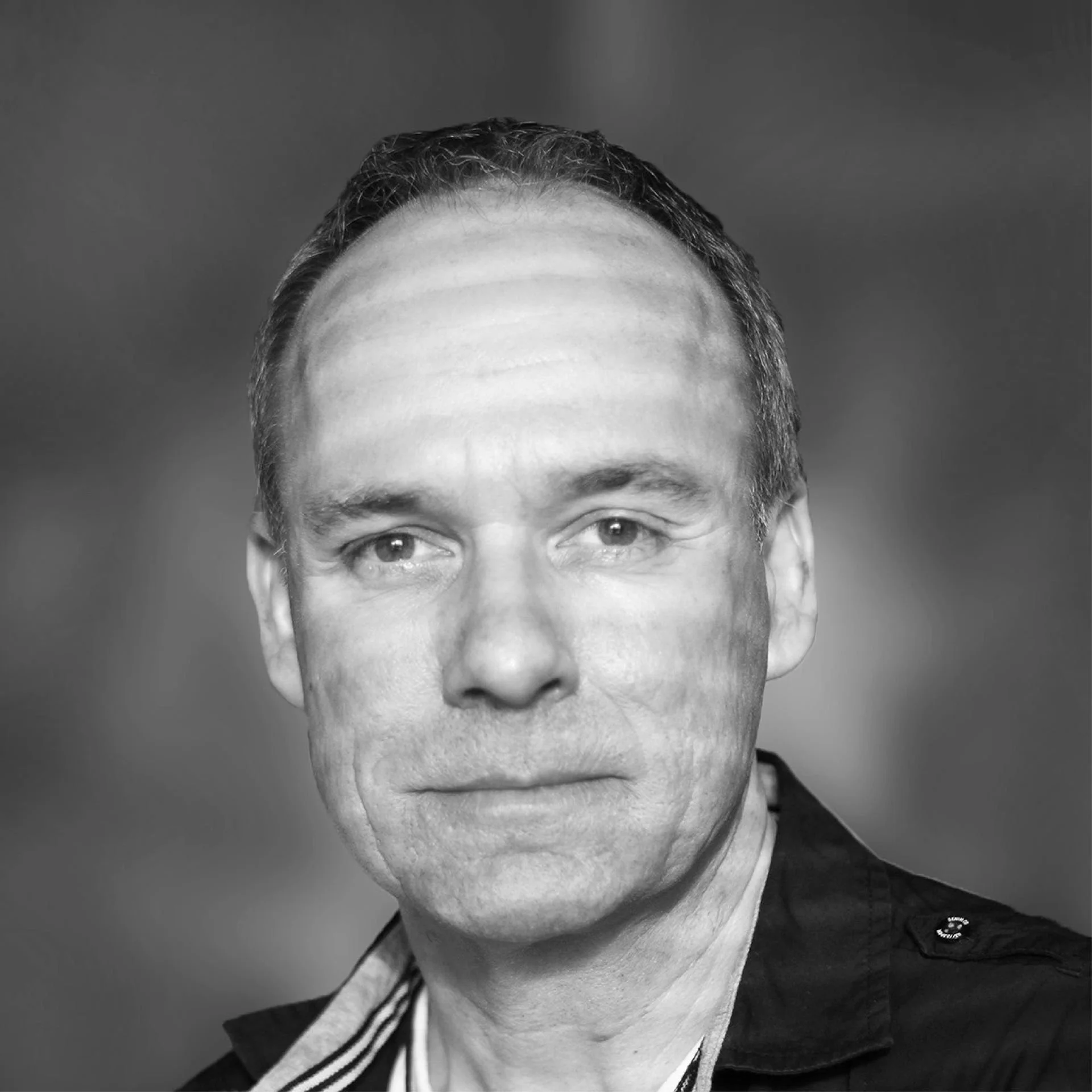
“True innovation doesn’t mean copying nature—it means learning from it and applying its principles to our technologies in a sustainable way. Fungi are masters of resource efficiency and biodegradation—exactly the qualities we need for a sustainable future.”
This conviction shapes the work of Dr. Thorsten Schwerte—an associate professor at the Institute of Zoology at the University of Innsbruck—who is now regarded as one of the leading experts in bionics, bio-inspired technologies, and sustainable materials development. Through his research on the flexibility and development of the cardiovascular system, his expertise in geographic information systems, and his commitment to biodegradable materials, he has elevated the fields of bioinspiration and sustainable technology development to a level that is both scientifically sound and practically applicable.
From an early age, he developed a passion for understanding how biological principles can be translated into sustainable technologies. His scientific career at the Institute of Zoology at the University of Innsbruck was built on this vision, where his research spans three methodologically intertwined areas: the flexibility and development of the cardiovascular system, bionics and bio-inspired research, and geographic information systems in biological research. His scientific approach combines classical basic biological research with innovative applications, focusing not only on the fundamental mechanisms of life but also on how we can learn from nature. His expertise in image analysis and the digitization of biological data makes him a pioneer of modern, data-driven biology.
In his professional work, he focuses on bio-inspired technologies and sustainable product development. He collaborates with researchers, engineers, and developers to convey knowledge about biological principles and their translation into sustainable applications. In doing so, he places great emphasis on the ethical dimension of technological progress and the integration of ecological responsibility with practical feasibility. He advocates the cradle-to-cradle principle and highlights the importance of biodegradable materials, such as biopolymers, as a playground for bioinspiration.
A central focus of his work is the development of sustainable, nature-inspired technologies while taking ethical considerations into account. He focuses on bio-inspired approaches, resource efficiency, and biodegradable materials that can be returned to the cycle after use.
His current research focuses on the intersection of biological understanding and technological innovation. He draws on his expertise in geographic information systems to visualize complex ecological relationships—a skill that is also crucial for understanding the distribution and ecology of fungi. These digital methods can help systematically document and make accessible the potential of medicinal mushrooms. His research is not purely basic research—it always aims for practical applications and can assess which research questions are not only scientifically interesting but also practically relevant.
His international recognition is evident in his role as a reviewer for prestigious scientific journals such as *Marine Biology*, *Nature Protocols*, *PLoS One*, and *Progress in Biophysics and Molecular Biology*. This role demonstrates his ability to assess scientific quality at the highest level—a skill that is invaluable for ensuring the quality of research projects.
He knows how to combine basic research with practical application and advocates an integrative approach to innovation—as the interplay of biological understanding, technological implementation, and ethical responsibility. His work makes it clear that fungi and mycelia are fascinating models for him: their network structure inspires architects and engineers, their ability to biodegrade is revolutionizing materials science, and their resource efficiency is unmatched. At the Mycoverse Foundation, he contributes his expertise in bionics, bio-inspired technologies, geographic information systems, and sustainable materials development, helping not only to explore the potential of fungi but also to translate it into concrete applications—and to translate biological principles into innovations that combine sustainability, ethics, and practical applicability.
His vision of sustainable, nature-inspired technology demonstrates how growth can occur without waste, how deconstruction and construction can go hand in hand, and how networks can be more efficient than hierarchical structures. In doing so, he is making a significant contribution to a future that is bio-inspired, sustainable, and scientifically grounded—and in which mycelium-based materials and technologies play a central role.
Mycoverse Foundation
, Marktgass 11,
, 9490 Vaduz,
, Principality of Liechtenstein
Home | Vision | Projekte | Artikel | Vorstand/Beirat | Shop | Kontakt | Impressum/Datenschutz | Manage Cookie Settings