
Mycelium pioneer and designer
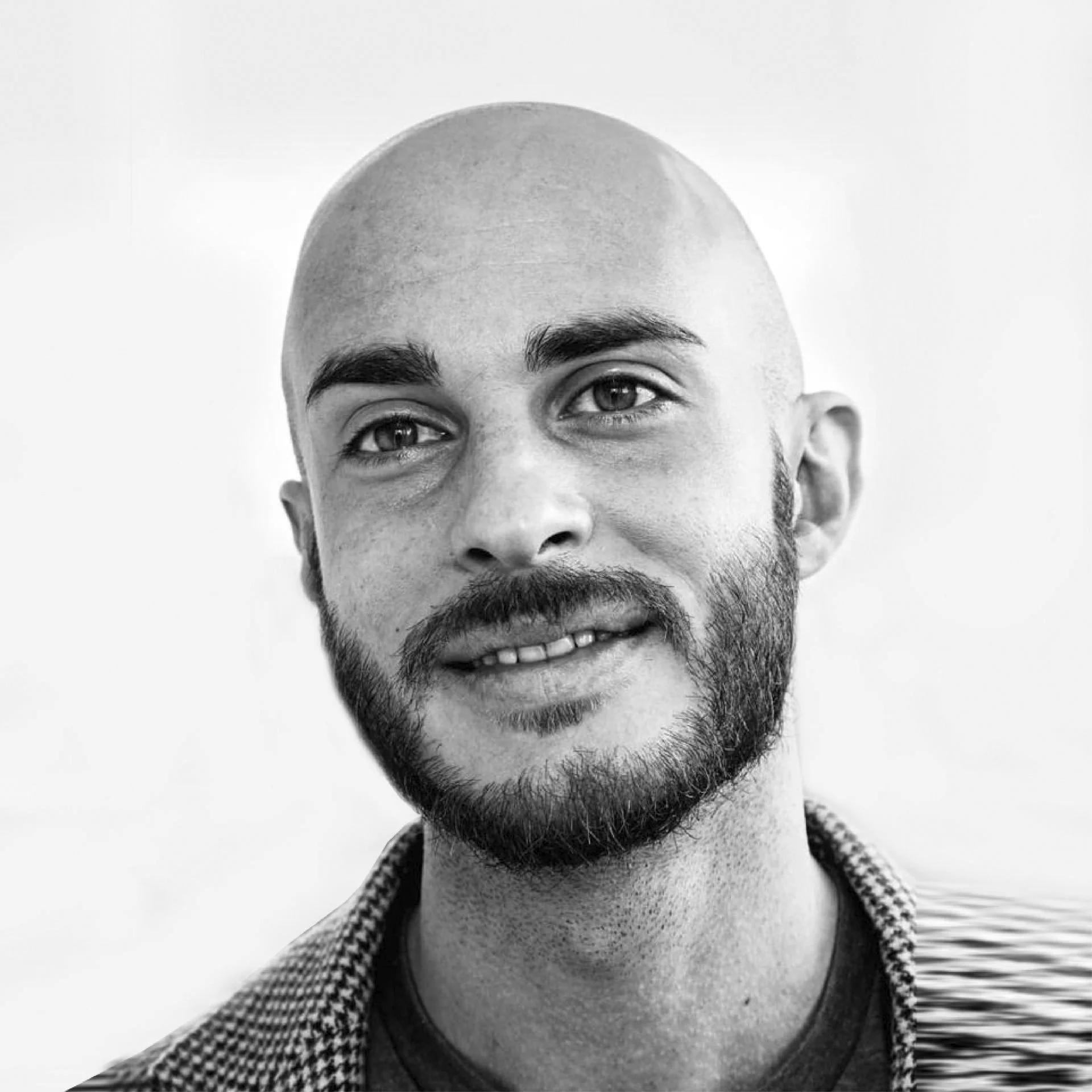
“Mushrooms are not just organisms—they are teachers of symbiotic relationships and regenerative systems. Their potential for design, materials science, and sustainable production becomes apparent only when we are willing to work with them as co-creators and understand the relational complexities of the ecosystem to which we belong.”
This conviction shapes the work of Maurizio Montalti—a designer, researcher, and entrepreneur who is now regarded as one of the leading pioneers in mycelium-based technologies and regenerative design. Through the founding of his design and research studio Officina Corpuscoli (2010) and as co-founder and Chief Mycelium Officer of SQIM (2015), as well as the brands mogu and ephea, he has elevated the fields of biomaterials and mycelium-based products to a level that is both scientifically sound and commercially viable.
From an early age, he developed a passion for understanding how human and non-human actors can come together within the relational complexity of a dynamic ecosystem. His work at the intersection of design and biotechnology was built upon this vision, where he established himself as one of the early pioneers dedicated to the research and development of diverse mycelium-based technologies. Through his Amsterdam-based studio Officina Corpuscoli, founded in 2010, he develops projects that explore integrative and regenerative possibilities for building symbiotic relationships across the realms of life and beyond. His critical investigations of contemporary material culture and his ongoing attempt to decipher the ways in which different actors interact within the ecosystem shape his unique approach.
In his professional work, he focuses on creating various types of innovative biomaterials and the associated artifacts and products. Driven by the goal of expanding and democratizing access to mycelium-based products, he co-founded SQIM in 2015, an innovative (bio)technology company where he serves as Chief Mycelium Officer. He collaborates with designers, scientists, and industry partners to disseminate knowledge about fungal mycelium as a biofabrication medium for applications across various industries. In doing so, he places great emphasis on materializing tangible narratives and bridging critical research with practical application.
A central focus of his work is the utilization of waste streams through microbial fermentation and the development of unique production processes. He explores mycelium-based technologies, regenerative material systems, and the creation of visions that enable critically resonant experiences.
Currently, his entrepreneurial work with SQIM and its business units/brands mogu and ephea focuses primarily on the interior design/architecture market as well as the fashion/automotive market. By distilling research and analysis through the materialization of tangible narratives, his work strives to create symbiotic relationships between design, biotechnology, and sustainable production. His projects at Studio Officina Corpuscoli are based on critical investigations and the ongoing pursuit of regenerative possibilities.
His work has received numerous awards, garnered widespread attention in the global media, and been exhibited worldwide at renowned institutions, including the Museum of Modern Art (New York), the Centre Pompidou (Paris), the Design Museum (London), Triennale (Milan), MAXXI (Rome), the MAK Museum of Applied Arts (Vienna), and the Nobel Prize Museum (Stockholm). In addition, Montalti has extensive experience in the field of education: As former artistic director and lecturer at dieDAS – Design Academy Saaleck (Germany), co-director of the MAD Master’s program (Materialization in Art and Design) at the Sandberg Instituut in Amsterdam, and researcher at the Design Academy Eindhoven, he has taught, lectured, and mentored students at various Dutch and international academies and universities.
He knows how to combine design with biotechnology and advocates for an integrative understanding of materials and production—as an interplay between human and non-human co-creators within a dynamic ecosystem. His work makes it clear that, for him, fungal mycelium is not merely a biomaterial, but a key to regenerative systems and symbiotic relationships that form the foundation for a sustainable future. At the Mycoverse Foundation, he contributes his expertise in mycelium-based technologies, regenerative design, biomaterial development, and commercial implementation, helping to unlock the potential of fungi as a biofabrication resource—and democratize access to innovative, sustainable products.
His pioneering work at the intersection of design and biotechnology demonstrates how critical research, creative vision, and entrepreneurial implementation can come together to create regenerative solutions for various industries. In doing so, he makes a significant contribution to the Mycoverse Foundation’s mission of advancing mycological innovation for the benefit of the environment and society.
Website: https://www.sqim.bio
LinkedIn: https://www.linkedin.com/company/sqim-mycofoundry
ephea
Website: https://www.ephea.bio/
Instagram: https://www.instagram.com/ephea_mycelium
Facebook: https://www.facebook.com/epheamycelium
mogu
Website: https://mogu.bio/
LinkedIn: https://www.linkedin.com/company/mogumycelium
Instagram: https://www.instagram.com/mogumycelium
Facebook: https://www.facebook.com/mogumycelium
Officina Corpuscoli
Website: https://www.corpuscoli.com/
LinkedIn OC: https://www.linkedin.com/company/officina-corpuscoli
Instagram: https://www.instagram.com/corpuscolo
Facebook: https://www.facebook.com/Corpuscoli
Mycoverse Foundation
, Marktgass 11,
, 9490 Vaduz,
, Principality of Liechtenstein
Home | Vision | Projekte | Artikel | Vorstand/Beirat | Shop | Kontakt | Impressum/Datenschutz | Manage Cookie Settings