
Comparing Divine Psilocybin Experiences: A groundbreaking study from Johns Hopkins University reveals surprising parallels between psychedelic and spontaneously experienced divine encounters. At a time when neuroscience and spirituality are increasingly converging, an extraordinary research study sheds new light on one of the most intimate human experiences: the personal encounter with the divine. Published in the renowned journal PLOS […]
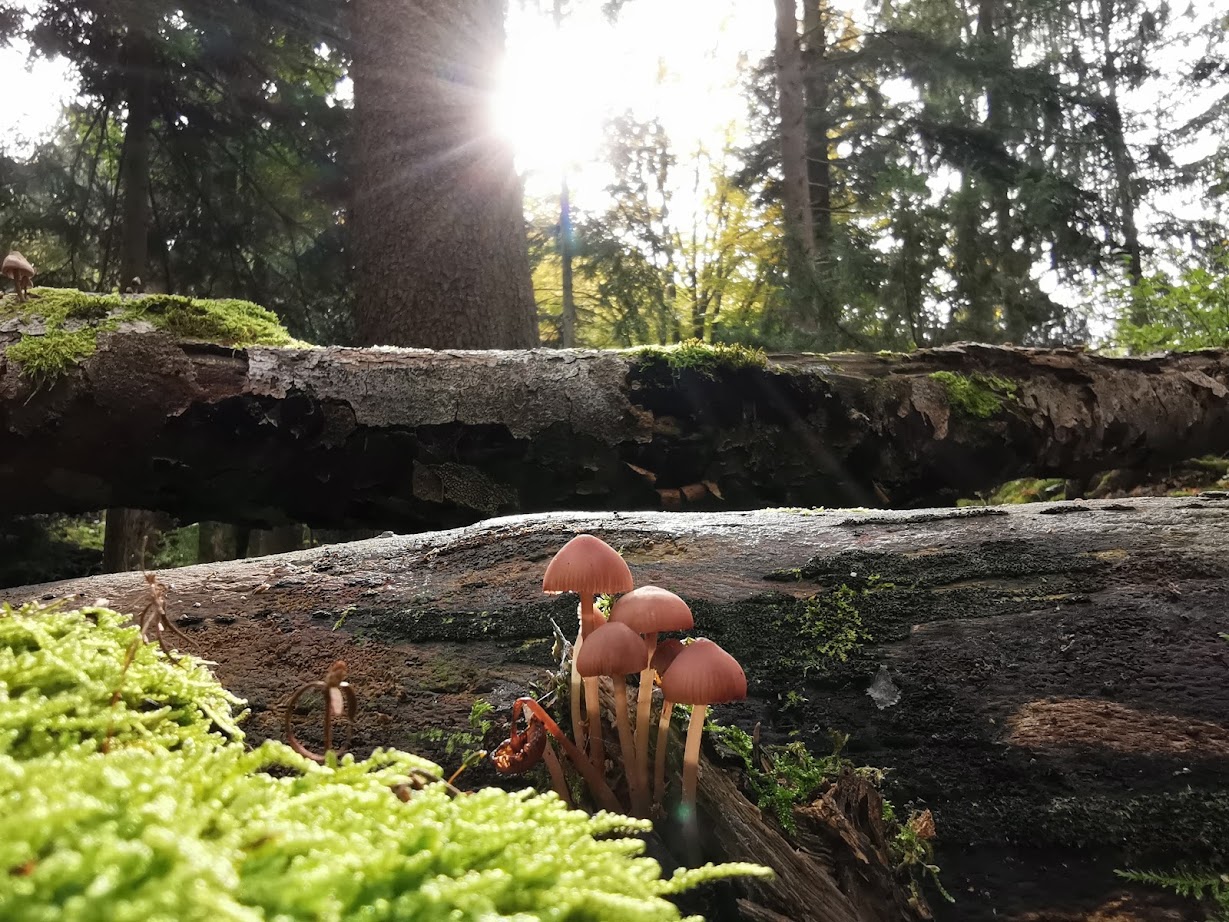
At a time when neuroscience and spirituality are increasingly converging, an extraordinary study sheds new light on one of the most intimate human experiences: the personal encounter with the divine. Published in the renowned journal PLOS ONE, the study—led by Roland R. Griffiths at the Johns Hopkins University School of Medicine—systematically examines what people experience when they report having encountered God, a higher power, or ultimate reality—regardless of whether this experience was spontaneous or triggered by classic psychedelics such as psilocybin, LSD, ayahuasca, or DMT.
Through a large-scale online survey, the researchers recruited a total of 4,285 participants, who described their most memorable encounter with God. The sample was divided into five distinct groups:
A key factor in the study’s validity: The non-drug group was rigorously excluded of anyone who had ever had a spiritual experience while under the influence of psychoactive substances. The psychedelic groups consisted only of individuals who had consumed a single substance. In addition, demographic differences between the groups were statistically adjusted to minimize any confounding effects.
The participants were 38.3 years old on average at the time of the survey and had experienced their encounter with God at an average age of 27.2—meaning that, on average, the experience had taken place more than a decade earlier. This speaks to the extraordinary impact of these experiences, which remained vivid in their memories even after many years.
Perhaps the most striking finding of the study is the fundamental agreement between the groups, despite their completely different triggers. The similarities far outweigh the differences.
In both the non-drug and psychedelic groups, participants reported exceptionally vivid memories of their experience. Interestingly, the non-drug group rated the vividness of their memories slightly higher (92 out of 100 points) than the psychedelic groups (76 out of 100 points)—though both scores are considered very high.
Another fascinating finding: Both groups rated their experience as more real than everyday reality. The participants did not perceive these encounters as hallucinations or delusions, but rather as a gateway to a deeper, more authentic reality.
Regardless of the trigger, participants described what they encountered using remarkably consistent attributes. More than half of all participants—in both the non-drug and psychedelic groups—characterized what they encountered as:
Less than 10% of participants in both groups described the entity they encountered as judgmental or malicious. The average ratings for attributes such as “holy,” “intelligent,” “benevolent,” and “conscious” were over 89 out of 100 points in both groups.
About 70% of both groups confirmed that what they encountered existed, at least in part, in another dimension or reality and that it continued to exist after the encounter.
The study provided a detailed account of how the encounter was experienced. All participants reported that one or more senses were involved. The most frequently mentioned senses were:
About 65% of all participants reported actual communication—an exchange of information with the entity they encountered. Around 90% in both groups experienced an emotional reaction during the encounter, and about 75% gained a message, mission, or insight from the experience.
The study used the scientifically validated Mystical Experience Questionnaire (MEQ30), which is based on the conceptual model developed by the philosopher of religion Walter Stace. This questionnaire captures four core dimensions of mystical experiences:
A “complete mystical experience” is present when all four subscales score at least 60%.
The results are remarkable:
Differences emerged within the psychedelic groups: The DMT group had by far the highest rate of full-blown mystical experiences and significantly outperformed psilocybin and LSD on the factors of “transcendence of time and space” and “indescribability.”
Despite the striking similarities, the study also revealed some insightful differences, primarily concerning the interpretation and contextualization of the experience:
Perhaps the most interesting discrepancy concerns the question of how participants would best describe what they encountered:
This difference is particularly interesting because it may reflect semantic and conceptual frameworks of interpretation rather than fundamental differences in the phenomenological experience itself. The non-drug group tended to be more religiously oriented, while the psychedelic groups more often had a spiritual but non-theistic background.
The non-drug group was significantly more likely to:
The psychedelic groups reported more frequently:
Regardless of the cause, the participants rated their experiences of God as exceptionally significant. The figures speak for themselves:
Participants reported moderate to significant, lasting positive changes in many areas of their lives:
Both groups reported sustained positive changes in:
Specific effects:
The ayahuasca group stood out in particular: it reported positive changes in social relationships, life satisfaction, spiritual awareness, attitudes toward life and the self, mood, and behavior significantly more often than the psilocybin and LSD groups. This could be attributed to the more frequent use of ayahuasca in structured, religious group settings.
One of the most surprising findings of the study concerns changes in religious identification:
Before the experiment, the following people identified as atheists:
According to the survey, the following identified as atheists:
Particularly noteworthy: Of those who identified as atheists before their spiritual experience, over 67% no longer did so afterward—and this held true for all five groups. This finding was statistically significant across all groups and is reminiscent of classic conversion experiences as described in the psychology of religion.
The study also provides a nuanced view of the four psychedelics examined:
The psilocybin and LSD groups were remarkably similar across all 76 items assessed. Despite differing molecular structures, receptor profiles, and durations of action, both substances produced virtually identical experiences of encountering God. This is surprising in that, while both are classic psychedelics whose effects are primarily mediated via the 5-HT2A receptor, they are otherwise pharmacologically distinct.
The ayahuasca group differed most significantly from the other psychedelic groups in terms of demographics: its members were older, more likely to be female, more highly educated, more likely to be married, and less likely to be from the United States. These differences likely reflect the more frequent use of ayahuasca in structured religious or spiritual group settings (Santo Daime, União do Vegetal).
The ayahuasca group tended to report the highest rates of positive attributes of the encounter and of lasting positive consequences. They reported the following significantly more often than the psilocybin and LSD groups:
The DMT group (primarily smoked, not as ayahuasca) was demographically similar to the psilocybin and LSD groups, but differed significantly in the intensity and nature of the experience:
Interestingly, despite the different contexts, the DMT profile resembled that of ayahuasca, suggesting that N,N-dimethyltryptamine (the primary psychoactive component of both) produces robust, characteristic effects across various forms of administration.
The study addresses one of the most fundamental questions in the philosophy of religion: Can encounters with God triggered by psychoactive substances be considered “authentic” religious experiences?
Some religious scholars have argued that drug-induced experiences cannot be genuine religious experiences. Others, including the influential philosopher of religion Huston Smith, have countered this with the“principle of causal indifference”:if two experiences are phenomenologically indistinguishable, one cannot claim that one is genuine and the other is not.
The data from this study provide empirical support for this view. The striking similarities in descriptive details, interpretation, and long-term consequences between the groups suggest that the trigger of the experience may be less relevant than the experience itself.
At the same time, the researchers rightly emphasize that neither detailed phenomenological studies nor the emerging field of neurotheology can answer ontological questions about the existence of God. Science can describe what people experience and how their brains function during such experiences, but it cannot definitively determine whether these experiences represent encounters with a transcendent reality or are “merely” neurobiological events.
Despite the largely positive reviews, about one-third of the participants felt that their experience of God was also among the five most psychologically challenging experiences of their lives, and about 15% described it as the single most challenging experience.
This is consistent with the classic description of the “sacred” by the theologian Rudolf Otto, who spoke of the “mysterium tremendum et fascinans”—the mystery that is both awe-inspiring and fascinating. An encounter with the Absolute can be both overwhelming and transformative, evoking awe and fear at the same time.
The authors themselves point out important limitations:
This research opens up fascinating prospects for a wide range of fields:
These findings raise fundamental questions about the neurobiological basis of spirituality. It appears that the human brain possesses an intrinsic capacity for these profound states of consciousness—regardless of the trigger. Future research using imaging techniques could shed light on the neural correlates of these experiences.
The sustained positive changes in life satisfaction, sense of meaning, and fear of death have significant implications for therapeutic applications. The resurgence of psychedelic therapy, particularly for depression, anxiety disorders, and existential crises at the end of life, is supported by scientific evidence.
The empirical similarity between spontaneous and substance-induced experiences of God challenges traditional distinctions between “genuine” and “artificial” spiritual experiences. The study suggests that the phenomenological experience and its consequences may be more important than the triggering mechanism.
At a time of increasing secularization coupled with a growing interest in spirituality, this research provides an empirical foundation for discussions about the nature of religious experiences. It shows that intense spiritual experiences are not limited to traditional religious contexts and that different paths can lead to similarly transformative experiences.
The authors call for future research on:
This groundbreaking study impressively demonstrates that human consciousness possesses a remarkable, potentially universal capacity for profound spiritual experiences that are interpreted as encounters with God. These experiences can arise in various ways—spontaneously or through the use of psychedelics—and lead to strikingly similar phenomenological experiences and long-term transformative effects.
The fact that more than two-thirds of those who identified as atheists before their experience no longer did so afterward underscores the potential power of these experiences to transform fundamental worldviews. At the same time, the consistently high ratings for life satisfaction, a sense of meaning, and spiritual growth show that these experiences—regardless of their metaphysical interpretation—are among the most valuable that people can have.
For the scientific community, the exciting task remains to further unravel the biological, psychological, and social mechanisms underlying these extraordinary states of consciousness. For society, this research opens the door to a nuanced discourse on the legitimacy of various paths to spiritual experience in a pluralistic world.
At a time when many people are searching for meaning and connection, this research reminds us that the human psyche possesses an inherent capacity for transcendence—a capacity that religious and spiritual traditions have cultivated for millennia and that is now increasingly attracting scientific interest.
Dr. Lucas Pawlik
Source: Griffiths RR, Hurwitz ES, Davis AK, Johnson MW, Jesse R (2019) Survey of subjective “God encounter experiences”: Comparisons among naturally occurring experiences and those induced by the classic psychedelics psilocybin, LSD, ayahuasca, or DMT. PLoS ONE 14(4): e0214377.
Mycoverse Foundation
, Marktgass 11,
, 9490 Vaduz,
, Principality of Liechtenstein
Home | Vision | Projekte | Artikel | Vorstand/Beirat | Shop | Kontakt | Impressum/Datenschutz | Manage Cookie Settings