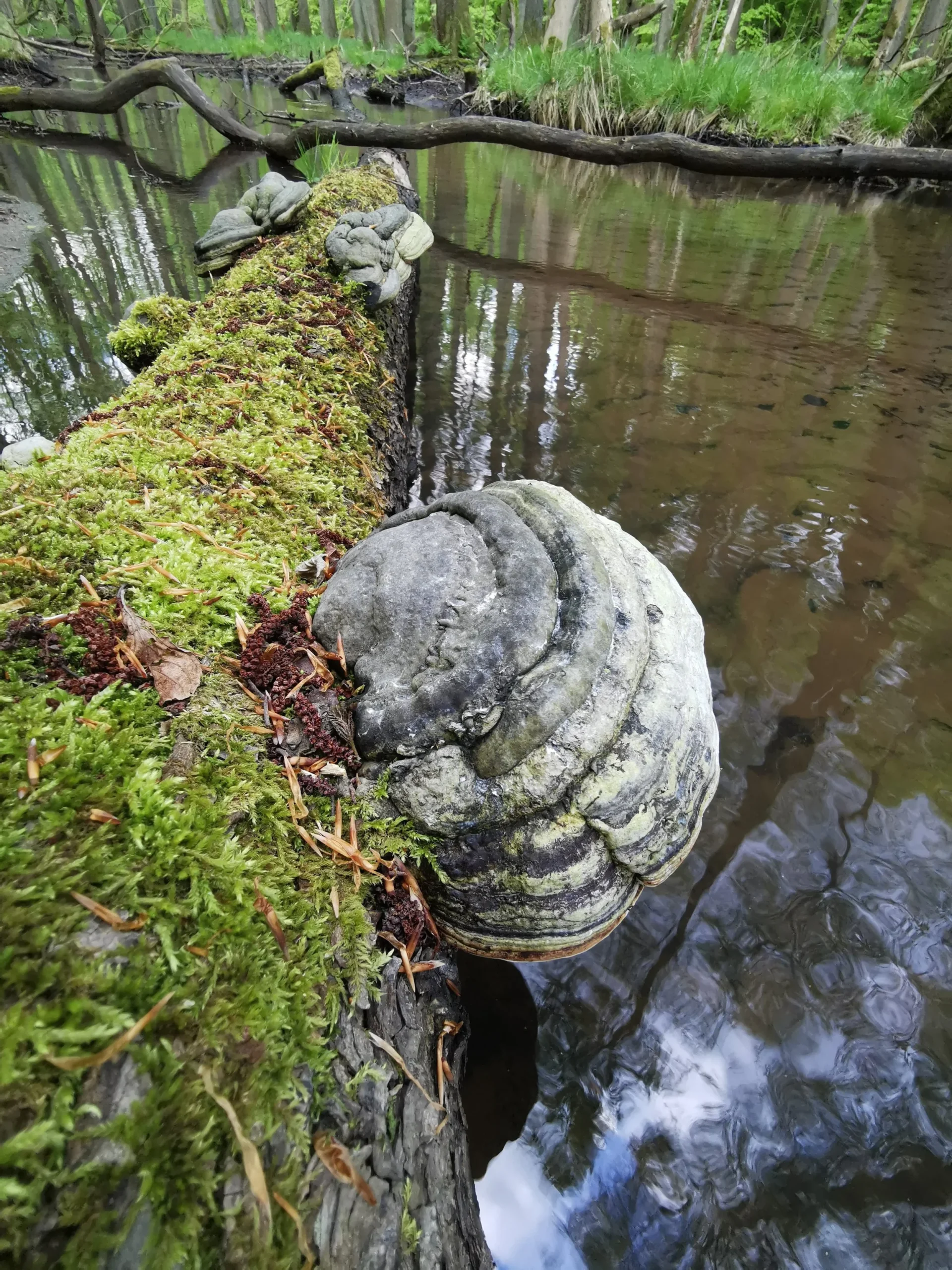
Bioactive ingredients
Fomentariol – The Diabetes Fighter
Antidiabetic – Blood sugar regulation
Anti-inflammatory – Reduction of chronic inflammatory processes
Antioxidant – Protection against oxidative stress
Ergosterol peroxide – The tumor specialist
Antitumor – Particularly effective against stomach cancer
Anti-inflammatory – Anti-inflammatory properties
Systemic antiviral – Broad antiviral spectrum
Antiprotozoal – Effective against parasites
Melanin – Universal Protection
Radiation Protection – Protection Against Ionizing Radiation
Anti-infective – Effective against:
- Helicobacter pylori (bacteria)
- HIV (viruses)
- Candida albicans (fungi)
Anti-cancer – Antitumor properties
Wound Healing – Promoting Tissue Repair
Daphnetin – The coumarin derivative
Natural coumarin derivative
Antitumor – Cancer-inhibiting effect
Anti-inflammatory – Anti-inflammatory effects
Antioxidant – Cell protection
Anti-malaria – Effective against malaria
Anti-arthritis – Inhibition of joint inflammation
Triterpenes – The All-Rounders
Anti-inflammatory – Reduces inflammatory reactions
Antidiabetic – Blood Sugar Control
Immune-boosting – Strengthens the immune system
Antitumor – Especially effective against lung, breast, and stomach cancer
Lignan – The Herpes Inhibitor
HSV Inhibition – Inhibition of the Herpes Simplex Virus
Nutritional Profile – The Energy Pack
Macronutrients:
- Protein: 15%
- Fat: 3.5%
- Complex carbohydrates: 70%
Vitamins:
Minerals:
Therapeutic Applications
Infectious Diseases – The Universal Fighter
Antiviral Effect – The Virus Eliminator
Chronic Hepatitis B and C – Efficacy Demonstrated in Laboratory and Human Studies
HIV – Greater anti-HIV potential than zidovudine in vitro and in rats
Herpes simplex virus (HSV) – Complete inhibition in vitro and in vivo
H1N1 Influenza Virus – Antiviral Activity
Antibacterial effect – The bacteria killer
Effective against:
- Pseudomonas aeruginosa
- Serratia marcescens
- Staphylococcus aureus
- Escherichia coli
Antifungal effect – The fungus fighter
Effective against:
- Aspergillus fumigatus
- Orchid absidia
- Candida albicans – Complete inhibition of growth by the melanin-glucan complex
Antiprotozoal effect – The antiparasitic agent
In vitro efficacy against:
- Plasmodium falciparum (malaria)
- Leishmania donovani (leishmaniasis)
- Trypanosoma brucei (sleeping sickness)
Digestive Tract Disorders – The Stomach Protector
Chronic lesions of the upper gastrointestinal tract:
Gastritis and Gastroduodenitis – High Therapeutic Efficacy in Children
Helicobacter pylori – Antibacterial effect more effective than medical antibiotics
Skin Health – The Skin Regenerator
Wound healing – promotes tissue repair; commonly used for purulent surgical wounds following a cesarean section
Increase in T lymphocytes – increase in immune cells in the wound area
Anti-aging benefits – skin repair and protection in after-sun products, facial lotions, and hair care products
Blood Clotting – The Blood Clot
Hemostasis – Promotes blood clotting when applied topically
Thrombolytic effect – dissolution of human blood clots with up to 83% activity
Antitumor activity – The cancer fighter
Breast cancer – In vitro activity against breast cancer cells, antiproliferative effect on multidrug-resistant (MDR) cells, reversible effect against MDR cancer cells
Stomach Cancer – Potent Cytotoxic and Antiproliferative Effects of Ethanol Extracts
Lung cancer – Strong cytotoxic effect, very high proapoptotic effect due to ethanol and petroleum fractions
S180 sarcoma cells and K562 human leukemia cells – Antiproliferative effects, induction of apoptosis, and reduction in tumor weight in vivo
Anti-inflammatory and Pain-Relieving Effects – The Pain Reliever
Rheumatic Diseases – Anti-Inflammatory Effects and Pain Relief
Metabolic Syndrome – The Metabolic Regulator
Type 2 diabetes mellitus – Significant reduction in blood glucose levels in mouse and rat models
Cholesterol-lowering – In vivo Effect
Traditional Applications – The Time-Tested Range
Wound care and skin care:
- Cauterization of wounds – Wound closure through heat treatment
- External Inflammation – Treatment of Skin Inflammation
- Frostbite – Treatment of Cold Injuries
Urinary tract and bladder disorders:
- Urinary tract infections – Diuretic effects in tea form
- Bladder Problems – Therapeutic Support
Respiratory diseases:
- Influenza virus, colds, bronchitis – antiviral and anti-inflammatory effects
- Asthma and Lung Diseases – Respiratory Support
Cancer treatment:
- Esophageal, stomach, and uterine cancer – Traditional oncological use
Women's Health:
- Abdominal Pain – Pain Relief
- Menstrual cramps, dysmenorrhea – menstrual cycle issues
Other traditional indications:
- Hemorrhoids – Treatment for Venous Disorders
- Arthritis, Rheumatism – Use in Moxibustion
- Paralysis – Neurological Care
Traditional Chinese Medicine (TCM)
- Lung Warming – Thermal Lung Strengthening
- Knot Release – Elimination of Abdominal Tension
- Calming Vital Energy – Harmonizing Qi
- Asthma and Edema – Treatment for Respiratory Issues and Water Retention
- Digestive problems – gastrointestinal complaints
- Constipation – Bowel Regulation
- Characteristics: Mild, slightly bitter
Japan:
- Hemostasis – Treatment of Deep Wounds
- Colds, flu, bronchitis – respiratory infections treated with tea
- General weakness – Strengthening therapy
India:
- Diuretic – Diuretic effect
- Laxatives – Bowel Regulation
- Nerve tonics – Neurological support
- Wound Dressing – Absorbent Wound and Burn Treatment
Central Europe:
- Bladder Disorders – Urinary Tract Treatment
- Cancer – Oncology Support
- Dysmenorrhea – Menstrual Cramps
- Hemorrhoids – Venous disorders
- Fever – Antipyretic effect
- Rheumatism – Joint Inflammation
- Ingrown Toenails – Local Treatment
Hungary:
- Headaches – Treatment for Cephalgia
- Hemorrhoids – Venous Problems
- Bladder Disorders – Urogenital Problems
- Cough – Respiratory symptoms
- Excessive Sweating – Managing Hyperhidrosis
Safety considerations
General Safety – The Compatibility Aspect
General Safety – Tree fungi are generally considered safe and non-toxic, suitable for medicinal use and as food. The tinder fungus is considered safe.
Non-toxic – The fruiting body is generally described as inedible, but not as poisonous or toxic.
Mutagenicity tests – None of the extracts induced mutagenicity, even at concentrations up to 5 mg/plate.
Occasional side effects – In rare cases, side effects may occur.
Taste and texture – It is likely the woody texture and bitter taste that prevent it from being used as food, not the actual danger.
References
- Maljurić N, Golubović J, Ravnikar M, Žigon D, Štrukelj B, Otašević B. Isolation and characterization of Fomentariol: A new potential antidiabetic agent derived from fungal material. Journal of Analytical Methods in Chemistry. February 20, 2018;2018
- Seo D-W, Yi Y-J, Lee M-S, Yun B-S, Lee S-M. Differential modulation of lipopolysaccharide-induced production of inflammatory cytokines by fomentariol and its antioxidant effect in RAW264.7 cells. Mycobiology. Dec. 2015; 43(4):450–7.
- Rebensburg, P., & Kappl, A. Healthy with Medicinal Mushrooms: Strengthening the Immune System, Healing Illnesses, and Relieving Ailments. Munich: riva; 2020. 271 pp.
- Rogers, RD. The Fungal Pharmacy: The Complete Guide to Medicinal Mushrooms and Lichens of North America. Berkeley, California: North Atlantic Books; 2011. 591 pp.
- Abugri DA, Ayariga JA, Tiimob BJ, Yedjou CG, Mrema F, Witola WH. Medicinal Mushrooms as Novel Sources for New Antiparasitic Drug Development. In: Agrawal DC, Dhanasekaran M, eds. Medicinal Mushrooms [Internet]. Singapore: Springer Singapore; 2019 [cited 2022 Jan 16]. pp. 251–73.
- Seniuk OF, Kovalev VO, Palamar LA, Krul NI, Gorovoj L, Shevel VM. Radioprotective effect of the melanin-glucan complex from Fomes fomentarius and indralin during irradiation of BALB/C mice with a dose of 5.95 Gy/8.5 min. Nuclear Physics and Atomic Energy. June 2014; 15:178–88.
- Guthmann, J. Healing Mushrooms: The World’s Most Important Species: Description – Components – Effects. 2nd, updated and expanded edition. Wiebelsheim: Quelle & Meyer Verlag; 2021. 446 pp.
- Seniuk OF, Gorovoj LF, Beketova GV, Savichuk HO, Rytik PG, Kucherov II, et al. Anti-infective properties of the melanin-glucan complex from the medicinal tinder fungus Fomes fomentarius (L.: Fr.) Fr. (Aphyllophoromycetideae). Int J Med Mushrooms. 2011;13(1):7–18.
- Anticarcinogenic properties of the melanin-glucan complex from higher fungi – *Proceedings of the 5th International Medicinal Mushroom Conference* 2009 [Internet]. [Cited January 18, 2022].
- NCATS Inxight Drugs – DAPHNETIN [Internet]. [Cited January 18, 2022].
- N.F. Kurochko, O.F. Seniuk, L.F. Gorovoj. The Treatment of Chronic Hepatitis B, C, and B+C with Mycoton. 2017.
- Gáper J, Gáperová S, Pristas P, Naplavova K. Medicinal value and taxonomy of the tinder fungus Fomes fomentarius (Agaricomycetes): A review. Int J Med Mushrooms. 2016;18(10):851–9.
- Pradeep P, Manju V, Ahsan MF. Antiviral activity of fungal compounds. In: Agrawal DC, Dhanasekaran M, eds. Medicinal Mushrooms [Internet]. Singapore: Springer Singapore; 2019 [cited 2021 Dec 27]. pp. 275–97.
- Badalyan SM, Barkhudaryan A, Rapior S. Recent advances in research on the pharmacological potential of mushrooms and prospects for their clinical application. In: Agrawal DC, Dhanasekaran M, eds. Medicinal Mushrooms [Internet]. Singapore: Springer Singapore; 2019 [cited 2021 Dec 27]. pp. 1–70.
- Doğan HH, Karagöz S, Duman R. In vitro evaluation of the antiviral activity of some fungi from Turkey. Int J Med Mushrooms. 2018;20(3):201–12.
- Suay I, Arenal F, Asensio FJ, Basilio A, Cabello MA, Díez MT, et al. Screening of basidiomycetes for antimicrobial activity. Antonie Van Leeuwenhoek. August 2000;78(2):129–39.
- Beketova GV, Savichuk NO, Savichuk AV, Senyuk OF, Gorovoj LF, Alexeenko NV, et al. Efficacy of the fungal preparation Mycoton in the treatment of chronic lesions of the upper digestive tract. IJM [Internet]. 2001 [cited 2022-01-18].
- Venckovsky BM, Tovstanovskaya VA, Bichkova NG, Prilutckaya AB, Gorovoj LF. Treatment of infected wounds in an obstetric practice using the drug Mycoton. IJM [Internet]. 2001 [cited 2022-01-18].
- Badalyan SM, Borhani A. Medicinal, nutritional, and cosmetic value of macrofungi in Mazandaran Province in northern Iran (review). Int J Med Mushrooms. 2019;21(11):1099–106.
- Nowakowski P, Markiewicz-Żukowska R, Bielecka J, Mielcarek K, Grabia M, Socha K. Treasures from the Forest: Evaluation of Mushroom Extracts as Anti-Cancer Agents. Biomed Pharmacother. November 2021;143:112106.
- Wong JH, Ng TB, Chan HHL, Liu Q, Man GCW, Zhang CZ, et al. Fungal extracts and compounds with inhibitory effects on breast cancer: Findings from studies using cultured cancer cells, tumor-bearing animals, and clinical trials. Appl Microbiol Biotechnol. June 2020;104(11):4675–703.
- Lee S-O, Lee M-H, Lee K-R, Lee E-O, Lee H-J. Fomes fomentarius ethanol extract inhibits cell growth and motility and induces apoptosis through targeted inhibition of AKT in human MDA-MB-231 breast cancer cells. International Journal of Molecular Sciences. January 2019; 20(5):1147.
- Doğan HH, Kars MD, Özdemir Ö, Gündüz U. Extracts from Fomes fomentarius and Tricholoma anatolicum (Agaricomycetes) exhibit significant anti-multidrug resistance activity in drug-resistant breast cancer cells. Int J Med Mushrooms. 2020;22(2):105–14.
- Stajić M, Vukojević J, Ćilerdžić J. Mushrooms as potential natural cytostatic agents. In: Agrawal DC, Dhanasekaran M, eds. Medicinal Mushrooms [Internet]. Singapore: Springer Singapore; 2019 [cited 2021 Dec 27]. pp. 143–68.
- Kim SH, Jakhar R, Kang SC. Apoptotic properties of polysaccharides isolated from the fruiting bodies of the medicinal mushroom Fomes fomentarius in human lung carcinoma cell lines. Saudi Journal of Biological Sciences. July 2015; 22(4):484–90.
- Park Y-M, Kim I-T, Park H-J, Choi J-W, Park K-Y, Lee J-D, et al. Anti-inflammatory and analgesic effects of a methanol extract of Fomes fomentarius. Biol Pharm Bull. October 2004; 27(10):1588–93.
- Lee J-S. Effects of Fomes fomentarius supplementation on antioxidant enzyme activity, blood glucose levels, and lipid profile in streptozotocin-induced diabetic rats. Nutrition Research – NUTR RES. February 2005; 25:187–95.