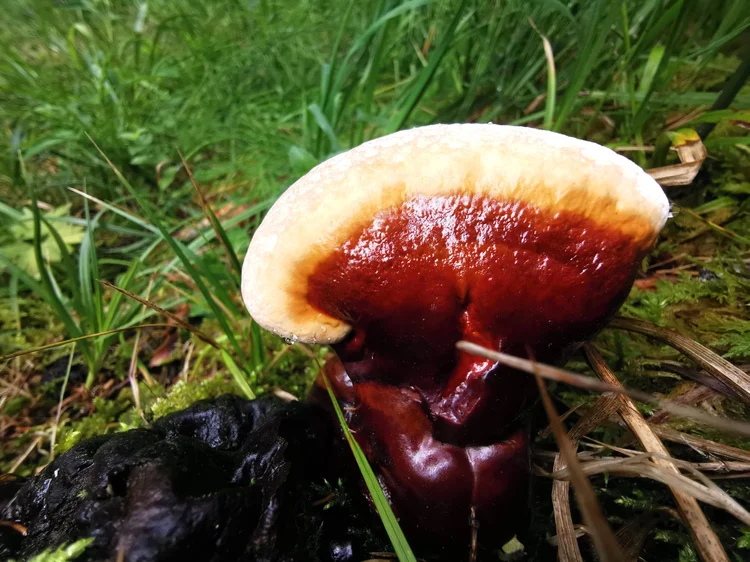
Reishi – der Pilz mit dem beeindruckendsten und weitreichendsten Spektrum an medizinischen Anwendungsmöglichkeiten
Bioactive ingredients
Triterpenoids – The Versatile Molecules
Over 150 different triterpenoids, at least 45 of which are of the lanostane type
Cholesterol-lowering – Regulation of lipid metabolism
Hepatoprotective – Protection and regeneration of liver cells
Antioxidant – Cell protection against oxidative stress
Antitumor/Anticarcinogenic – Inhibition of tumor growth and metastasis
Antithrombotic – Prevention of blood clots
Neuroprotective – Protection of nerve cells
Hypoallergenic – Reduces allergic reactions
Antiviral – Effective against HIV, HSV, and HPV
Antibacterial – Broad-spectrum antimicrobial
Antihistamine – Inhibition of histamine release
Anti-inflammatory – Reduces chronic inflammation
Calming – Stress-reducing and anxiolytic effects
Ganoderic Acids – Natural Remedies
Anti-inflammatory and analgesic – as effective as diclofenac or stronger than aspirin
Antitumor effect – inhibition of tumor growth
Antiandrogenic effect – Regulation of hormonal balance
Osteoclastogenesis Regulation – Control of Bone Metabolism
Promotion of neurogenesis – Ganoderic acids A, B, S1, and Z induce nerve cell growth
Antihistaminic – C1, C2, and D exhibit antihistaminic effects
Cholesterol-lowering – Vitamins B and C lower cholesterol levels
Ganoderic acid – The blood pressure reducer
Blood Pressure-Lowering – Significant Control of Hypertension
Antiviral triterpenes – The virus fighters
Ganodriol F, Ganodermanontriol, Lucidumol-B
Anti-HIV – Inhibition of HIV replication
Antiviral – Broad-spectrum antiviral
Polysaccharides – The Immune Regulators
Over 100 different polysaccharides (~40% β-D-glucans)
Immunomodulatory – Regulation of the immune system
Antitumor – Inhibition of cancer cells
Lipid-lowering – Reduces cholesterol and triglycerides
Antiviral – Inhibition of viral replication
Antifibrotic – Prevention of tissue hardening
Hepatoprotective – Protects liver cells
Anti-inflammatory – Systemic reduction of inflammation
Antioxidant – Protection against free radicals
Ganoderma – The Diabetes Fighters
Antidiabetic – Blood sugar regulation
Antitumor – Additional cancer inhibition
Ling-Zhi 8 (LZ-8) – The Allergy Blocker
Anti-anaphylactic – Protection against severe allergic reactions
Immunomodulatory – Fine-tuning of the immune system
Monoterpenes – The Respiratory System's Helpers
Trans-anethol – Expectorant for clear airways
Carvone, linalool, 1,8-cineole – Antimicrobial effect
Isomenthone, piperitone – Antihistamine and anti-asthmatic
Sesquiterpene α-Bisabolol – The Soother
Anti-inflammatory – Reduction of tissue inflammation
Antispasmodic – Muscle-relaxing effect
Adenosine – The Vasodilator
Vasodilatory – In the cardiovascular system, brain, retina, kidneys, skin, and peripheral blood vessels
Blood-thinning – improves blood flow
Anxiolytic – Anxiety-relieving effect
Stress-reducing – Adaptogenic properties
Muscle relaxant – Spasmolytic effect
Anti-inflammatory – Anti-inflammatory effects
Tyrosinase – The Skin Health Booster
Dopamine Production – Neurotransmitter Synthesis
Melanin Regulation – Skin Pigmentation
Skin Health – Dermatological Care
Ganodermaside A–D – The Anti-Aging Compounds
Ergosterol – Derivatives from various parts of fungi
Anti-aging properties – slowing down the aging process
Life-extending – Increasing life expectancy
Sporule Active Ingredients – The Cell Promoters
Choline – a precursor to neurotransmitters
Betaine – a methyl group donor
Amino acids – the building blocks of protein
Ergosterol – a precursor to vitamin D2
Nutrient Profile – The Variable Spectrum
Macronutrients:
Moisture content: 6.9–87.02%
Protein: 7–26.4%
Fat: 0.59–5%
Carbohydrates: 0.54–43.1%
Polysaccharides: 2.11%
Dietary fiber: 0.1–70.2%
Ash: 1.8–3.85%
Vitamins:
B-vitamin complex: B1, B2, B3, B6
Vitamin C
Vitamin D
Minerals:
Magnesium (Mg)
Potassium (K)
Calcium (Ca)
Phosphorus (P)
Iron (Fe)
Therapeutic Applications
Cardiovascular Diseases and Metabolic Syndrome – The Heart Protector
Coronary heart disease (CHD) – Significant improvement in chest pain, palpitations, angina pectoris, and shortness of breath
High blood pressure – A significant reduction or normalization of blood pressure, sometimes noticeable within just two weeks
Cardiac Arrhythmias – Improving Heart Rhythm in Clinical Trials
Type 2 diabetes mellitus – A proven blood sugar-lowering agent for fasting and postprandial blood glucose levels
Hypercholesterolemia/Hyperlipidemia – Improvement in Patients with Dyslipidemia
Thrombosis – Prevention of platelet aggregation, inhibition of angiotensin-converting enzyme
Prebiotic – Modulation of the Gut Microbiota in Obesity and Hypercholesterolemia
An Australian study found no significant effects on metabolic syndrome or type 2 diabetes
Hepatoprotective Effects – The Liver Protector
Chronic hepatitis B, A, and C – Improved liver function, normalized liver enzymes, alleviated symptoms, and reduced antigen levels
Liver fibrosis – Reduction of oxidative stress and normalization of liver morphology
Gastroprotective effects – Effective against Helicobacter pylori, stomach ulcers, and NSAID-induced gastric damage
Immunostimulatory effects – The immunomodulator
Immune System Stimulation – Increased Lymphocyte Counts in Healthy Children Due to β-Glucans
Viral and Bacterial Infections – The Infection Fighter
Herpes zoster virus (HZV) – Pain relief and prevention of postherpetic neuralgia (in the herbal formula WTMCGEPP)
Human Papillomavirus (HPV) – Significant Elimination of HPV16 and HPV18 in Cases of Gingivitis and Chronic Genital Inflammation
HIV, EBV, HSV, Influenza – Inhibitory Effects in Laboratory Studies
Bacterial infections – Antibacterial activity against E. coli, B. subtilis, S. aureus, P. aeruginosa, and C. albicans
Antioxidant and Anti-Inflammatory Effects – The Cell Protector
Antioxidant profile – Improvement in healthy subjects without side effects
Overtraining protection – Protection against oxidative stress (in combination with cordyceps)
Anti-inflammatory effect – Similar efficacy to diclofenac (~50% reduction in inflammation)
Complementary Cancer Treatment – The Tumor Specialist
Improved immune status – Increased treatment efficacy in non-small cell lung cancer (NSCLC)
Quality of Life – Improved overall quality of life in NSCLC patients
Side EffectRelief – Reducing Chemotherapy-Related Side Effects
Symptom Management – Effectiveness Against Fatigue and Depression in Breast Cancer
Mortality reduction – lowering the risk of death from gynecological, gastric, and nasopharyngeal cancer
Cancer Spectrum:
Clinical trials: Urinary tract cancer, prostate cancer, breast cancer, lung cancer, colorectal cancer, gynecological cancers
In vivo experiments: colorectal cancer, breast cancer, triple-negative breast cancer, lung cancer, ovarian cancer, hepatocellular carcinoma, leukemia
In vitro results: All of the above, plus prostate cancer, stomach cancer, cervical cancer, glioblastoma, and sarcoma
Allergies and Lung Diseases – The Allergy Stopper
Allergies – Complete inhibition of anaphylactic reactions (in the FAHF-2 formula)
Asthma – Significant Improvement in Symptoms
COPD – Therapeutic Support
Chronic bronchitis – Significant improvement in symptoms, especially in asthma patients
Musculoskeletal Disorders – The Muscle and Joint Helper
Fibromyalgia – Improving Physical Function, Quality of Life, and Mood
Muscle Disorders – Treatment of Atrophic Myotonia, Dermatomyositis, Muscular Dystrophy, and Polymyositis
Autoimmune diseases – rheumatoid arthritis, myasthenia gravis (approved in Japan and China)
Neurological Disorders – The Neuroprotector
Chronic Fatigue Syndrome – Therapeutic Support
Neuroprotective effect – protection of hippocampal neurons against oxidative stress
Epilepsy – Anticonvulsant Properties
Parkinson's Disease – Inhibition of Microglia Activation and Protection of Dopaminergic Neurons
Alzheimer's disease – Positive results mainly in animal studies
Multiple Sclerosis – Potential for Nerve Repair
Cognitive function – improvements in animal studies
Mental Health – The Mood Regulator
Anxiety Disorders – Anxiolytic Effect
Depression – Antidepressant Properties
Insomnia – Sleep-enhancing effects
Neurasthenia/Burnout Syndrome – Especially in Cases of Adrenal Insufficiency
Oral Health – Face Masks
Prevention of Stomatitis – Increased IgA Levels and Reduction of Pathogenic Microorganisms
HPV Reduction – Significant Elimination in Cases of Gingivitis
Skin Health – The Skin Enhancer
Range of Treatments – Acne, Eczema, Warts, Contact Allergies, Inflammation, Swelling
Anti-aging properties – brightening, moisturizing, UV protection
Wound healing – Enhancement of fibroblast proliferation and migration
Reproductive System – The Hormone Regulator
Men's Health – Benign Prostatic Hyperplasia, Testosterone Regulation
Women's Health – Irregular Menstruation, Endometriosis, Premenopause/Menopause
Fertility – Increased libido, improved fertility, better sperm parameters
Bone Health – The Bone Strengthener
Osteoporosis – Preventive and Therapeutic Effects
Traditional Applications – The Time-Tested Range
Adaptogenic properties:
Physical Health – Improving overall physical condition, boosting energy, supporting organ function, extending life expectancy
Mental Health – Improved Memory, Enhanced Concentration, Sharpened Intelligence, Increased Willpower, Calming Effects
Sexual Performance – Increased Stamina, Hormonal Balance
Specific traditional indications:
Cardiovascular – Coronary heart disease, high blood pressure, hypercholesterolemia, chest tightness, blood and heart revitalization
Respiratory system – Cough, bronchitis, asthma
Liver – Chronic hepatitis, liver diseases
Gastrointestinal – Stomach Ulcers
Kidneys – Nephritis
Neurology – Neuralgia, Neurasthenia
Musculoskeletal System – Arthritis
Oncology – Cancer
Metabolism – Weight Loss, Anorexia
Convalescence – Weakness and Cognitive Decline Following a Prolonged Illness
Neurology – Dizziness, Insomnia
Emergency Medicine – Antidotes for Fungal Poisoning, Prevention of Altitude Sickness
Detoxification – Removal of toxins and mucus
TCM characteristics:
Thermal effect – Warming
Properties – Astringent, nourishing, detoxifying, toning
References
- Rogers, RD. The Mushroom Pharmacy: The Complete Guide to Medicinal Mushrooms and Lichens of North America. Berkeley, California: North Atlantic Books; 2011. 591 pp.
- Haertel B, Rimböck M, Neuerer T. Medicinal Mushrooms: Modulating, Restorative, and Strengthening. Salzburg: Druckerei Roser GmbH; 2019.
- Guthmann, J. Healing Mushrooms: The World’s Most Important Species: Description – Components – Effects. 2nd, updated and expanded edition. Wiebelsheim: Quelle & Meyer Verlag; 2021. 446 p.
- Paterson RRM. Ganoderma—a therapeutic biofactory derived from mushrooms. Phytochemistry. September 2006; 67(18):1985–2001.
- Dr. Walter Ardigò. Healing with Medicinal Mushrooms. A Practical Handbook. Youcanprint; 2017. 394 pp.
- Rossi P, Difrancia R, Quagliariello V, Savino E, Tralongo P, Randazzo CL, et al. B-glucans from Grifola frondosa and Ganoderma lucidum in breast cancer: an example of complementary and integrative medicine. Oncotarget. May 15, 2018; 9(37):24837–56.
- Yadav SK, Ir R, Jeewon R, Doble M, Hyde KD, Kaliappan I, et al. “https://www.thieme-connect.com/products/ejournals/html/10.1055/a-1177-4834” Planta Med. November 2020; 86(16):1161–75.
- Stamets, P. Growing Gourmet and Medicinal Mushrooms. 3rd ed. Berkeley, California: Ten Speed Press; 2000. 574 pp.
- Hikino H, Konno C, Mirin Y, Hayashi T. Isolation and hypoglycemic effects of Ganoderan A and B, glycans from the fruiting bodies of Ganoderma lucidum. Planta Med. Aug 1985;51(4):339–40.
- PDQ Integrative, Alternative, and Complementary Therapies Editorial Board. Medicinal Mushrooms (PDQ®): Version for Healthcare Professionals. In: PDQ Cancer Information Summaries [Internet]. Bethesda (MD): National Cancer Institute (US); 2002 [cited 2022 Jan 18]. Available from: http://www.ncbi.nlm.nih.gov/books/NBK401261/
- Coates PM, Paul MC, Blackman M, Blackman MR, eds. Reishi or Ling Zhi (Ganoderma lucidum) = Solomon P. Wasser. In: Encyclopedia of Dietary Supplements (Online). CRC Press; 2004.
- Yu Q, Guo M, Zhang B, Wu H, Zhang Y, Zhang L. Analysis of the nutritional composition of 23 species of edible mushrooms. Journal of Food Quality. October 26, 2020; 2020
- Wachtel-Galor S, Yuen J, Buswell JA, Benzie IFF. Ganoderma lucidum (Lingzhi or Reishi): A Medicinal Mushroom. In: Benzie IFF, Wachtel-Galor S, eds. Herbal Medicine: Biomolecular and Clinical Aspects [Internet]. 2nd ed. Boca Raton (FL): CRC Press/Taylor & Francis; 2011 [cited January 18, 2022]. Available from: http://www.ncbi.nlm.nih.gov/books/NBK92757/
- Sharif S, Shahid M, Mushtaq M, Akram S, Rashid A. Wild mushrooms: A potential source of nutrients and antioxidants with acceptable toxicity. Prev Nutr Food Sci. June 2017; 22(2):124–30.
- Rebensburg, P., & Kappl, A. Healthy with Medicinal Mushrooms: Strengthening the Immune System, Healing Illnesses, and Relieving Ailments. Munich: riva; 2020. 271 pp.
- Sargowo D, Ovianti N, Susilowati E, Ubaidillah N, Widya Nugraha A, Vitriyaturrida null, et al. The role of the polysaccharide peptide from Ganoderma lucidum as a potent antioxidant against atherosclerosis in high-risk patients and patients with stable angina pectoris. Indian Heart J. October 2018; 70(5):608–14.
- Klupp NL, Kiat H, Bensoussan A, Steiner GZ, Chang DH. A double-blind, randomized, placebo-controlled trial of Ganoderma lucidum for the treatment of cardiovascular risk factors associated with metabolic syndrome. Sci Rep. August 11, 2016; 6:29540.
- Gao Y, Chen G, Daiy X, Yey J, Zhou S. A Phase I/II study of Ganoderma lucidum (W.Curt.Fr.) Lloyd (Aphyllophoromycetideae) extract in patients with coronary heart disease. International Journal of Medicinal Mushrooms – INT J MED MUSHROOMS. January 2004; 6:327–34.
- Kanmatsuse K, Kajiwara N, Hayashi K, Shimogaichi S, Fukinbara I, Ishikawa H, et al. [Studies on Ganoderma lucidum. I. Efficacy against hypertension and side effects]. Yakugaku Zasshi. October 1985;105(10):942–7.
- Chu TTW, Benzie IFF, Lam CWK, Fok BSP, Lee KKC, Tomlinson B. Study on the potential cardioprotective effects of Ganoderma lucidum (Lingzhi): Results of a controlled human intervention study. Br J Nutr. April 2012;107(7):1017–27.
- Gao Y, Lan J, Dai X, Ye J, Zhou S. A Phase I/II study of Ganoderma lucidum (W.Curt.Fr.)Lloyd (Aphyllophoromycetideae) extract in patients with type 2 diabetes mellitus. IJM [Internet]. 2004 [cited 2022 Jan 18];6(1). Available from: https://www.dl.begellhouse.com/journals/708ae68d64b17c52,0738f8d34e863c74,1629a45749954343.html
- Varghese R, Dalvi YB, Lamrood PY, Shinde BP, Nair CKK. Historical and current perspectives on the therapeutic potential of higher basidiomycetes: an overview. 3 Biotech. September 17, 2019; 9(10):362.
- Bu F, Zhang S, Duan Z, Ding Y, Chen T, Wang R, et al. A critical review of the relationship between herbal medicine, Akkermansia muciniphila, and human health. Biomedicine & Pharmacotherapy. August 2020; 128:110352.
- Gao Y, Zhou S, Chen G, Dai X, Ye J, Gao H. A Phase I/II study of a Ganoderma lucidum (Curt.: Fr.) P. Karst. (Ling Zhi, Reishi mushroom) extract in patients with chronic hepatitis B. IJM [Internet]. 2002 [cited 2022 Jan 18];4(4). Available from: https://www.dl.begellhouse.com/journals/708ae68d64b17c52,72e968661ff5d957,09001a9418679e96.html
- Clinical Observation of the Treatment of Chronic Hepatitis B with Wulingdan Pills – “Journal of The Fourth Military Medical University” June 1987 [Internet]. [Cited January 18, 2022]. Available at: https://en.cnki.com.cn/Article_en/CJFDTotal-DSJY198706010.htm
- Martin Powell. Medicinal Mushrooms. [Internet]. Place of publication not identified: Mycology Press; [cited December 27, 2021]. Available at: https://www.hoopladigital.com/title/11571096
- Chiu H-F, Fu H-Y, Lu Y-Y, Han Y-C, Shen Y-C, Venkatakrishnan K, et al. Triterpenoids- and polysaccharide-peptide-enriched Ganoderma lucidum: a randomized, double-blind, placebo-controlled crossover study on its antioxidant and hepatoprotective efficacy in healthy subjects. Pharmaceutical Biology. January 1, 2017; 55(1):1041–6.
- Vlassopoulou M, Yannakoulia M, Pletsa V, Zervakis GI, Kyriacou A. Health effects of beta-glucans from mushrooms: a systematic review of randomized controlled trials. Food Funct. April 26, 2021; 12(8):3366–80.
- Hijikata Y, Yasuhara A, Sahashi Y. Effect of a herbal formula containing Ganoderma lucidum on the relief of herpes zoster pain: a pilot clinical study. Am J Chin Med. 2005;33(4):517–23.
- Donatini B. Combating oral human papillomavirus (HPV) with medicinal mushrooms, Trametes versicolor and Ganoderma lucidum: a preliminary clinical study. Int J Med Mushrooms. 2014;16(5):497–8.
- Vazirian M, Faramarzi MA, Ebrahimi SES, Esfahani HRM, Samadi N, Hosseini SA, et al. Antimicrobial activity of the medicinal mushroom Ganoderma lucidum (Lingzhi or Reishi; Basidiomycetes) and its major compounds. Int J Med Mushr. 2014;16(1):77–84.
- Rossi P, Buonocore D, Altobelli E, Brandalise F, Cesaroni V, Iozzi D, et al. Improving the assessment of training status in endurance cyclists: effects of supplementation with Ganoderma lucidum and Ophiocordyceps sinensis. Evidence-Based Complementary and Alternative Medicine. 2014;2014:1–11.
- Jin X, Ruiz Beguerie J, Sze DM, Chan GC. Ganoderma lucidum (Reishi mushroom) for cancer treatment. Cochrane Database of Systematic Reviews. April 5, 2016;2016(4)
- Gao Y, Zhou S, Chen G, Dai X, Ye J. A Phase I/II study of a Ganoderma lucidum (Curt.: Fr.) P. Karst. extract (Ganopofy) in patients with advanced cancer. International Journal of Medicinal Mushrooms. January 2002;4:8.
- Gao Y, Dai X, Chen G, Ye J, Zhou S. A randomized, placebo-controlled, multicenter study of Ganoderma lucidum (W.Curt.:Fr.) Lloyd (Aphyllophoromycetideae) polysaccharides (Ganopoly®) in patients with advanced lung cancer. IJM [Internet]. 2003 [cited 2022 Jan 18];5(4). Available from: https://www.dl.begellhouse.com/journals/708ae68d64b17c52,40f85691198060b9,29caf9ba3f525dbb.html
- Chen X, Hu Z-P, Yang X-X, Huang M, Gao Y, Tang W, et al. Monitoring of immune responses to a plant-derived immunomodulator in patients with advanced colorectal cancer. Int Immunopharmacol. March 2006; 6(3):499–508.
- Zhong L, Yan P, Lam WC, Yao L, Bian Z. Natural products related to Coriolus versicolor and Ganoderma lucidum as adjunctive therapy for cancer: A systematic review and meta-analysis of randomized controlled trials. Front Pharmacol. July 3, 2019;10:703.
- Liu J, Mao JJ, Li SQ, Lin H. Preliminary efficacy and safety of Reishi & Privet Formula on the quality of life of patients with non-small cell lung cancer undergoing chemotherapy: A randomized, placebo-controlled trial. Integr Cancer Ther. Dec. 2020; 19:1534735420944491.
- Bao P-P, Lu W, Cui Y, Zheng Y, Gu K, Chen Z, et al. Use of ginseng and Ganoderma lucidum following a breast cancer diagnosis and quality of life: a report from the Shanghai Breast Cancer Survival Study. PLoS One. 2012;7(6)
- Zhao H, Zhang Q, Zhao L, Huang X, Wang J, Kang X. Ganoderma lucidum spore powder improves cancer-related fatigue in breast cancer patients undergoing endocrine therapy: A pilot clinical study. Evid Based Complement Alternat Med. 2012;2012:809614.
- Wong JH, Ng TB, Chan HHL, Liu Q, Man GCW, Zhang CZ, et al. Fungal extracts and compounds with inhibitory effects on breast cancer: Findings from studies using cultured cancer cells, tumor-bearing animals, and clinical trials. Appl Microbiol Biotechnol. June 2020;104(11):4675–703.
- Nowakowski P, Markiewicz-Żukowska R, Bielecka J, Mielcarek K, Grabia M, Socha K. Treasures from the Forest: Evaluation of Mushroom Extracts as Anticancer Agents. Biomed Pharmacother. Nov 2021;143:112106.
- Kong M-Y, Li L-Y, Lou Y-M, Chi H-Y, Wu J-J. Chinese herbal medicine for the prevention and treatment of colorectal cancer: From molecular mechanisms to potential clinical applications. J Integr Med. September 2020; 18(5):369–84.
- Jin H, Song C, Zhao Z, Zhou G. Ganoderma lucidum polysaccharide, an extract from Ganoderma lucidum, exerts an inhibitory effect on the malignancy of cervical cancer cells by attenuating the epithelial-mesenchymal and JAK/STAT5 signaling pathways. Pharmacology. 2020;105(7–8):461–70.
- Bianchi I, Marrocchesi R. Healing with Medicinal Mushrooms: Therapeutic Properties and Guidelines for the 12 Most Important Medicinal Mushrooms. Treviso: Editoriale Programma; 2015.
- Srivastava KD, Kattan JD, Zou ZM, Li JH, Zhang L, Wallenstein S, et al. The Chinese herbal medicine FAHF-2 completely blocks anaphylactic reactions in a mouse model of peanut allergy. Journal of Allergy and Clinical Immunology. January 2005; 115(1):171–8.
- Olivares PR. Ganoderma lucidum improves physical concentration in women with fibromyalgia. Nutricion Hospitalaria. November 1, 2015;(5):2126–35.
- Pazzi F, Adsuar JC, Domínguez-Muñoz FJ, García-Gordillo MA, Gusi N, Collado-Mateo D. Effects of Ganoderma lucidum on mood and health-related quality of life in women with fibromyalgia. Healthcare (Basel). November 30, 2020;8(4)
- Rai SN, Mishra D, Singh P, Vamanu E, Singh MP. Therapeutic applications of fungi and their biomolecules, and an overview of the in silico approach in neurodegenerative diseases. Biomed Pharmacother. May 2021; 137:111377.
- Wang G, Li X, Cao W, Li J, Wang L. A retrospective study of Ganoderma lucidum spore powder in patients with epilepsy. Medicine (Baltimore). June 18, 2018;97(23)
- Remya VR, Chandra G, Mohanakumar KP. Edible Mushrooms as Neuro-Nutraceuticals: The Basis of Therapeutics. In: Agrawal DC, Dhanasekaran M, eds. Medicinal Mushrooms [Internet]. Singapore: Springer Singapore; 2019 [cited December 27, 2021]. pp. 71–101. Available at: http://link.springer.com/10.1007/978-981-13-6382-5_2
- Kuypers KPC. Self-medication with Ganoderma lucidum (“Reishi”) to alleviate the symptoms of Parkinson’s disease: A case study. J Med Food. July 2021; 24(7):766–73.
- Lee W, Fujihashi A, Govindarajulu M, Ramesh S, Deruiter J, Majrashi M, et al. The role of fungi in neurodegenerative diseases. In: Agrawal DC, Dhanasekaran M, eds. Medicinal Mushrooms [Internet]. Singapore: Springer Singapore; 2019 [cited 2021 Dec 27]. pp. 223–49. Available from: http://link.springer.com/10.1007/978-981-13-6382-5_8
- Tsuk S, Lev JH, Rotstein A, Carasso R, Zeev A, Netz Y, et al. Clinical effects of a commercially available dietary supplement containing Ophiocordyceps sinensis and Ganoderma lucidum on cognitive function in healthy young volunteers. Int J Med Mushrooms. 2017;19(8):667–73.
- Socala K, Nieoczym D, Grzywnowicz K, Stefaniuk D, Wlaz P. Evaluation of the anticonvulsant, antidepressant, and anxiolytic effects of an aqueous extract from cultured mycelia of the medicinal mushroom Lingzhi or Reishi (Ganoderma lucidum; higher Basidiomycetes) in mice. Int J Med Mushrooms. 2015;17(3):209–18.
- Tang W, Gao Y, Chen G, Gao H, Dai X, Ye J, et al. A randomized, double-blind, placebo-controlled trial of a Ganoderma lucidum polysaccharide extract for neurasthenia. J Med Food. 2005;8(1):53–8.
- Li L-D, Mao P-W, Shao K-D, Bai X-H, Zhou X-W. Ganoderma proteins and their potential applications in cosmetics. Appl Microbiol Biotechnol. Dec. 2019;103(23–24):9239–50.