
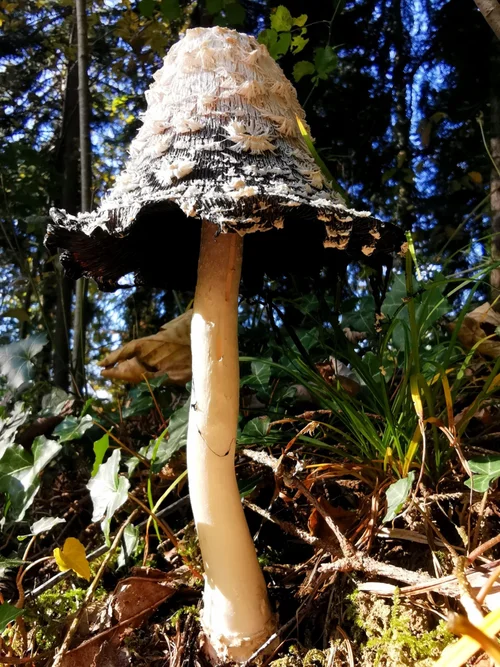
Coprinus comatus – Shaggy Mane – Sasakure Hitoyotake – Ji Tui Mo – Mao Tou Gui San
Powerful antioxidant – protects cells from oxidative stress
Neuroprotective – Protection of nerve cells
Anti-inflammatory – Reduction of chronic inflammatory processes
Tumor-suppressing – Anticarcinogenic properties
Antidiabetic – Blood sugar regulation
Antihyperglycemic – Control of elevated blood sugar levels
Lipid-lowering – reduction of cholesterol and triglyceride levels
HIV-1 Inhibition – Antiviral Effect
Insulin-mimetic – Enhancement of the blood-sugar-lowering effect by mimicking insulin
Antioxidant – Protection against free radicals
Antimicrobial – Inhibition of pathogenic microorganisms
Acetaldehyde dehydrogenase inhibition
Vitamin C – The Cell Protector
Antioxidant – Protection against oxidative damage
Trehalose – The Gut Care Specialist
Prebiotic – Promotes healthy gut flora
Citric Acid – The Blood Sugar Regulator
Antidiabetic – Supports blood sugar control
CCP (Coprinus comatus polysaccharides, β-glucans) – The All-Rounders
Prebiotic – Supports gut flora
Antidiabetic – Blood sugar regulation
Antioxidant – Cell protection
Anti-inflammatory – Anti-inflammatory effect
Hepatoprotective – Protects liver cells
Antibacterial – Antimicrobial Properties
Antimicrobial compounds – The germ fighters
Coprinin, coprinol – formed during fermentation
Coprinuslactone – Additional antimicrobial effect
Laccase – The HIV Inhibitor
Inhibition of HIV-1 activity – Limited antiviral effect
Phenols and aromatic molecules – The Relaxants
3-Octanone, 3-Octanol, 1-Octen-3-ol, 1-Octanol, l-Dodecanol
Antioxidant – Cell protection
Antitumor – Cancer-inhibiting properties
Emotional Relief – Reducing Anxiety and Promoting Relaxation After Extraction
Caprylic acid, n-butyric acid, isobutyric acid – Additional therapeutic components
Macronutrients:
Moisture content: 90.5%
Protein: 11.8–29.5 g/100 g
Fat: 1.1–7.3 g per 100 g
Carbohydrates: 32.1–76.3 g/100 g
Dietary fiber: 21.13–34.59 g/100 g
Ash: 13.24 g/100 g
Minerals:
Iron (Fe)
Calcium (Ca)
Zinc (Zn)
Magnesium (Mg)
Phosphorus (P)
Promising results in animal studies
Reducing Insulin Resistance – Improvements in Type 2 Diabetes
Islet cell protection – Protection of pancreatic β-cells in type 1 diabetes
Blood Sugar Control – Lowering Fasting and Postprandial Blood Sugar Levels
Fructosamine Reduction – Improvement in Long-Term Blood Sugar Markers
Improvement in lipid profile – reduction in total cholesterol and triglycerides
Diabetic Nephropathy – Reducing Oxidative Stress and Inflammation
Bone Health – In Combination with Organic Vanadium: β-Cell Regeneration and Improved Bone Strength
Particularly effective against hormone-dependent tumors
Androgen-dependent prostate cancer – In vitro:
Inhibition of cell proliferation – Arrest of growth
Inhibition of PSA secretion – Reduction of prostate-specific antigen
Estrogen-dependent breast cancer – In vitro:
ER+ and ER- Cell Growth – Inhibition of Both Types of Breast Cancer Cells
Apoptosis Induction – Programmed Cell Death
Inhibition of tumor formation – Prevention of tumor development
Other types of cancer – In vitro:
Ovarian Cancer – Induction of Apoptosis
Gastric cancer – Inhibition of colony formation in cell lines
Hepatocellular carcinoma – Antiproliferative effect
Glioblastoma – Cytotoxic and DNA synthesis-inhibiting effects
T-cell leukemia – Antileukemic activity
Benign Prostatic Hyperplasia – Promising Antiandrogenic Effect
Androgen receptor reduction – In vitro concentration reduction
PSA Gene Expression – Reduced Gene Activity
Alcohol-related liver disease – Improvement of alcohol metabolism disorders in animal studies
Oxidative stress – Alleviating processes that damage the liver
Dyslipidemia – Improvement of Abnormal Lipid Levels
Liver Lipid Metabolism – Normalization of Metabolic Disorders
Prebiotic effect – Positive changes in gut microbiota with a reduction in liver inflammation and insulin resistance
Weight Management – Support for Weight Control
Antimicrobial Effect – The Germ Fighter
Bacterial infections – In vitro inhibitory effects against:
Staphylococcus aureus – Impaired biofilm formation
Pseudomonas aeruginosa – Growth inhibition
Multidrug-resistant Gram-positive bacteria – Bacillus species
Fungal infections – Antifungal activity against:
Aspergillus niger – Mold inhibition
Candida albicans – Combating Yeast Infections
Skin Health – The Skin Enhancer
Skin Aging – Antioxidant Effects
Moisturizing – Skin-nourishing properties
Skin Lightening – Reduction of Hyperpigmentation
UV-B protection – Reduction of UV-B-induced skin inflammation
Neuroprotective effect – The brain protector
Anti-AChE activity – Reversible acetylcholinesterase inhibition, comparable to donepezil
Alzheimer's Potential – Possible Therapeutic Applications
Lewy Body Dementia – Potential Treatment Support
Gut Health – The Digestive Aid
Improved Digestion – Optimizing Digestive Function
Flatulence – Reducing Gas Buildup
Constipation – Promoting Bowel Movement
Hemorrhoids – Therapeutic Support
Gut Health – Primary Area of Application
Promoting Digestion – Improving Gastrointestinal Function
Gastrointestinal complaints – Treatment of digestive disorders
Metabolic Support – Regulation of Metabolic Processes
L-Ergothioneine – The Super Antioxidant
Powerful antioxidant – protects cells from oxidative stress
Neuroprotective – Protection of nerve cells
Anti-inflammatory – Reduction of chronic inflammatory processes
Tumor-suppressing – Anticarcinogenic properties
Comatin – The Diabetes Specialist
Antidiabetic – Blood sugar regulation
Antihyperglycemic – Control of elevated blood sugar levels
Lipid-lowering – reduction of cholesterol and triglyceride levels
HIV-1 Inhibition – Antiviral Effect
Vanadium – The Insulin Mimic
Insulin-mimetic – Enhancement of the blood-sugar-lowering effect by mimicking insulin
Antioxidant – Protection against free radicals
Antimicrobial – Inhibition of pathogenic microorganisms
Coprin – The Mycotoxin
Acetaldehyde – Dehydrogenase Inhibition
Vitamin C – The Cell Protector
Antioxidant – Protection against oxidative damage
Trehalose – The Gut Care Specialist
Prebiotic – Promotes healthy gut flora
Citric Acid – The Blood Sugar Regulator
Antidiabetic – Supports blood sugar control
CCP (Coprinus comatus polysaccharides, β-glucans) – The All-Rounders
Prebiotic – Supports gut flora
Antidiabetic – Blood sugar regulation
Antioxidant – Cell protection
Anti-inflammatory – Anti-inflammatory effect
Hepatoprotective – Protects liver cells
Antibacterial – Antimicrobial Properties
Antimicrobial compounds – The germ fighters
Coprinin, coprinol – formed during fermentation
Coprinuslactone – Additional antimicrobial effect
Laccase – The HIV Inhibitor
Inhibition of HIV-1 activity – Limited antiviral effect
Phenols and aromatic molecules – The Relaxants
3-Octanone, 3-Octanol, 1-Octen-3-ol, 1-Octanol, l-Dodecanol
Antioxidant – Cell protection
Antitumor – Cancer-inhibiting properties
Emotional Relief – Reducing Anxiety and Promoting Relaxation After Extraction
Caprylic acid, n-butyric acid, isobutyric acid – Additional therapeutic components
Macronutrients:
Moisture content: 90.5%
Protein: 11.8–29.5 g/100 g
Fat: 1.1–7.3 g per 100 g
Carbohydrates: 32.1–76.3 g/100 g
Dietary fiber: 21.13–34.59 g/100 g
Ash: 13.24 g/100 g
Minerals:
Iron (Fe)
Calcium (Ca)
Zinc (Zn)
Magnesium (Mg)
Phosphorus (P)
Coprinus Syndrome – Alcohol Intolerance
Trigger – consumption in combination with alcohol
Mechanism – Inhibition of acetaldehyde dehydrogenase by mycotoxins
Symptoms:
Ethanol intolerance – Alcohol intolerance
Skin redness – flushing reactions
Metallic taste – taste disorders
Tachycardia – Rapid heartbeat
Headaches – Cephalgia
Dizziness – Vertigo
Vomiting – Nausea and Emesis
Sweating – Hyperhidrosis
Fasciculations – muscle twitches
Orthostatic hypotension – a drop in blood pressure upon standing
Collapse – Circulatory failure
Skin reactions – Allergic reactions
At-risk population – patients with dermatitis and an atopic predisposition
Prevalence – 32% of patients with atopic dermatitis
Reaction Type – Delayed-Type Reactions
Test procedure – Atopic patch test (5 mg of cap protein per 1 g of petroleum jelly or 1.35 mg of spore protein per 1 g of petroleum jelly)
References
Coprinus – An Overview | ScienceDirect Topics [Internet]. [Cited January 18, 2022]. Available at:https://www.sciencedirect.com/topics/pharmacology-toxicology-and-pharmaceutical-science/coprinusbenwirkungen and Safety Precautions
Martin Powell. Medicinal Mushrooms. [Internet]. Place of publication not specified: Mycology Press; [cited December 27, 2021]. Available at: https://www.hoopladigital.com/title/11571096
Bianchi I, Marrocchesi R. Healing with Medicinal Mushrooms: Therapeutic Properties and Guidelines for the 12 Most Important Medicinal Mushrooms. Treviso: Editoriale Programma; 2015.
Guthmann, J. Healing Mushrooms: The World’s Most Important Species: Description – Components – Effects. 2nd, updated and expanded edition. Wiebelsheim: Quelle & Meyer Verlag; 2021. 446 pp.
Rogers, RD. The Fungal Pharmacy: The Complete Guide to Medicinal Mushrooms and Lichens of North America. Berkeley, California: North Atlantic Books; 2011. 591 pp.
Nachimuthu S, Kandasamy R, Ponnusamy R, Deruiter J, Dhanasekaran M, Thilagar S. L-Ergothioneine: A Potential Bioactive Compound from Edible Mushrooms. In: Agrawal DC, Dhanasekaran M, eds. Medicinal Mushrooms: Recent Advances in Research and Development [Internet]. Singapore: Springer; 2019 [cited 2022 Jan 18]. pp. 391–407. Available from: https://doi.org/10.1007/978-981-13-6382-5_16
Asahi T, Wu X, Shimoda H, Hisaka S, Harada E, Kanno T, et al. Ergothioneine, an amino acid derived from fungi, is a potential inhibitor of inflammation-induced DNA halogenation. Bioscience, Biotechnology, and Biochemistry. February 1, 2016;80(2):313–7.
Rebensburg, P., & Kappl, A. Healthy with Medicinal Mushrooms: Strengthen Your Immune System, Cure Diseases, and Alleviate Symptoms. Munich: riva; 2020. 271 p.
Cao H, Qin D, Guo H, Cui X, Wang S, Wu Y, et al. The Shaggy Ink Cap Medicinal Mushroom, Coprinus comatus (Agaricomycetes), a Versatile Functional Species: A Review. Int J Med Mushrooms. 2020;22(3):245–55.
Han C, Liu T. A comparison of the hypoglycemic activity of three species of basidiomycetes rich in vanadium. Biol Trace Elem Res. February 2009;127(2):177–82.
Lv Y, Han L, Yuan C, Guo J. Comparison of the hypoglycemic activity of trace elements absorbed in fermented Coprinus comatus mushrooms. Biol Trace Elem Res. November 2009;131(2):177–85.
Han C, Yuan J, Wang Y, Li L. Hypoglycemic activity of a fermented mushroom of Coprinus comatus rich in vanadium. J Trace Elem Med Biol. 2006;20(3):191–6.
Zhou G, Han C. The combined effect of vanadium and fermented Coprinus comatus mushrooms on glycemic metabolism. Biol Trace Elem Res. July 2008;124(1):20–7.
Han C, Cui B, Wang Y. Vanadium uptake by the biomass of Coprinus comatus and its effect on hyperglycemic mice. Biol Trace Elem Res. July 2008;124(1):35–9.
Matthies L, Laatsch H. Unusual mushroom poisoning: Coprin, an inhibitor of alcohol metabolism. Pharmacy in Our Time. 1992;21(1):14–20.
Dr. Walter Ardigò. Healing with Medicinal Mushrooms. A Practical Handbook. Youcanprint; 2017. 394 p.
Karaman M, Tesanovic K, Gorjanovic S, Pastor FT, Simonovic M, Glumac M, et al. Polarography as the technique of choice for assessing total antioxidant activity: A case study of selected Coprinus comatus extracts and quinic acid, their antidiabetic component. Nat Prod Res. May 2021; 35(10):1711–6.
Li W, Wang Y, Sun M, Liang Y, Wang X, Qi D, et al. The medicinal mushroom Coprinus comatus (Agaricomycetes), whose protein attenuates acute alcoholic liver injury in conjunction with changes in the gut microbiota of mice. Int J Med Mushrooms. 2021;23(5):91–100.
Wang S, Wang C, Cao H, Cui X, Guo H, Zheng W, et al. Comparison of the cosmetic effects of liquid-fermented cultures of several medicinal mushrooms, including antioxidant, moisturizing, and skin-brightening properties. Int J Med Mushrooms. 2020;22(7):693–703.
Ramesh S, Majrashi M, Almaghrabi M, Govindarajulu M, Fahoury E, Fadan M, et al. Overview of the therapeutic efficacy of mushrooms. In: Agrawal DC, Dhanasekaran M, eds. Medicinal Mushrooms [Internet]. Singapore: Springer Singapore; 2019 [cited 2022 Jan 16]. pp. 103–41. Available from: http://link.springer.com/10.1007/978-981-13-6382-5_3
Stilinović N, Čapo I, Vukmirović S, Rašković A, Tomas A, Popović M, et al. Chemical composition, nutritional profile, and in vivo antioxidant properties of the cultivated mushroom Coprinus comatus. R Soc Open Sci. September 2020; 7(9):200900.
Nowakowski P, Naliwajko SK, Markiewicz-Żukowska R, Borawska MH, Socha K. The Two Faces of Coprinus comatus – Functional Properties and Potential Hazards. Phytotherapy Research. November 2020; 34(11):2932–44.
Husen F, Hernayanti H, Ekowati N, Sukmawati D, Ratnaningtyas NI. Antidiabetic effects and antioxidant properties of the medicinal mushroom Coprinus comatus (Agaricomycetes) in streptozotocin-induced hyperglycemia in rats. Int J Med Mushrooms. 2021;23(10):9–21.
Gao Z, Kong D, Cai W, Zhang J, Jia L. Characterization and antidiabetic and nephroprotective effects of mycelial polysaccharides from Coprinus comatus. Carbohydrate Polymers. January 2021;251:117081.
Stajić M, Vukojević J, Ćilerdžić J. Mushrooms as potential natural cytostatic agents. In: Agrawal DC, Dhanasekaran M, eds. Medicinal Mushrooms [Internet]. Singapore: Springer Singapore; 2019 [cited 2021 Dec 27]. pp. 143–68. Available from: http://link.springer.com/10.1007/978-981-13-6382-5_4
Zaidman B-Z, Wasser SP, Nevo E, Mahajna J. Coprinus comatus and Ganoderma lucidum impair androgen receptor function in LNCaP prostate cancer cells. Mol Biol Rep. June 2008; 35(2):107–17.
Dotan N, Wasser SP, Mahajna J. Inhibition of androgen receptor activity by compounds from Coprinus comatus. Nutrition and Cancer. November 2011; 63(8):1316–27.
Dotan N, Wasser SP, Mahajna J. The edible and medicinal mushroom Coprinus comatus as a natural antiandrogenic modulator. Integr Cancer Ther. June 2011; 10(2):148–59.
Gu Y-H, Leonard J. In vitro effects of selected fungal species on proliferation, apoptosis, and colony inhibition in ER-dependent and ER-independent human breast cancer cells. Oncology Reports. February 1, 2006; 15(2):417–23.
Asatiani MD, Wasser SP, Nevo ED, Ruimi N, Mahajna JA, Reznick A. The medicinal mushroom Coprinus comatus (O.F. Mull.: Fr.) Pers. (Agaricomycetideae) disrupts H₂O₂-induced activation of the NF-κB pathway by inhibiting IκBα phosphorylation in MCF7 breast cancer cells. Int J Med Mushrooms [Internet]. 2011 [cited 2022 Jan 18];13. Available from: https://www.dl.begellhouse.com/references/708ae68d64b17c52,77c52f4810e4b47b,4c5e3d861c1bdd9f.html
Wong JH, Ng TB, Chan HHL, Liu Q, Man GCW, Zhang CZ, et al. Fungal extracts and compounds with inhibitory effects on breast cancer: Findings from studies using cultured cancer cells, tumor-bearing animals, and clinical trials. Appl Microbiol Biotechnol. June 2020;104(11):4675–703.
Nowakowski P, Markiewicz-Żukowska R, Gromkowska-Kępka K, Naliwajko SK, Moskwa J, Bielecka J, et al. Fungi as potential therapeutic agents in cancer treatment: Evaluation of the anti-glioma activity of extracts from Coprinus comatus, Cantharellus cibarius, Lycoperdon perlatum, and Lactarius deliciosus. Biomedicine & Pharmacotherapy. January 2021; 133:111090..
Li W, Wang Y, Sun M, Liang Y, Cai X, Qi D, et al. The prebiotic effects of Coprinus comatus polysaccharides on the gut microbiota in normal mice and those with acute alcoholic liver injury: A comparative study. Evid Based Complement Alternat Med. 2020;2020:2027570.
Karaman M, Tesanovic K, Novakovic A, Jakovljevic D, Janjusevic L, Sibul F, et al. Coprinus comatus filtrate extract, a novel neuroprotective agent of natural origin. Nat Prod Res. August 2020;34(16):2346–50.
Coprinus Syndrome – Alcohol Intolerance
Trigger – consumption in combination with alcohol
Mechanism – Inhibition of acetaldehyde dehydrogenase by mycotoxins
Symptoms:
Ethanol intolerance – Alcohol intolerance
Skin redness – flushing reactions
Metallic taste – taste disorders
Tachycardia – Rapid heartbeat
Headaches – Cephalgia
Dizziness – Vertigo
Vomiting – Nausea and Emesis
Sweating – Hyperhidrosis
Fasciculations – muscle twitches
Orthostatic hypotension – a drop in blood pressure upon standing
Collapse – Circulatory failure
Skin reactions – Allergic reactions
At-risk population – patients with dermatitis and an atopic predisposition
Prevalence – 32% of patients with atopic dermatitis
Reaction Type – Delayed-Type Reactions
Test procedure – Atopic patch test (5 mg of cap protein per 1 g of petroleum jelly or 1.35 mg of spore protein per 1 g of petroleum jelly)
References
Mycoverse Foundation
, Marktgass 11,
, 9490 Vaduz,
, Principality of Liechtenstein
Home | Vision | Projekte | Artikel | Vorstand/Beirat | Shop | Kontakt | Impressum/Datenschutz | Manage Cookie Settings