MYCOVERSE Logo

Mushrooms – The Underrated Foundation for Sustainability and Future Technologies

Mushrooms are much more than just culinary delicacies. They play a key role in our ecosystems, the bioeconomy, and thus in the implementation of the UN Sustainable Development Goals (SDGs). Despite their enormous importance, their economic value and potential have so far received little attention from the business community, policymakers, and society at large.
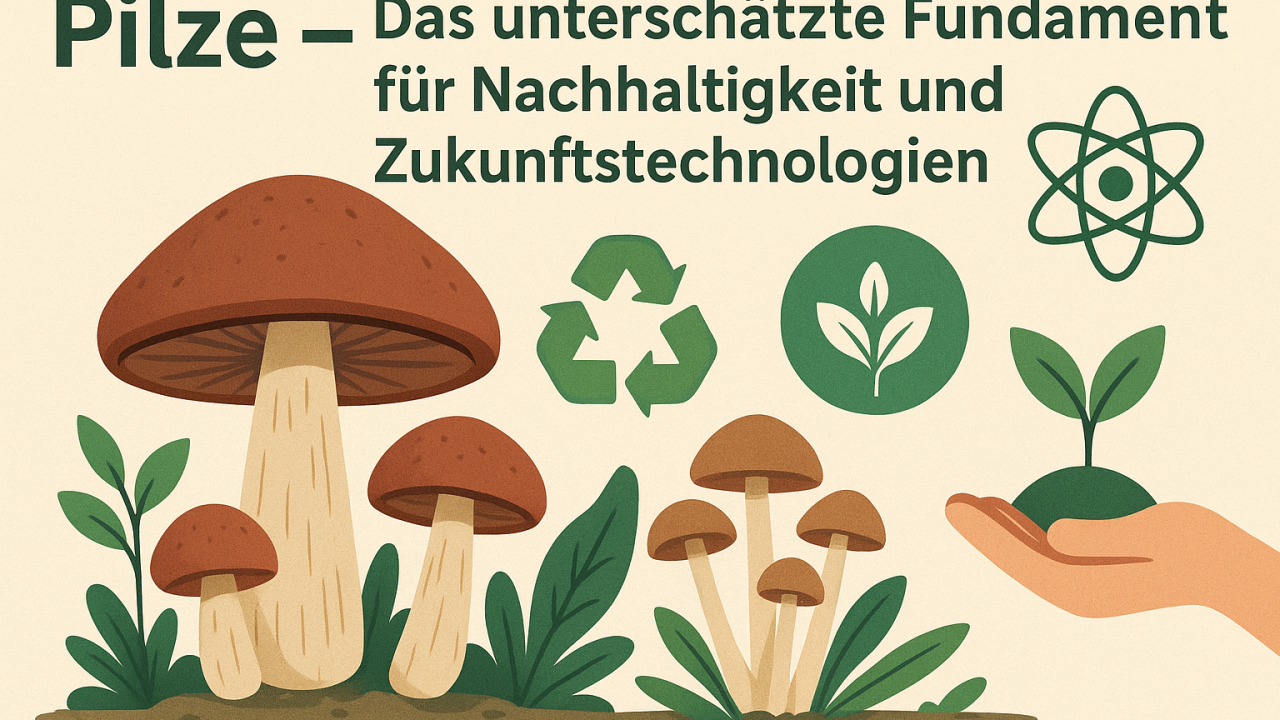
Mushrooms – The Underrated Foundation for Sustainability and Future Technologies

🍄 More Than Just Food – Mushrooms as a Resource for Nutrition, Health, and Industry

  • Food security: Many wild and cultivated mushrooms are valuable, nutrient-rich foods. They contain high-quality proteins, essential amino acids, carbohydrates, vitamins, minerals, and healthy fats.
  • Health: Mushrooms provide bioactive compounds with medical, pharmaceutical, and cosmetic potential—ranging from immune stimulants to anti-cancer agents.
  • Industrial applications: Fungi can serve as a renewable alternative to fossil resources—for example, in the production of bioplastics, enzymes, biofuels, and sustainable building materials.
  • Ecological services: Through their mycelial network, they regulate nutrient cycles, contribute to CO₂ sequestration, and can remove pollutants from the soil (mycoremediation).

📊 The Economic Dimension of Mushrooms

According to an initial global estimate (Hyde et al. 2019), the directly measurable economic value of fungi currently stands at around $54.6 billion —even though only about 8% of the estimated species have been studied. By comparison, the entire bio-based economy (including biotechnology, bioenergy, and bioplastics) is already valued at over 355 billion US dollars worldwide (BIO 2020).

Every job created in the bio-based industries generates a significant multiplier effect: In the United States, for example, a single direct job generates an average of 4.63 additional jobs in the supply and service sectors.

🌍 Mushrooms and the UN Sustainable Development Goals (SDGs)

Mushrooms contribute directly or indirectly to at least half of the 17 UN Sustainable Development Goals (SDGs), including in the following areas:

  • No Poverty & No Hunger (SDG 1 & 2) – Income for rural communities, nutritious food
  • Health & Well-being (SDG 3) – New Medicines & Prevention
  • Sustainable Consumption and Production Patterns (SDG 12) – Organic Production & Circular Economy
  • Climate Action (SDG 13) – Carbon Sequestration & Ecosystem Conservation
  • Life on Land (SDG 15) – Conservation of biodiversity and habitats

🔬 Untapped treasures: 90% of the fungal kingdom remains unknown

  • Scientists estimate that there are 2.2 to 3.8 million species of fungi worldwide—some analyses even suggest there may be as many as 5.1 million species.
  • Only about 151,000 species have been described so far—that is approximately 8%.
  • Every undiscovered species could be economically and medically significant —but could also be lost forever if its habitats are destroyed.

🚀 Future Potential: From Mycelium Building Materials to Space Missions

With the rapid advancement of biotechnology, revolutionary new applications are emerging:

  • Plastic-free packaging made from mycelium
  • Meat substitute with an authentic texture and high protein content
  • Building materials that sequester CO₂ and are recyclable
  • Next-generation pharmaceutical manufacturing
  • Aerospace: Self-healing structures made of mycelium for extraterrestrial habitat systems

⚠️ The Challenge: Protecting Against Overuse

The growing market poses risks: without targeted regulation, sustainable harvesting, and biodiversity conservation, there is a risk of overharvesting and the loss of unique species before their potential has even been realized.

💡 Conclusion: Time for a “Myco-Revolution”

The fungal kingdom could come to have a similar technological significance for the bioeconomy as the mastery of fire or the use of electricity once did. Hidden within its underground mycelial network lies a global nervous system of life that connects nutrition, ecological cycles, and climate protection.

👉 Now is the time to invest in research, sustainable use, and education—so that we don’t lose the treasure of mycofauna, but instead make it available for the benefit of humanity.

Contents

Share this post:
Sign up for our newsletter. No spam, no sharing of your information—just the latest news and interesting facts from the world of mushrooms. You can unsubscribe at any time.

Mycoverse Foundation
, Marktgass 11,
, 9490 Vaduz,
, Principality of Liechtenstein

info@mycoverse-foundation.org

MYCOVERSE Logo