
Architect and researcher specializing in vertical farming and resilient urban planning
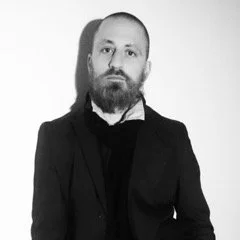
“Vertical farming is not just a technological innovation—it is a paradigm shift in the way we think about cities, food security, and environmental sustainability. Its full potential will only be realized when we combine architectural design with energy-efficient systems and a commitment to social responsibility.”
This conviction shapes the work of Daniel Podmirseg—architect, researcher, and founder of the Vertical Farm Institute—who is now regarded as one of the leading international experts on vertical farming and sustainable urban development. With his groundbreaking dissertation “Up! Contribution of Vertical Farms to Increase the Overall Energy Efficiency of Cities” (Cuvillier, 2016) and his visionary thesis project “SPUROPE 2050: A Vertical Farm for London in 2050,” he has elevated the topic of urban food production to a scientifically sound and architecturally innovative level.
Born in Merano, Italy, in 1976, he developed an early interest in understanding how urban systems function and how architecture, agriculture, and energy efficiency can be interwoven. His architectural studies at the renowned Academy of Fine Arts in Vienna (B.Arch., 2008) were built upon this vision, followed by his Ph.D. at Graz University of Technology (2015). His extensive professional experience at internationally renowned firms such as Coop Himmelb(l)au, JWA Architects, and BOA-Architecture shaped his perspective on environmental responsibility and innovative urban planning. Engaging with the challenges facing modern metropolises—food security, climate change, energy efficiency—has increasingly directed his focus toward how urban spaces can be transformed and how sustainable food production can be integrated into architectural systems.
In his professional work, he focuses on developing transformative solutions for urban agriculture and integrating production systems into building designs. As the founder and director of the Vertical Farm Institute (founded in 2016), he works with research institutions, companies, and policymakers to disseminate knowledge about vertical farming, its positive environmental impacts, and its practical implementation. In doing so, he places great emphasis on scientifically sound presentation and the integration of cutting-edge technology with sustainable urban development concepts.
A central focus of his work is the further development of vertical farming technology and its integration into urban infrastructure. He specializes in energy optimization, the circular economy, building systems, and architectural innovation, and supports projects in the development of forward-looking urban planning concepts.
His current research focuses on large-scale urban transformation projects. His groundbreaking 2024 feasibility study for Berlin proposed a revolutionary 40,000-square-meter urban development project that seamlessly integrates vertical farming into comprehensive urban planning. Under his leadership, the Vertical Farm Institute has launched transformative initiatives such as Cropify, the Skyberries Conference, and the Skyberries Academy, which promote knowledge exchange and technological innovation.
His exceptional contributions have earned him widespread recognition: he was nominated for Austrian of the Year 2020 for his climate initiatives, won the i4X Startup Moonshot Competition (2018), and received first prize for a research proposal on urban transformation, funded by the Robert Bosch Foundation (2017). His academic excellence extends to teaching positions at the University of Applied Arts Vienna, Graz University of Technology, and the Technical University of Berlin, where he teaches energy-efficient architecture and sustainable urban development.
He knows how to combine architectural innovation with environmental sustainability and social responsibility, and advocates for an integrative approach to urban development—as an interplay of architecture, agriculture, energy, and community. His work makes it clear that vertical farming is not merely a field of research for him, but also a concrete response to the pressing challenges of climate change and urban food security. At the Mycoverse Foundation, he contributes his expertise in energy-efficient building systems, the circular economy, and sustainable urban agriculture, helping to explore the potential for integrating controlled mycological cultivation systems into urban architectural frameworks—and making mycological production an integral part of resilient urban ecosystems.
Mycoverse Foundation
, Marktgass 11,
, 9490 Vaduz,
, Principality of Liechtenstein
Home | Vision | Projekte | Artikel | Vorstand/Beirat | Shop | Kontakt | Impressum/Datenschutz | Manage Cookie Settings