
Economist and associate professor at the Institute for Auditing, Trust Services, and Accounting at the Vienna University of Economics and Business.
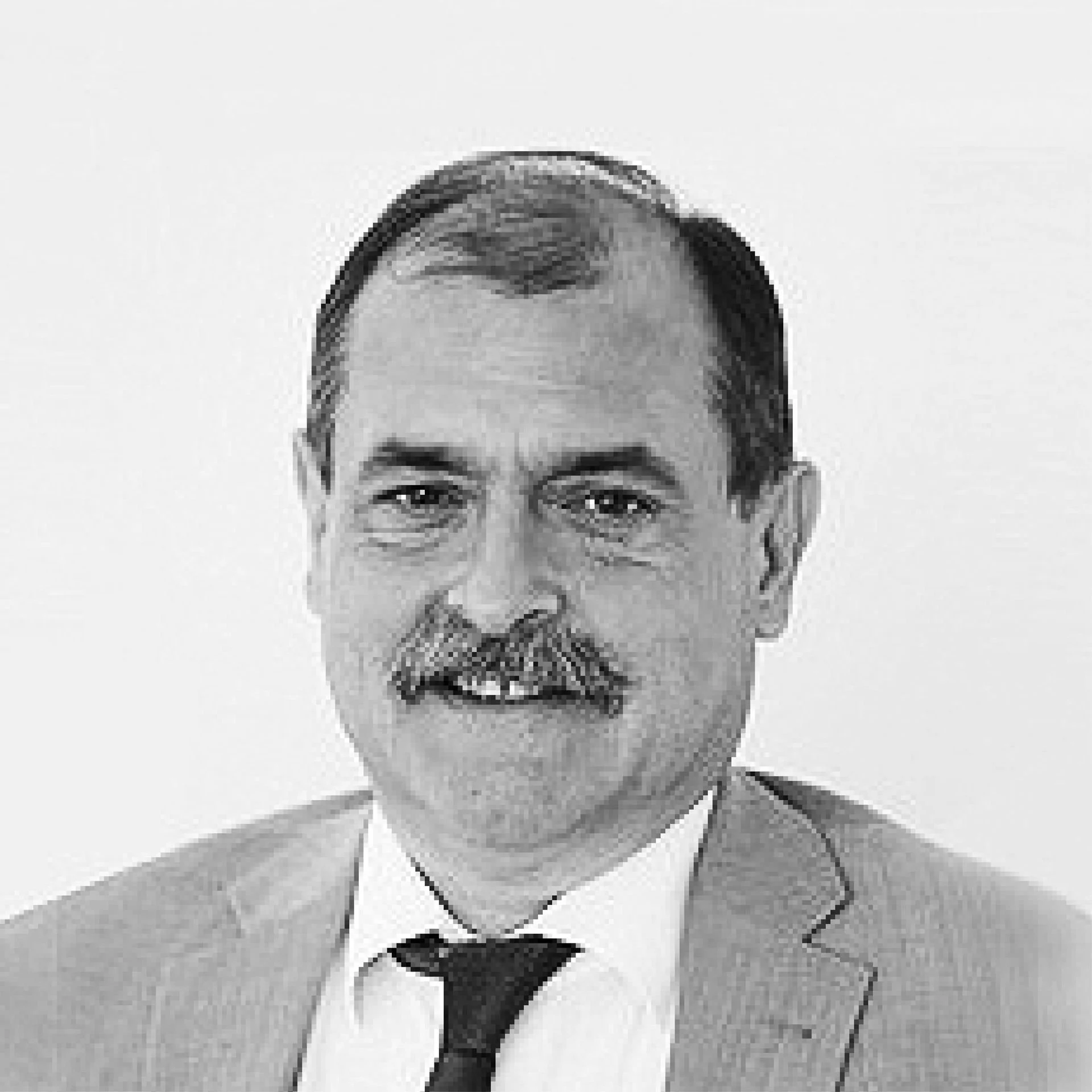
“True economic innovation does not come from optimizing existing systems—it comes from fundamentally rethinking the mechanisms that shape the economy and society. Understanding monetary, credit, and resource systems is the key to a more equitable and sustainable future.”
This conviction shapes the work of Prof. Dr. Franz Hörmann—an economist and associate professor at the Institute for Auditing, Trust Services, and Accounting at the Vienna University of Economics and Business, who is today regarded as one of the leading critical thinkers in the fields of monetary theory, accounting, and systemic economic reforms. With his habilitation thesis “PC Software Models in Accounting … Under the Influence of Technological Progress” (1994) and his critical analysis of the debt-money system, he has elevated the topics of economic systems and their societal impacts to a level that is both scientifically grounded and socially critical.
Even while studying business administration at the Vienna University of Economics and Business (1978–1983), he developed a passion for understanding how technological progress and systematic structures influence economic processes. His academic career was built on this foundation: His thesis on an integrated program system for piecework wage calculation in MBASIC, his doctoral dissertation (1984–1987), completed with distinction, on the topic “Automated, Integrated Accounting … using a software package written in the C programming language,” and his habilitation in 1994 demonstrate his early integration of economics and technological innovation. After graduating with honors from Maroltingergasse High School (1978), he established himself as an expert at the intersection of accounting, information technology, and system-critical economic analysis.
In his professional work, he focuses on monetary theory, particularly credit money and debt money (book money), and is critical of the fiat money system. Having served as an assistant professor and university lecturer since December 1995, he became an associate professor at the Institute for Auditing, Trust Services, and Accounting at the Vienna University of Economics and Business in March 1998. Since September 2001, he has served as an examiner for the Chamber of Public Accountants. He works with students, economic experts, and socially critical thinkers to impart knowledge about alternative economic systems and the mechanisms of monetary and credit systems. In doing so, he places great emphasis on the critical analysis of existing structures and their impact on society and democracy.
A central focus of his work is a critical examination of the tuition fee system and its social consequences. He explores monetary theory, accounting in the context of technological progress, and the analysis of systemic redistribution mechanisms.
His current academic work focuses on critiquing the fiat money system. In his view, the debt-based money system, with its interest and compound interest, leads to redistribution and inequality; he sees this as a threat to democracy and the rule of law. His research combines technological expertise with economic theory and social critique to develop and discuss systemic alternatives to conventional economic models.
He knows how to combine technological innovation with economic theory and social critique, and advocates for an integrative understanding of economic systems—as an interplay of monetary mechanisms, resource distribution, and democratic structures. His work makes it clear that, for him, economic systems are not neutral technical constructs, but rather malleable mechanisms that have a fundamental impact on justice, sustainability, and social structures. At the Mycoverse Foundation, he contributes his expertise in systemic analysis, resource distribution, alternative economic models, and critical thinking regarding value chains, helping to deepen the understanding of sustainable, equitable economic structures—and to develop perspectives on how mycological innovation can be integrated into the circular economy and alternative resource systems.
His experience in analyzing complex systems and his understanding of the interplay between technology, economics, and social structures are particularly relevant to the development of sustainable, equitable models in the mushroom industry and the commercialization of mycological innovations. In this way, he makes a significant contribution to the Foundation’s mission, which is economically sound, critically reflective of the system, and socially responsible.
Mycoverse Foundation
, Marktgass 11,
, 9490 Vaduz,
, Principality of Liechtenstein
Home | Vision | Projekte | Artikel | Vorstand/Beirat | Shop | Kontakt | Impressum/Datenschutz | Manage Cookie Settings