
Expert in sustainability and agricultural management
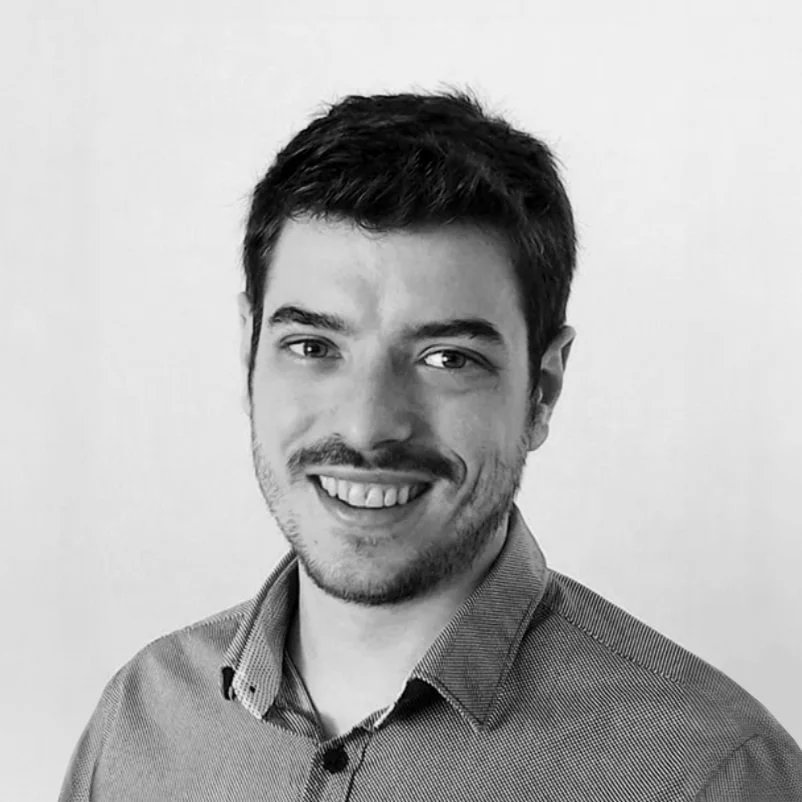
“The agriculture of the future must be more than just productive—it must be sustainable, regenerative, and in harmony with natural cycles. Mushrooms can play a key role in this: as a high-quality source of protein, as a soil enhancer, and as a solution for agricultural waste. Mycology is not just a branch of agriculture—it could be its future.”
This conviction shapes the work of Tobias Lienhard, B.Sc. in Agriculture—an agricultural scientist and sustainability expert who is now regarded as one of the leading experts in sustainable agriculture, agricultural management, and the integration of mushroom production into regenerative systems. With his expertise in sustainable farming methods, process optimization, market analysis, and networking in agricultural development, he has elevated the topics of circular economy in agricultural production and mushrooms as an integral part of sustainable systems to a level that is both scientifically sound and economically viable.
While studying agricultural sciences and technology (Bachelor of Science), he developed a deep understanding of the complex interrelationships within agricultural systems—from soil science and plant physiology to agricultural engineering. Building on this scientific foundation, he came to realize that traditional agriculture has reached its limits and must be fundamentally reimagined. The challenges—climate change, soil degradation, water scarcity, loss of biodiversity, and a growing global population—led him to the conviction that the agriculture of the future must undergo a transformation essential for survival. His professional career has consistently focused on sustainability in the agricultural sector, whereby he views sustainability not as a passing fad, but as a fundamental reorientation of food production.
In his professional work, he focuses on sustainable farming methods, regenerative agriculture, the circular economy in agricultural production, and the integration of various agricultural systems. His expertise includes agricultural management and process optimization, and he understands that even the most sustainable method will fail if it is not practical and economically viable. He works with farmers, scientists, policymakers, businesses, and NGOs in agricultural development networks to share knowledge about sustainable transformation and bring different stakeholders together to collaborate. In doing so, he places great emphasis on combining sustainability with economic viability and linking ecological and economic sustainability.
A central focus of his work is the optimization of production processes, resource management, and quality assurance, while maintaining environmental responsibility. He focuses on identifying weaknesses in traditional systems, developing improvement strategies, and implementing more efficient systems.
His current research focuses on integrating mushroom production into sustainable agricultural systems. His expertise in market analysis helps identify trends, recognize opportunities, and assess risks—which is particularly important for establishing new agricultural approaches such as professional mushroom production. His networking brings people together, initiates projects, shares knowledge, and promotes the exchange of best practices—work that is often unseen but fundamental to the success of sustainable agricultural initiatives.
From a sustainability perspective, mushrooms offer remarkable advantages: resource efficiency (growing on agricultural waste), land efficiency (vertical production), water efficiency (a fraction of the water required for meat production), climate friendliness (low greenhouse gas emissions), and circular economy (recycling of waste, production of valuable substrates for soil improvement). His particular vision is the integration of mushroom production into existing agricultural systems: farmers could use their waste for mushroom production, utilize spent mushroom substrate as a soil conditioner, and integrate mushrooms into agroforestry systems.
He knows how to combine scientific understanding with practical management expertise, market knowledge, and networking, and advocates for an integrative approach to agriculture—as the interplay of ecology, economy, and social responsibility. His work makes it clear that, for him, mushrooms are not isolated products, but integral components of holistic, sustainable agricultural systems that can make fundamental contributions to solving the most pressing challenges of our food production. At the Mycoverse Foundation, he brings his expertise in sustainable agriculture, agricultural management, process optimization, market analysis, and agricultural networking to bear, helping to establish mushroom production not as a niche but as a relevant component of sustainable agriculture—and to develop viable business models that make sense both ecologically and economically.
His systemic perspective helps us understand how mushroom production can be made more efficient, quality standardized, and production processes optimized—which is particularly important for scaling up small niche producers into a significant component of food production. In doing so, he makes a significant contribution to a future that is grounded in agricultural science, designed to be sustainable, and economically viable—and in which mushrooms play a key role in the regenerative transformation of agriculture.
Mycoverse Foundation
, Marktgass 11,
, 9490 Vaduz,
, Principality of Liechtenstein
Home | Vision | Projekte | Artikel | Vorstand/Beirat | Shop | Kontakt | Impressum/Datenschutz | Manage Cookie Settings