
The genus Psilocybe, a member of the Hymenogastraceae family, comprises more than 140 known species worldwide, making it one of the most diverse groups of psychoactive fungi. Particularly notable is its ability to produce the psychoactive indoles psilocybin and psilocin.
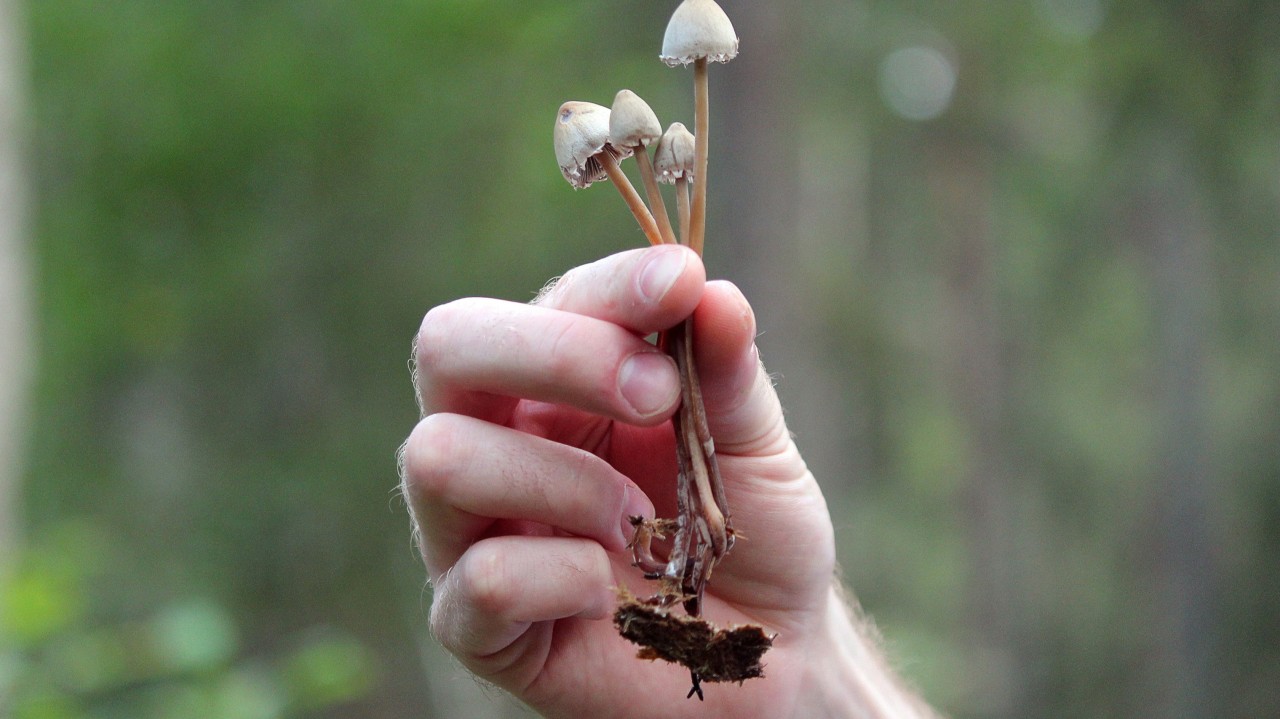
The genus Psilocybe, a member of the Hymenogastraceae family, comprises more than 140 known species worldwide, making it one of the most diverse groups of psychoactive fungi. Particularly notable is its ability to produce the psychoactive indoles psilocybin and psilocin. Not every species exhibits psychoactive properties—several species within the genus are pharmacologically inactive. A distinctive identifying feature of many, but not all, Psilocybe mushrooms is the distinct blue discoloration of their fruiting bodies when subjected to mechanical stress, an indicator of the breakdown process of psilocybin into psilocin.
Psilocybe species can be found in a wide variety of habitats: they grow on wood, decaying plant matter, dung, or directly on the ground. Their ecological role is primarily that of saprophytes—they play a key role in the decomposition of organic matter and the formation of humus in many ecosystems. Some species, such as Psilocybe azurescens, are considered particularly potent “wood lovers,” while others, such as Psilocybe cubensis, are classic “manure lovers” found in tropical regions.
In addition to their psychoactive effects, research is now also exploring the possibility that mushrooms of the genus Psilocybe produce secondary plant compounds with antimicrobial or antioxidant effects—a current focus of pharmacognosy.
The Liberty Cap (Psilocybe semilanceata) stands out as one of the most popular and potent species, particularly in Europe and North America.
The diversity and adaptability of this genus make it a "blue goldmine" for mycologists and medical researchers alike.
Psilocybin mushrooms have a centuries-old tradition in the shamanic rituals of indigenous peoples in Central and South America. Their use dates back to pre-Columbian times, when stone and ceramic figurines point to ritual mushroom ceremonies and depictions of the mushroom spirit.
The first documented case of "poisoning" from Psilocybe semilanceata dates back to London in 1799, when a family experienced unexpected hallucinations after eating wild mushrooms.
Pharmacology: The psychoactive compound psilocybin is converted in the body into psilocin, which primarily acts on the brain’s serotonin 5-HT2A receptors. Activation of these receptors triggers altered perception, synesthetic experiences, and often profound emotional and cognitive insights. The effects vary from person to person depending on the dose and are strongly influenced by set and setting (mental state and environment).
Modern therapy: In controlled clinical trials, a single or repeated dose of psilocybin—usually administered in a therapeutically supervised setting—has led to improvements, some of which are long-lasting, in:
According to current research, these effects are not solely due to biochemical receptor binding, but also to profound changes in neural network communication within the brain. In particular, activity in the default mode network is modulated, and new neural connections are formed—a possible mechanism for the increased openness, self-reflection, and flexibility observed following treatment.
The current body of research is supported by international institutions such as the FDA, which designated psilocybin as a “Breakthrough Therapy” for severe depression (2025).
Psilocybe mushrooms play a key role in the ecosystem: they break down organic matter and improve soil structure, a process that is particularly evident in extensive pastures and forests. Their targeted cultivation (indoor vs. outdoor) raises questions about sustainability and the conservation of rare wild species.
At the same time, interest in synthetic psilocybin is growing as a way to conserve wild populations and ensure medical purity. Synthetic psilocybin offers the possibility of providing standardized, safe dosages for clinical applications.
The rediscovery of psychedelic mushrooms in modern research has been accompanied by a growing public debate about their potential benefits and risks. Initiatives such as “Mushroom Mondays” and international organizations like the Mycoverse Foundation promote an informed, science-based discourse and advocate for patient protection and evidence-based regulation.
This remains a dynamic field: developing standardized, controlled forms of psilocybin therapy, distinguishing them from self-medication, and establishing a legal framework are key challenges for the coming years.
Psilocybe mushrooms are far more than just psychedelic “magic mushrooms”: they combine ecological diversity, pharmacological depth, and social relevance with a potential that could have a lasting impact on modern medicine. Research into them demands respect, responsibility, and scientific rigor—both in the laboratory and in public discourse. I’m happy to answer any further questions about other mushroom genera, ecological characteristics, or current research.
Mycoverse Foundation
, Marktgass 11,
, 9490 Vaduz,
, Principality of Liechtenstein
Home | Vision | Projekte | Artikel | Vorstand/Beirat | Shop | Kontakt | Impressum/Datenschutz | Manage Cookie Settings