
Pioneer in soil microbiology
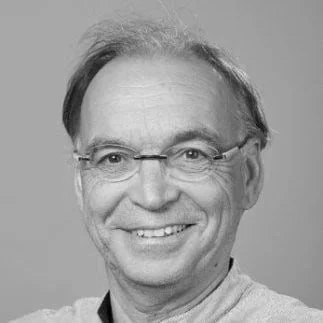
“The invisible world of microbes shapes the visible world in which we live. Without an understanding of these microbial processes, we cannot fully comprehend the cycles of life—let alone restore them.”
This insight runs through the entire body of work of Professor Heribert Insam—a visionary microbiologist whose research bridges the gap between the smallest organisms on our planet and the greatest ecological challenges of our time. With his books *Microbial Communities*, *Microbiology of Composting*, *Microbes at Work*, and *Recycling of Biomass Ashes*, he has elevated the fields of soil microbiology and the circular economy to a level that is both scientifically sound and practically oriented.
After earning his doctorate from the University of Innsbruck in 1985, he embarked on a scientific journey that would take him from the Austrian Alps to Braunschweig, Calgary, and eventually around the world. His early research focus on the dynamics of organic carbon in soil proved to be groundbreaking—long before climate change became a global priority, he had already recognized the fundamental role of soil microbiology in the health of our planet. His work on projects to remediate coal mines and restore forests in Germany, China, and later in Austria demonstrated his special gift early on: the ability to translate scientific findings into practical solutions for damaged ecosystems.
After completing his habilitation in 1991, his research focus shifted to the microbiology of composting. He founded his research group, “Microbial Resource Management,” and in 2006 took the step of turning his scientific vision into a business reality. As a co-founder of Bio4Gas and BioTreaT GmbH, he brought biological treatment and recycling technologies from the laboratory into practical application. In 2011, he was appointed full professor at the University of Innsbruck. For the next ten years, he headed the Chair of Microbiology and served as spokesperson for the Center for Environmental Sciences and Biotechnology. His research continually expanded into new, forward-looking areas: from the microbiome of the black soldier fly to innovative solutions in wastewater treatment.
When the pandemic swept the world in 2020, he took charge of establishing Austria’s nationwide SARS-CoV-2 wastewater monitoring system—a system that became a vital early warning system for waves of infection.
Throughout his academic career, Heribert was not only a researcher but also a passionate mentor. Over 80 master’s theses and 20 doctoral dissertations were completed under his supervision. As the editor of four influential books published by Springer, he created seminal works that have shaped generations of researchers. For more than 20 years, he served as editor-in-chief of the renowned journals “Geoderma” and “Applied Soil Ecology.” His international collaborations took him to Argentina, Burkina Faso, China, Costa Rica, Ethiopia, France, Italy, and Mexico.
Since retiring from the university in 2023, he has been realizing a long-cherished dream through the “Science Center MikroMondo”: to introduce the public to the fascinating world of microbes and to combine science with art.
He knows how to combine scientific rigor with practical application and advocates for a holistic understanding of ecosystems—as the interplay of microbial communities that form the foundation of all life. As a member of the Mycoverse Foundation’s Scientific Advisory Board, he brings decades of expertise in soil microbiology, composting, and microbial cycling processes to the table. His work reminds us that fungi do not exist in isolation but are part of a larger microbial ecosystem, and helps to integrate this holistic understanding—from the molecular level to the global carbon cycle—into the Foundation’s research.
Mycoverse Foundation
, Marktgass 11,
, 9490 Vaduz,
, Principality of Liechtenstein
Home | Vision | Projekte | Artikel | Vorstand/Beirat | Shop | Kontakt | Impressum/Datenschutz | Manage Cookie Settings