
Hier ist eine Zusammenfassung des Artikels in wenigen Sätzen:
Das Mykologische Transformationsprotokoll kombiniert Psilocybin-Therapie mit den Funktionspilzen Löwenmähne, Reishi und Cordyceps in vier Phasen (Vorbereitung, Sitzung, akute Integration, langfristige Ernährung). Die Pilze unterstützen die Neuroplastizität durch BDNF-Förderung, Entzündungshemmung und metabolische Stabilisierung — was die Behandlungsergebnisse stabilisiert und die hohe Ergebnisvarianz der Psilocybin-Therapie reduziert. Das Protokoll adressiert die SDGs 3, 10 und 12, da Pilze lokal und nachhaltig anbaubar, erschwinglich und kulturell anpassbar sind. Es bietet eine praktische, evidenzbasierte Intervention für mehr therapeutische Zuverlässigkeit und globale Gesundheitsgerechtigkeit.
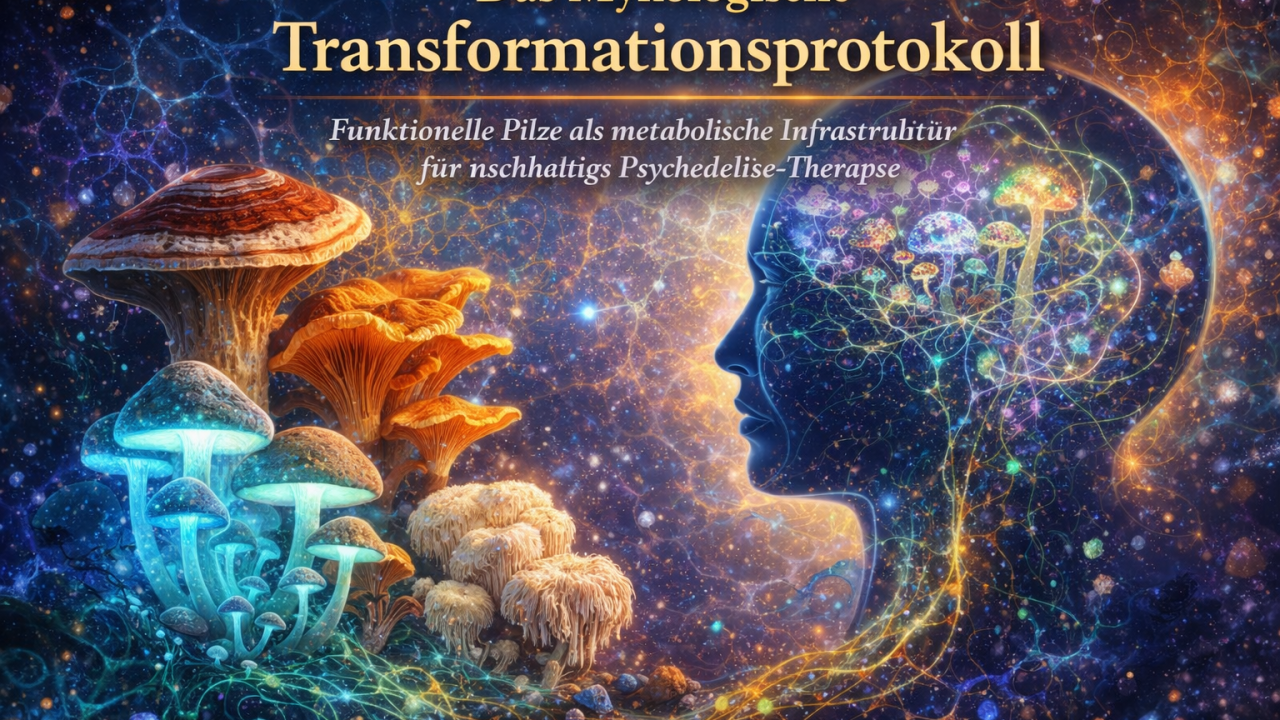
The Mycological Transformation Protocol: Combining Psilocybin with Medicinal Mushrooms for Lasting Therapeutic Change and Global Health Equity
Dr. Lucas Pawlik
Zusammenfassung:
Das Mykologische Transformationsprotokoll kombiniert Psilocybin-Therapie mit Funktionspilzen (Löwenmähne, Reishi, Cordyceps) in vier Phasen, um Behandlungsergebnisse zu stabilisieren und Zugangsbarrieren zu senken. Es adressiert die SDGs 3, 10 und 12 durch verbesserte Neuroplastizität, reduzierte Entzündungen und nachhaltige, lokal anbaubare Interventionen – evidenzbasiert, praktisch und global umsetzbar.
Introduction: Why Mushrooms and Psilocybin Go Hand in Hand Today
Psilocybin-assisted therapy has established itself as one of the most promising treatments for depression, PTSD, addiction, and existential distress. Clinical studies consistently show rapid, lasting improvements that often surpass those achieved with conventional treatments. Nevertheless, two key challenges remain:
Treatment outcomes vary widely—some patients experience a profound, lasting transformation, while others see little benefit. Access is severely limited—a single psilocybin session costs between $1,000 and $5,000 in the United States, making it unaffordable for the vast majority of the world’s population.
At the same time, medicinal and edible mushrooms—such as lion’s mane, reishi, shiitake, cordyceps, and dozens of others—have been used therapeutically for thousands of years in Asian, indigenous, and traditional European medical systems. Modern research confirms many of their traditionally recognized effects: neuroprotection, anti-inflammatory properties, immunomodulation, mitochondrial support, and cognitive enhancement.
This article proposes a simple intervention: the systematic combination of medicinal mushrooms with psilocybin therapy in four phases—before, during, immediately after, and in the months following a psychedelic session.
This reasoning is not speculative. It is based on established mechanisms through which medicinal mushrooms promote neuroplasticity, reduce inflammation, and optimize metabolism. Added to this are the well-known prerequisites for the effects of psilocybin to consolidate into lasting changes, clinical observations that integration practices determine therapeutic durability, and global health equity considerations that require affordable and accessible interventions.
This protocol directly addresses three UN Sustainable Development Goals:
SDG 3 (Good Health and Well-being): By reducing treatment variability and expanding access through affordable dietary interventions, more people can benefit from psychedelic therapy. Furthermore, a diet rich in mushrooms offers fundamental benefits for mental and physical health, regardless of whether psychedelics are used.
SDG 10 (Reduced Inequalities): Medicinal mushrooms are among the most affordable therapeutic interventions available. Many can be cultivated locally at minimal cost. By demonstrating that therapeutic outcomes can be improved through diet—without relying exclusively on expensive pharmaceuticals—economic barriers to mental health care are reduced.
SDG 12 (Responsible Consumption and Production): Mushroom cultivation is environmentally sustainable—it requires minimal amounts of water, no arable land, and derives protein and nutrients from agricultural waste. The adoption of mushroom-based diets promotes food security and environmental resilience.
The protocol described here is practical, evidence-based, and can be implemented today. Finally, an emerging hypothesis—Lee Carroll’s “gourmet ape” theory—is presented, suggesting that these benefits may run deeper than we currently understand. However, the protocol does not depend on this hypothesis being true. It works based on what we already know.
The Evidence Base: What We Know About Functional Mushrooms and Neuroplasticity
Before a protocol is proposed, it must be demonstrated why functional mushrooms are plausible adjunct interventions for psychedelic therapy.
Lion's Mane (Hericium erinaceus): Direct neurotrophic support
Established effects: Increases the expression of nerve growth factor (NGF) and brain-derived neurotrophic factor (BDNF). Promotes neuronal differentiation and myelination. Improves cognitive function in cases of mild cognitive impairment (human randomized controlled trials). Supports hippocampal neurogenesis (animal models). May protect against neurodegenerative diseases.
Relevance to psilocybin therapy: The long-lasting therapeutic effects of psilocybin correlate with sustained BDNF-TrkB signaling. Lion’s Mane offers an independent pathway for upregulating neurotrophic factors and may potentially enhance and prolong the neuroplastic window opened by psilocybin.
Reishi (Ganoderma lucidum): entzündungshemmende Grundlage
Etablierte Wirkungen: starke Entzündungshemmung über Modulation des NF-κB-Signalwegs. Immunregulation (balanciert Th1/Th2-Reaktionen). Neuroprotection gegen oxidativen Stress. Verbessert die Schlafqualität und -dauer. Reduziert Angst in klinischen Studien.
Relevanz für die Psilocybin-Therapie: Chronische Entzündung dämpft die Neuroplastizität, indem sie die BDNF-Verfügbarkeit reduziert und die synaptische Funktion stört. Reishis entzündungshemmende Wirkungen können einem vorzeitigen Schliessen des neuroplastischen Fensters vorbeugen. Darüber hinaus ist die Schlafqualität entscheidend für die Gedächtniskonsolidierung und das synaptische Remodeling während der Integration.
Cordyceps (Cordyceps militaris): metabolische und energetische Unterstützung
Proven effects: Improves cellular ATP production. Increases oxygen utilization and endurance. Supports mitochondrial biogenesis. Reduces fatigue in chronic fatigue syndrome. Modulates the HPA axis (stress response).
Relevance to psilocybin therapy: Neuroplastic remodeling is energetically demanding. Sustained phosphorylation cascades, dendritic sprouting, and synaptogenesis require ATP. Cordyceps provides the metabolic substrate for these processes. Integration fatigue—which is common after intensive sessions—may reflect this metabolic demand.
Edible mushrooms (shiitake, maitake, oyster mushrooms, etc.): Nutrient density and availability
Proven benefits: Rich in ergothioneine (a dietary antioxidant with a unique transporter in the human body). Rich in B vitamins (especially B5, B3, and B2—essential for neurotransmitter synthesis). Contains beta-glucans (immune modulation, prebiotic effects). Provides selenium, copper, and other trace elements. Low in calories, filling, and environmentally sustainable.
Relevance to psilocybin therapy: These mushrooms provide essential nutritional support that optimizes overall health—a prerequisite for any therapeutic intervention to be effective. They are also affordable, culturally familiar in many regions, and palatable, making long-term adherence realistic.
The Neuroplasticity Timeline
Understanding when these interventions are effective requires an understanding of psilocybin’s neuroplastic timeline:
Akutphase (0–8 Stunden): 5-HT2A-Rezeptoraktivierung → Glutamatfreisetzung → BDNF-Freisetzung → TrkB-Aktivierung → sofortige Gentranskriptionsänderungen. Subakutphase (1–7 Tage): Proteinsynthese, dendritisches Aussprossen, Einleitung der Synaptogenese. Integrationsphase (1–4 Wochen): synaptisches Remodeling, Myelinisierung, funktionelle Netzwerkreorganisation. Nachhaltige Phase (1–6 Monate): Konsolidierung oder Regression — Veränderungen stabilisieren sich entweder auf einem neuen Ausgangsniveau oder klingen ab.
Functional mushrooms can support every stage through complementary mechanisms.
The Four-Phase Mycological Preparation Protocol
Phase 1: Preparation phase (4–6 weeks before the session)
Goal: To optimize baseline metabolic, inflammatory, and neuroplastic capacity.
Primary mushrooms: Lion’s Mane: 1–3 g of dried fruiting body daily (or 500–1500 mg of double-extract supplement). Reishi: 1–2 g of extract daily (double extract). Shiitake/Maitake: 50–150 g fresh weekly (or 10–30 g dried), incorporated into meals.
Optional additions: Cordyceps: 1–2 g daily for fatigue or low energy levels. Reishi mushroom: 1 g daily to support the gut-brain axis.
Reasoning: Upregulation of baseline BDNF expression (Lion’s Mane). Reduction of chronic inflammation (Reishi). Establishing mushroom consumption as a familiar, sustainable habit (edible mushrooms). Allowing time for the bioaccumulation of beneficial compounds.
Implementation: Weeks 1–2: Introduce Lion’s Mane and Reishi; monitor gastrointestinal tolerance. Weeks 3–4: Add Cordyceps as needed; begin cooking with Shiitake/Maitake 2–3 times a week. Weeks 5–6: Full regimen established; recipes become routine.
Preparation tips: In the morning: Lion’s Mane and Cordyceps (for cognitive and energy support throughout the day). In the evening: Reishi tea (calming, promotes sleep). Meals: Shiitake in soups and stir-fries; Maitake in broths.
Phase 2: Day of the Meeting
Ziel: metabolische Stabilität und Erdung des Nervensystems gewährleisten.
Primary mushrooms: Reishi tea (2–3 hours before the session): 2–3 g, simmer for 20–30 minutes. Chaga tea (optional during the session): drink as desired. Lion’s Mane broth (after the peak, 6–8 hours): light vegetable and mushroom soup.
Reasoning: Reishi modulates the stress response without causing sedation (its traditional “calming” use). Chaga provides antioxidant protection during a metabolically demanding experience. Lion’s Mane broth facilitates a gentle return to eating and continues to provide neurotrophic support.
Umsetzung: Morgens: leichtes Frühstück; Reishi-Tee 2–3 Stunden vor der Psilocybin-Einnahme. Während der Sitzung: Wasser, Elektrolyte; Chaga-Tee verfügbar, aber nicht erforderlich. Nach dem Höhepunkt: Warme Löwenmähnen-Brühe mit Gemüse, Miso und Ingwer. Vermeiden: Schwere Mahlzeiten vor der Sitzung (verlangsamen die Absorption); entzündungsfördernde Lebensmittel danach (belasten das System).
Phase 3: Acute Integration (Days 1–7 after the session)
Ziel: Das neuroplastische Fenster offenhalten; vorzeitiges Schliessen verhindern.
Medicinal mushrooms: Lion’s Mane: 2–4 g daily (higher therapeutic dose). Reishi: 1–2 g daily. Edible mushrooms: 100–200 g fresh daily (or 20–40 g dried).
Optional supplements: Butterfly mushroom: 1–2 g daily to support the gut-brain axis (dysbiosis can trigger neuroinflammation). Cordyceps: 1–2 g when energy or motivation levels are low.
Reasoning: The most significant neuroplastic remodeling occurs during the first week. High levels of neurotrophic support maximize synaptogenesis. Anti-inflammatory protection prevents inflammation-induced inhibition of plasticity. Edible mushrooms provide the nutritional foundation for energy-intensive remodeling.
Daily routine: Lion’s Mane (morning), Reishi (evening), edible mushrooms in 1–2 meals. Prioritize sleep: 8 or more hours; Reishi tea before bed. Additional activities: gentle exercise, journaling, spending time in nature, integrative therapy.
Häufige Fehler, die zu vermeiden sind: sofortige Rückkehr zu stark stressbelasteten Routinen. Entzündungsfördernde Ernährung (verarbeitete Lebensmittel, übermässiger Zucker und Alkohol). Schlafentzug (stört die Konsolidierung).
Phase 4: Long-term integration and sustainable mushroom-based diet (Weeks 2–12 and beyond)
Ziel: therapeutische Gewinne festigen; dauerhafte Ernährungsumstellung etablieren.
Rotation of medicinal mushrooms (to prevent the development of tolerance): Weeks 1–2: Lion’s Mane (1.5–2 g) and Reishi (1 g). Weeks 3–4: Cordyceps (1.5 g) and Butterfly Mushroom (1 g). Weeks 5–6: Lion’s Mane (1.5 g) and Chaga tea. Weeks 7–8: Reishi (1 g) and Cordyceps (1.5 g). Repeat the cycle.
Basic ingredients (3–7 times a week): High frequency: shiitake, oyster mushrooms, maitake. Medium frequency: king oyster mushrooms, fresh lion’s mane mushrooms, enoki mushrooms. Occasionally: chanterelles, morels, porcini mushrooms (seasonal and when available).
Sample Weekly Meal Plan: Monday: Shiitake miso soup (breakfast); Lion’s Mane supplement. Tuesday: Oyster mushroom stir-fry (dinner); Reishi tea (evening). Wednesday: Cordyceps supplement; Maitake chicken soup (lunch). Thursday: Grilled king oyster mushroom “steaks” (dinner); chaga tea. Friday: Freshly sautéed lion’s mane (dinner); lion’s mane supplement. Saturday: Mixed mushroom risotto with porcini mushrooms; reishi supplement. Sunday: Mushroom broth for noodle soup; butterfly mushroom supplement.
Kochtechniken für maximalen Nutzen: Gründlich garen: Baut Chitin ab und verbessert die Nährstoffbioverfügbarkeit. Sonnentrocknung oder UV-Belichtung: Erhöht den Vitamin-D-Gehalt dramatisch (Pilzscheiben mit den Lamellen nach oben 1–2 Stunden in der Sonne platzieren). Brühen und Suppen: Extrahieren wasserlösliche Polysaccharide. Anbraten mit Fett: verbessert die Aufnahme fettlöslicher Verbindungen. Fermentation: Miso und Sojasosse liefern zusätzliche bioaktive Stoffe.
Evidence-based prioritization of fungi
If the full transcript seems overwhelming or resources are limited:
Level 1 (Essential — Start Here): Lion’s Mane: strongest evidence for neuroplasticity; well-tolerated; dual use as both an edible and medicinal mushroom. Reishi: best anti-inflammatory profile; supports sleep; crucial for integration. Shiitake (culinary): accessible, nutritious, delicious, and easy to cook with regularly. Cost: about $30–50 per month for supplements and fresh edible mushrooms.
Stufe 2 (sehr vorteilhaft — bei Bereitschaft hinzufügen): Cordyceps: bei Erschöpfung oder wenn Energie eine Integrationsbarriere darstellt. Maitake (kulinarisch): hervorragend für Brühen; Immununterstützung. Austernpilze (kulinarisch): erschwinglich, vielseitig und anfängerfreundlich. Zusätzliche Kosten: etwa 20–30 US-Dollar pro Monat.
Stufe 3 (synergistisch — für ein umfassendes Protokoll): Schmetterlingsporling: Absicherung der Darm-Hirn-Achse. Chaga: höchster Antioxidantiengehalt; traditionelles Tonikum. Kräuterseitling (kulinarisch): fleischige Textur; hoher Proteingehalt. Zusätzliche Kosten: etwa 20 US-Dollar pro Monat.
Total cost for the comprehensive program: Complete supplements and edible mushrooms: approximately $70–100 per month. Level 1 only: approximately $30–50 per month. Home cultivation (after the initial investment): approximately $10–20 per month on an ongoing basis.
For comparison: A psilocybin therapy session in the U.S.: $1,000–$5,000. Monthly SSRI prescription: $10–$200 (often required for years). Therapy sessions during the integration phase: $100–$300 per session.
Addressing the Variance Problem: Why It Is Crucial for Equity
The greatest weakness of psilocybin therapy is its unpredictability. Two patients with similar diagnoses, identical doses, and comparable settings can experience very different outcomes. One may achieve lasting remission, while for the other, the benefits are modest and temporary.
This variability is not just a clinical problem—it is a matter of fairness. If consistently good results cannot be achieved, access cannot be scaled responsibly. Regulatory approval stalls. Insurance companies refuse to cover the costs. Only those who can afford multiple sessions at $3,000 each have the opportunity to try again if the first session does not work.
Functional mushrooms could reduce this variability by optimizing the physiological substrate on which psilocybin acts: Less chronic inflammation leads to more consistent BDNF-TrkB signaling. Improved mitochondrial function enables a more reliable supply of ATP for remodeling. Higher baseline neurotrophic factors produce a greater neuroplastic response to the same dose of psilocybin. Improved sleep and stress regulation leads to better integration outcomes.
If the mycological preparation protocol increases the proportion of patients who achieve remission—for example, from 60 to 75 percent—the impact at the population level is enormous. This means fewer repeat sessions (lower costs per successful treatment), faster regulatory approval (more consistent study results), stronger arguments for insurance coverage, and greater feasibility in resource-poor settings where medicinal mushrooms are often already available. This is SDG 10 (Reduced Inequalities) in practice.
Global Implementation: Mushrooms as Local, Sustainable Medicine
One of the most compelling aspects of this protocol is its global adaptability.
Regional mushroom availability: East Asia: Shiitake, maitake, enoki, and lion’s mane are already staples; reishi and cordyceps are traditional medicinal mushrooms. Europe: Oyster mushrooms, chanterelles, and porcini are widespread; growing interest in lion’s mane cultivation. America: Oyster mushrooms are common; shiitake are increasingly cultivated; butterfly mushrooms are native to forests. Africa: Oyster mushrooms grow on agricultural waste such as cassava and banana stems; lion’s mane can be cultivated locally. South Asia: Oyster mushrooms, straw mushrooms; traditional use of various Ganoderma species.
Community-Based Mushroom Farming: Mushroom farming is uniquely suited to community-based production. It requires minimal infrastructure (simple plastic bags, buckets, or tree trunks are sufficient). It thrives on waste products such as coffee grounds, straw, cardboard, and sawdust. The production cycle is short (oyster mushrooms: 2–3 weeks from substrate to harvest). The nutritional output per input is high. It can be carried out in urban, suburban, and rural settings.
Fallstudie: In Kenia auf Kaffeesatz angebaute Austernpilze bieten zugleich Einkommen, Ernährung und eine Lösung zur Abfallverwertung. Therapeutische Implikation: Gemeinschaften, die sich auf psychedelisch gestützte Therapieprogramme vorbereiten — während sich die rechtlichen Rahmenbedingungen global weiterentwickeln — können lokalen Pilzanbau als Ernährungsintervention und als wirtschaftliche Chance etablieren.
Beyond Psilocybin: Fundamental Benefits for Mental Health
It is crucial that this protocol also offers benefits to people who will never have access to psilocybin therapy. A mushroom-rich diet with targeted medicinal mushroom supplementation reduces symptoms of depression and anxiety (Reishi studies), improves cognitive function in aging populations (Lion’s Mane studies), strengthens immune resistance (several species), supports cardiovascular health (statins in oyster mushrooms, polysaccharides in maitake), and provides a sustainable, affordable source of protein and micronutrients.
SDG 3 (Health) is addressed regardless of whether psychedelic therapy is used. The protocol does not depend on access to controlled substances—it serves as a fundamental preventive measure for mental health.
Der Horizont: Lee Carroll’s Gourmet-Affe-Hypothese
Everything described so far is supported by current evidence. We know that lion’s mane increases neurotrophic factors. We know that reishi reduces inflammation. We know that neuroplasticity requires metabolic support, and we know that the effects of psilocybin vary from person to person—which suggests that physiological readiness plays a role.
But there may be more to this story—something deeper and older.
Lee Carrolls Gourmet-Affe-Hypothese schlägt vor, dass die Beziehung zwischen Menschen und Pilzen nicht bloß ernährungsbedingt, sondern koevolutionär ist. Die Hypothese besagt, dass Ergothionein — ein schwefelhaltiges Antioxidans, für das Menschen ein eigenes Transporterprotein besitzen — als „metabolischer Bereitschaftsprimer“ fungieren kann, der die neuroplastische Signalgebung stabilisiert, insbesondere durch den BDNF-TrkB-Signalweg.
In Carroll’s framework, chronic exposure to ergothioneine through edible mushrooms creates favorable redox, metabolic, and membrane conditions for sustained neuroplastic signaling. Psilocybin then produces enhanced, more consistent effects in ergothioneine-primed individuals. Over evolutionary time scales, this could have created a positive feedback loop: individuals who consumed mushrooms had improved learning capacity, which made them better foragers, which in turn increased mushroom consumption.
This puts Terence McKenna’s “Stoned Ape” hypothesis in a new light: Psilocybin may have catalyzed cognitive evolution, but ergothioneine provided the metabolic substrate that allowed these changes to stabilize and spread.
Carroll’s hypothesis extends beyond the brain. Ergothioneine can modulate hundreds of redox-sensitive proteins in all tissues—mitochondrial enzymes, transcription factors, cytoskeletal proteins, and immune regulators. In this broader perspective, fungi not only underpin neuroplasticity; they reduce global oxidative and metabolic constraints and lower the physiological costs of maintaining complex, energy-intensive phenotypes such as large brains, extended lifespans, and high-performance musculature.
Wenn Carroll recht hat, ist die Kombination aus Funktionspilzen und Psilocybin-Therapie nicht nur eine Optimierung bekannter Wege — sie rekapituliert die evolutionären Bedingungen, unter denen die menschliche Kognition möglicherweise entstanden ist. Das therapeutische Protokoll zielt auf eine Rückkehr zu einer uralten Beziehung ab.
Wenn Carroll unrecht hat — oder nur teilweise recht, oder recht, aber unvollständig — funktioniert das Protokoll dennoch auf der Grundlage der bereits beschriebenen etablierten Mechanismen. Das ist die Schönheit dieses Ansatzes: Er hängt nicht von der spekulativen Hypothese ab, aber diese Hypothese legt nahe, dass die Vorteile möglicherweise noch grösser sind, als die aktuelle Evidenz zeigt.
Conclusion: From Evidence to Practice, From the Individual to the Global Community
This protocol is based on three pillars.
First, based on current scientific evidence: functional mushrooms support neuroplasticity, reduce inflammation, boost metabolism, and improve mental health outcomes regardless of whether they are used in a psychedelic context.
Second, regarding clinical needs: Psilocybin therapy exhibits significant variability; reducing this variability makes the treatment more reliable, scalable, and equitable.
Third, global health equity: Mushrooms are affordable, sustainable, and can be grown locally, making this intervention accessible in resource-limited settings where expensive synthetic pharmaceuticals are not available.
By integrating functional mushrooms into psilocybin therapy across four phases—preparation, session day, acute integration, and long-term dietary changes—we address SDG 3 (Good Health and Well-being) through improved therapeutic outcomes and basic mental health protection, SDG 10 (Reduced Inequalities) through affordable interventions and community-based cultivation, and SDG 12 (Responsible Consumption) through ecologically sustainable cultivation and circular economy practices.
The question isn’t whether this makes sense—the evidence already supports it. The question is whether we have the collective will to implement it: to train therapists in nutritional preparation, support community mushroom cultivation, fund research on reducing variance, and shift cultural narratives around mental health from “quick pharmacological fixes” to “sustainable relational healing.”
Mushrooms invite us to embrace this shift. They are ancient, accessible, nourishing, and—if Carroll’s hypothesis is correct—possibly linked to the cognitive evolution of our species in ways we are only just beginning to understand.
But we don’t have to understand everything to get started. We just have to cook, grow, consume, and observe what changes. The rest will follow.
#PsychedelischeTherapie
#Neuroplastizität
#Pilzmedizin
#NachhaltigeGesundheit
#GerechteGesundheitsversorgung
Mycoverse Foundation
, Marktgass 11,
, 9490 Vaduz,
, Principality of Liechtenstein
Home | Vision | Projekte | Artikel | Vorstand/Beirat | Shop | Kontakt | Impressum/Datenschutz | Manage Cookie Settings