MYCOVERSE Logo

Echinacea – the protector of the nervous system and mucous membranes

Hericium erinaceus – Lion’s Mane – Yamabushitake – Hou Tou Gu
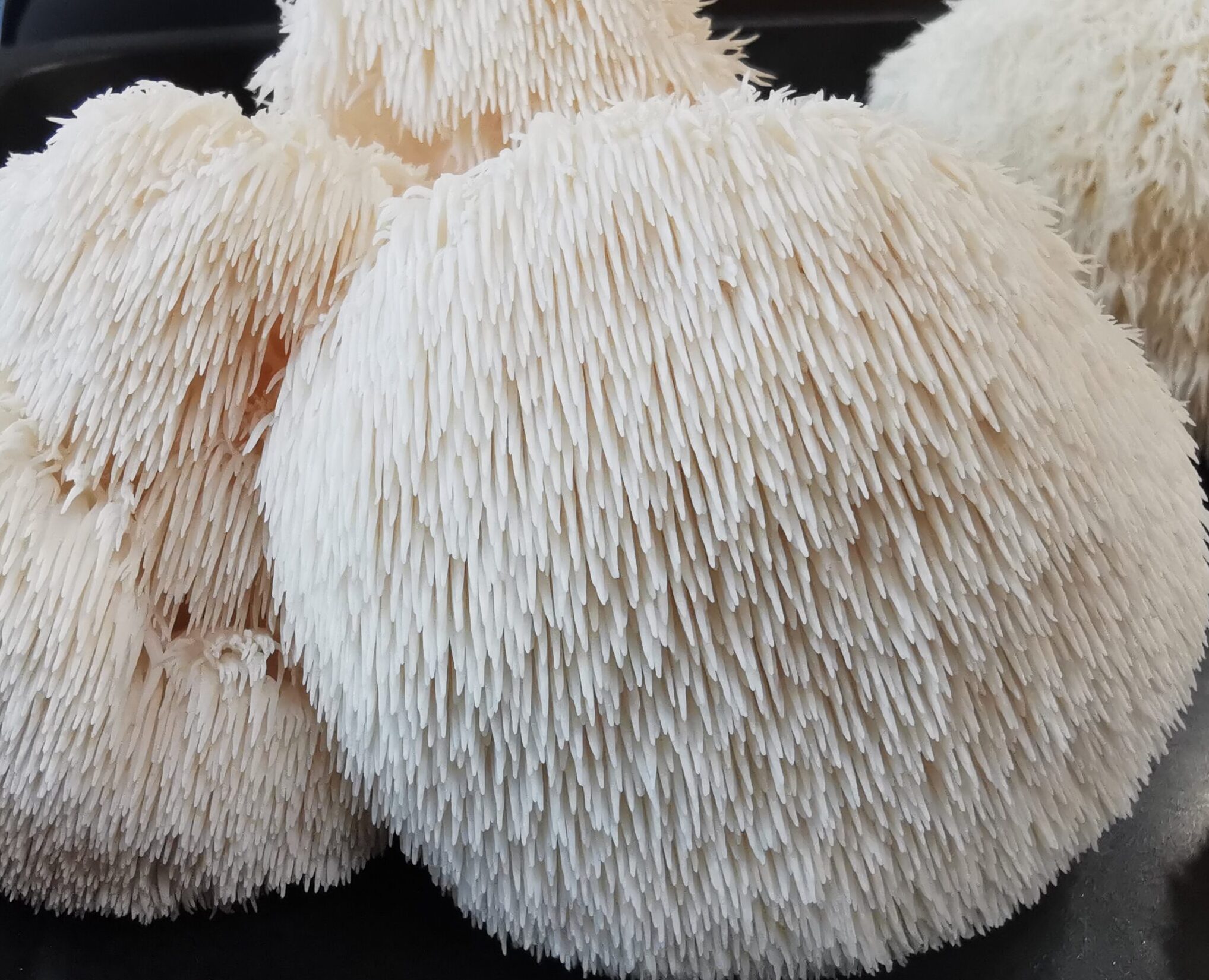
Bioactive ingredients

Neurotrophic and neuroprotective substances – Substances that promote nerve growth

NGF Stimulation – Promoting the Production of Nerve Growth Factor:

Neuronal protection – Prevention of neuronal death

Promotes growth – supports nerve cell growth and differentiation

Promotes synapse formation

Protects against oxidative stress – protects against free radicals

Anti-inflammatory – Reduction of microglial inflammation

Anti-aging – Protection against the aging process

Cognitive enhancer – improves cognitive function

Erinacine – The Blood-Brain Barrier Breakers

Mycelium compounds – Can they cross the blood-brain barrier (BBB)?:

Erinacine A and B – Aromatic compounds

Erinacine A-C – The NGF Synthesizers:

Stimulates NGF synthesis – promotes the production of nerve growth factor

Synapse-forming – Supporting the formation of new synaptic connections

Anti-ischemic – Protection against circulatory disorders

Erinacine E – The Pain Reliever:

Opioid receptor-binding – binding to pain receptors

Analgesic – pain and cramp relief

Antibacterial – Effective against MRSA

Antidiabetic – Glucosidase-inhibiting effect

Hericenone – The Active Ingredients in the Fruiting Bodies

Fruit body compounds – substances that overcome BHS:

Hericenone A and B – Aromatic compounds

Hericenon B – The Thrombosis Inhibitor:

Antithrombotic – Anticoagulant effect

Hericenone C-H – The NGF activators:

Stimulates NGF synthesis – promotes nerve growth factor

Cerebrosides – The Building Blocks of Nerve Cell Membranes

Supports nerve cell membranes – Key components of nerve cell structure

Corallocine A–C – The Astrocyte Activators

NGF Induction – Stimulation of NGF Synthesis in Human Astrocytes

Antitumor – Cancer-fighting activity

Lipoxin-A4 – The Neuroinflammation Inhibitor

Upregulation – Increased expression in the brain:

Neuroprotective – Protection against brain inflammation

Reduces oxidative stress – Reduces oxidative damage

Dilinoleoyl phosphatidylethanolamine – The Neuron Protector

Neuronal protection – protection against β-amyloid deposits and other stressors

Ergosterols – The Digestive Aids

Supports digestive health – supports the gastrointestinal tract

Antibacterial – Protection against pathogenic bacteria

Antioxidant – Cell protection against free radicals

L-Ergothioneine – The Cell Protector

Antioxidant – Powerful cell-protective properties

Nutritional Profile – The Vital Package

Macronutrients:

Moisture content: 10.68%

Protein: 9.55–31.7%

Fat: 0.78–4%

Carbohydrates: 17.6–26.72%

Polysaccharides: 5.81%

Dietary fiber: 30–47%

Ash: 5.27–9.8%

Vitamin complex: B1, B2, B3, D, provitamin D2

Essential minerals: Na, P, Fe, Ca, K, Mg

Therapeutic Applications

Neurological and Neurodegenerative Diseases – The Nerve Regenerator

Alzheimer's disease (AD):

Cognitive improvements – Clinical studies in middle-aged adults, adults, and older adults:

Improving Short-Term Memory – Boosting Memory Performance

Visual Recognition – Improving Visual Perception

Cognitive and mental abilities – Enhancing mental performance

Daily Activities – Improving Daily Living Skills

Long-term effect – Lasting effect after discontinuation without side effects

Molecular mechanisms:

Reduction of Neuroinflammation – Reducing Brain Inflammation

Increased NGF Expression – Enhanced Nerve Growth Factor Production in Hippocampal Neurons

Increased acetylcholine – Elevated ACh and ChAT levels in serum and the hypothalamus

Combination therapy – Using T. versicolor to slow the progression of AD and maintain energy homeostasis

Multiple sclerosis:

Improved Myelination – Promoting the Formation of Nerve Sheaths in Animal Models

Neural Growth – Accelerated Support

Protection against oxidative stress – Prevention of neuronal death

Managing MS Relapses – Support for Recovery from Relapses

Parkinson's disease:

Promoting Neuron Survival – Protecting and Preserving Nerve Cells

Reducing oxidative stress – reducing cellular damage

Compensation for dopamine loss – Reduction of dopamine-related brain lesions

Polyneuropathies:

Diabetic Neuropathy – Specialized Care for Diabetes-Related Nerve Damage

Injuries to the nervous system:

Central nervous system injuries – Traumatic brain injuries:

Inflammation Reduction – Reducing inflammation in damaged brain regions

Reduction of oxidative stress – Protection against oxidative damage

Improvement in behavioral symptoms – reduction in anxiety and learning difficulties

Peripheral injuries:

Acceleration of Neuronal Regeneration – Potential Acceleration of Peripheral Nerve Healing

Anti-inflammatory properties – Strong anti-inflammatory effects

Improved immune response – Enhanced immune reaction at the site of injury

Reduction of Neuropathic Pain – Blocking the Transmission of Pain Signals

Cerebrovascular diseases:

Reduction of ischemic damage – Erinacin A and Hericenon B reduce ischemic damage

Thrombosis Prevention – Preventing Blood Clots

Anti-aging effects:

Improvement in Hearing Loss – Positive Effects on Age-Related Hearing Loss

Frailty Syndrome – Improving Age-Related Frailty in Animal Studies

Gastrointestinal Health – The Mucosal Healer

Gastritis:

Inhibition of Helicobacter pylori – Complete in vitro and in vivo inhibition

Clinical Successes – Nearly 90% of patients tested negative for the antigen after treatment

Gastroesophageal reflux disease:

Heartburn Relief – Protection of the Esophageal Mucosa

Stomach and duodenal ulcers:

Cytoprotective – protective effect against gastric ulcers in vivo

Inflammatory bowel disease (IBD):

Crohn's disease and ulcerative colitis – Improvements in animal models:

Mucosal Healing – Repair of Damaged Stomach and Colon Mucosa

Swelling Reduction – Reducing Inflammation

Anti-inflammatory action – Suppression of inflammatory processes

Promoting Gut Bacteria – Growth of Beneficial Bacteria

Dysbiosis:

Regulation of the gut microbiota – increasing beneficial bacteria, reducing pathobionts

The Gut-Brain Axis – A Crucial Role in Mental Health and Cognitive Function

Leaky Gut Syndrome:

Strengthening the intestinal barrier – Restoring intestinal wall integrity

Constipation:

Promotes digestion – stimulates pancreatic secretion

Infectious Diseases – The Pathogen Fighter

MRSA:

Clinical Efficacy – Disappearance of MRSA in Patients Taking H. erinaceus Supplements

Bacterial infections:

Salmonella typhimurium – In vivo effect

E. coli, S. aureus, B. subtilis – In vitro activity

Viral infections:

HIV – Antiviral activity in vitro

Mental Health – The Mood Booster

Depression:

General Effects of Mushrooms – Eating Mushrooms May Reduce the Risk of Depression

Improvement in symptoms – reduction in symptoms of depression and anxiety:

Improved Concentration – Fewer Concentration Problems

Mood stabilization – reducing mood swings

Reducing Irritability – Less Frustration and Irritability

Relief from Heart Palpitations – Improvement in Cardiovascular Symptoms

Reducing Sleep Disorders – Improving Sleep Quality

Target groups – Effective for young women, menopausal women, overweight women, and overweight men

Long-lasting effects – effects persist after discontinuation

Successes in animal models – Antidepressant, anxiolytic, and anti-inflammatory effects

Anxiety and stress:

Improving recognition memory – Better handling of unfamiliar objects as a safeguard against anxiety and depression

Insomnia:

Reversal of Sleep Disorders – Improved Sleep in Mouse Models

Anxiety Reduction – Fewer Anxiety Attacks

Schizophrenia:

Symptom relief – Potential therapeutic effect

Menopause:

Relief from menopausal symptoms – improvement in depression, insomnia, anxiety attacks, and hot flashes (not yet confirmed by clinical studies)

Complementary Cancer Treatment – The Tumor Fighter

Improved immune status:

Boosting the Immune System – Strengthening Immune Defenses

Inhibition of tumor growth – Activity against Sarcoma-180, gastric, esophageal, and skin cancer cells

Extension of survival time:

Multiple myeloma – In combination with A. blazei Murrill and G. frondosa, survival rates are 1.3 years longer

Reduction of side effects:

Chronic Pain – Relief of Cancer-Related Pain

Peripheral polyneuropathy – Improvement of chemotherapy-induced nerve damage

Chemotherapy Side Effects – General Symptom Relief

Anti-metastatic effect:

Esophageal and Colorectal Cancer – Inhibition of Metastasis

Gastrointestinal Cancer Specialist:

In vitro and in vivo activity:

Colon Cancer – Antitumor Effects in Clinical Trials

Stomach Cancer – Specific Efficacy

Liver Cell Cancer – Treating Hepatocellular Carcinoma

Lung Cancer – Effects in Mouse Models

Leukemia – In vitro activity

Lymphomas – Antitumor Properties

Breast Cancer – Antitumor Effect

Cervical Cancer – The Fight Against Cervical Cancer

Esophageal Cancer – Effects of Esophageal Carcinoma

Cardiovascular Diseases and Metabolic Syndrome – The Metabolic Regulator

High blood pressure:

Lowering Blood Pressure – Cardiovascular Regulation

Dyslipidemia:

Lipid-lowering – Regulation of lipid metabolism

Cholesterol-lowering – Improving cholesterol levels

Type 2 diabetes mellitus:

Blood sugar-lowering – Glucose regulation

Improving Diabetes – General Diabetes Management

Pain Relief for Neuropathy – Effective for Diabetic Nerve Damage

Atherosclerosis:

V ascular protection – Protection against atherosclerosis

Skin Health – The Wound Healing Accelerator

Accelerated wound healing:

Scar Tissue Reduction – Reduced Scarring in Animal Studies

Atopic dermatitis:

Allergy-related skin conditions – Potential effects of food intolerances

Traditional Use in Traditional Chinese Medicine – Knowledge Dating Back Thousands of Years

Digestive Support – The Gastrointestinal Healer

Improved digestion:

Stomach Ulcers – Treatment of Ulcers

Duodenal Ulcers – Healing of Duodenal Ulcers

Acute and Chronic Gastritis – Treatment of Inflammation of the Stomach Lining

Energy and Vitality – The Source of Strength

Neurasthenia – Treatment for Nervous Exhaustion

General Weakness – Combating Fatigue

Strength and Vitality – General Strengthening

Hypodynamia – Treatment for Low Energy

Cognitive Support – The Mind Sharpener

Memory Improvement – Boosting Your Ability to Remember

Promoting Concentration – Improving Attention

Cognitive Functions – Enhancing Mental Performance

Organ Support – The Multi-Organ Booster

Organ health:

Kidneys – Kidney Support

Heart – Heart Strengthening

Liver – Liver Protection

Lungs – Lung Support

Spleen – Strengthening the spleen

Other traditional uses

Insomnia – Promoting Sleep

Astringent – Tightening effect

Cancer – Tumor Treatment

Qi Deficiency – Restoring Energy Balance

References

  1. Guthmann, J. Healing Mushrooms: The World’s Most Important Species: Description – Components – Effects. 2nd, updated and expanded edition. Wiebelsheim: Quelle & Meyer Verlag; 2021. 446 p.
  2. Martin Powell. Medicinal Mushrooms [Internet]. Place of publication not identified: Mycology Press; [cited December 27, 2021]. Available at: https://www.hoopladigital.com/title/11571096
  3. Haertel B, Rimböck M, Neuerer T. Medicinal Mushrooms: Modulating, Restorative, and Strengthening. Salzburg: Druckerei Roser GmbH; 2019.
  4. Remya VR, Chandra G, Mohanakumar KP. Edible Mushrooms as Neuro-Nutraceuticals: The Basis of Therapeutics. In: Agrawal DC, Dhanasekaran M, eds. Medicinal Mushrooms [Internet]. Singapore: Springer Singapore; 2019 [cited 2022 Jan 16]. pp. 71–101. Available from: http://link.springer.com/10.1007/978-981-13-6382-5_2
  5. Lee W, Fujihashi A, Govindarajulu M, et al. The role of fungi in neurodegenerative diseases. In: Agrawal DC, Dhanasekaran M, eds. Medicinal Fungi [Internet]. Singapore: Springer Singapore; 2019 [cited 2021 Dec 27]. pp. 223–49. Available from: http://link.springer.com/10.1007/978-981-13-6382-5_8
  6. Rai SN, Mishra D, Singh P, et al. Therapeutic applications of fungi and their biomolecules, and an overview of the in silico approach in neurodegenerative diseases. Biomed Pharmacother. May 2021;137:111377.
  7. Thongbai B, Rapior S, Wittstein K, et al. Hericium erinaceus, an amazing medicinal mushroom. Mycological Progress. August 2015;14:1–23.
  8. Rogers, RD. The Mushroom Pharmacy: The Complete Guide to Medicinal Mushrooms and Lichens of North America. Berkeley, California: North Atlantic Books; 2011. 591 pp.
  9. Yadav SK, Ir R, Jeewon R, et al. A mechanistic review of bioactive compounds from medicinal mushrooms: Potential candidates for mycotherapy to alleviate neurological disorders. Planta Med. Nov 2020;86(16):1161–75.
  10. Bianchi I, Marrocchesi R. Healing with Medicinal Mushrooms: Therapeutic Properties and Instructions for Use of the 12 Most Important Medicinal Mushrooms. Treviso: Editoriale Programma; 2015.
  11. Rebensburg, P., & Kappl, A. Healthy with Medicinal Mushrooms: Strengthening the Immune System, Healing Illnesses, and Relieving Ailments. Munich: riva; 2020. 271 pp.
  12. Spelman K, Sutherland E, Bagade A. Neurological activity of lion’s mane mushroom (Hericium erinaceus). Journal of Restorative Medicine. Dec. 2017; 6:19–26.
  13. Roda E, Priori EC, Ratto D, et al. Neuroprotective metabolites from Hericium erinaceus promote healthy aging of the nervous system. IJMS. June 15, 2021;22(12):6379.
  14. Stamets, P. Cultivation of Edible and Medicinal Mushrooms. 3rd ed. Berkeley, California: Ten Speed Press; 2000. 574 pp.
  15. Yu Q, Guo M, Zhang B, et al. Analysis of the nutritional composition of 23 species of edible mushrooms. Journal of Food Quality. October 26, 2020;2020
  16. Saitsu Y, Nishide A, Kikushima K, et al. Improvement of cognitive function through oral administration of Hericium erinaceus. Biomed Res. 2019;40(4):125–31.
  17. Li I-C, Chang H-H, Lin C-H, et al. Prevention of early-stage Alzheimer’s disease using Hericium erinaceus mycelium enriched with erinacin A – a pilot study with a double-blind, placebo-controlled trial. Front Aging Neurosci. June 3, 2020;12:155.
  18. Richard Bray. Medicinal Mushrooms: A Practical Guide to Medicinal Mushrooms (Urban Homesteading). Self-published; 2020. 229 pp.
  19. Pp Y, Cy L, Ty L, et al. Hericium erinaceus mycelium exerts neuroprotective effects in Parkinson’s disease—in vitro and in vivo models. J Drug Res Dev [Internet]. 2020 [cited 2022 Jan 17];6(1). Available at: https://www.sciforschenonline.org/journals/drug/JDRD150.php
  20. D’Amico R, Trovato Salinaro A, Fusco R, et al. Hericium erinaceus and Coriolus versicolor modulate molecular and biochemical changes following traumatic brain injury. Antioxidants. June 2, 2021;10(6):898.
  21. Yang P-P, Chueh S-H, Shie H-L, et al. Effects of Hericium erinaceus mycelium extracts on the functional activity of purinergic receptors and neuropathic pain in mice with L5 spinal nerve ligation. Evidence-Based Complementary and Alternative Medicine. May 14, 2020; 2020:1–12.
  22. Winder M, Bulska-Będkowska W, Chudek J. The use of extracts from Hericium erinaceus and Trametes versicolor in supportive cancer care. Acta pharmaceutica (Zagreb, Croatia). March 2021; 71:1–16.
  23. Badalyan SM, Barkhudaryan A, Rapior S. Recent advances in research on the pharmacological potential of mushrooms and prospects for their clinical application. In: Agrawal DC, Dhanasekaran M, eds. Medicinal Mushrooms [Internet]. Singapore: Springer Singapore; 2019 [cited 2021 Dec 27]. pp. 1–70. Available at: http://link.springer.com/10.1007/978-981-13-6382-5_1
  24. Hetland G, Tangen J-M, Mahmood F, et al. Antitumor, anti-inflammatory, and antiallergic effects of Agaricus blazei mushroom extract and the related medicinal basidiomycete mushrooms Hericium erinaceus and Grifola frondosa: A review of preclinical and clinical studies. Nutrients. May 8, 2020;12(5):1339.
  25. Durmus A, Durmus I, Bender O, et al. The effect of Hericium erinaceum on the prevention of chemically induced experimental colitis in rats. Korean J Intern Med. March 1, 2021; 36(Suppl 1): 52.
  26. Xie X-Q, Geng Y, Guan Q, et al. Effects of short-term consumption of Hericium erinaceus on serum biochemical markers and changes in the gut microbiota: A pilot study. Nutrients. March 21, 2021; 13(3):1008.
  27. Ramesh S, Majrashi M, Almaghrabi M, et al. Overview of the therapeutic efficacy of mushrooms. In: Agrawal DC, Dhanasekaran M, eds. Medicinal Mushrooms [Internet]. Singapore: Springer Singapore; 2019 [cited 2022 Jan 16]. pp. 103–41. Available from: http://link.springer.com/10.1007/978-981-13-6382-5_3
  28. Ghosh S, Nandi S, Banerjee A, et al. Investigation of the medicinal properties of lion’s mane mushroom. J Food Biochem [Internet]. August 2021 [cited 2022 Jan 17];45(8). Available at: https://onlinelibrary.wiley.com/doi/10.1111/jfbc.13833
  29. Pradeep P, Manju V, Ahsan MF. Antiviral efficacy of fungal components. In: Agrawal DC, Dhanasekaran M, eds. Medicinal Mushrooms [Internet]. Singapore: Springer Singapore; 2019 [cited 2021 Dec 27]. pp. 275–97. Available from: http://link.springer.com/10.1007/978-981-13-6382-5_10
  30. Ba DM, Gao X, Al-Shaar L, et al. Mushroom consumption and depression: A population-based study using data from the U.S. National Health and Nutrition Examination Survey (NHANES), 2005–2016. Journal of Affective Disorders. Nov. 2021;294:686–92.
  31. Chong PS, Fung M-L, Wong KH, et al. Therapeutic potential of Hericium erinaceus in depressive disorders. Int J Mol Sci. December 25, 2019;21(1)
  32. Vigna L, Morelli F, Agnelli GM, et al. Hericium erinaceus improves mood and sleep disturbances in patients with overweight or obesity: Could circulating pro-BDNF and BDNF be potential biomarkers? Evidence-Based Complementary and Alternative Medicine. April 18, 2019; 2019:1–12.
  33. Venturella G, Saporita P, Gargano ML. Current research on medicinal mushrooms in Italy. In: Agrawal DC, Dhanasekaran M, eds. Medicinal Mushrooms [Internet]. Singapore: Springer Singapore; 2019 [cited 2022 Jan 17]. pp. 317–33. Available from: http://link.springer.com/10.1007/978-981-13-6382-5_12
  34. Li T-J, Lee T-Y, Lo Y, et al. Hericium erinaceus mycelium alleviates anxiety induced by chronic sleep disturbance in vivo. BMC Complementary and Integrative Medicine. December 5, 2021; 21(1):295.
  35. Inanaga K. Case Report: Recovery from Schizophrenia with Amyloban 3399, an Active Ingredient Derived from Hericium erinaceum. 2015.
  36. Inanaga K. Recovery from schizophrenia through bioactive compounds in Hericium erinaceum. Int J Sch Cog Psychol [Internet]. 2015 [cited 2022 Jan 17];2(s1). Available from: https://www.omicsonline.com/open-access/recovery-from-schizophrenia-with-bioactive-substances-in-hericium-erinaceum-ijscp-S1-003.php?aid=57637
  37. Nowakowski P, Markiewicz-Żukowska R, Bielecka J, et al. Treasures from the Forest: Evaluation of Mushroom Extracts as Anticancer Agents. Biomed Pharmacother. November 2021;143:112106.
  38. Stajić M, Vukojević J, Ćilerdžić J. Mushrooms as potential natural cytostatic agents. In: Agrawal DC, Dhanasekaran M, eds. Medicinal Mushrooms [Internet]. Singapore: Springer Singapore; 2019 [cited 2021 Dec 27]. pp. 143–68. Available from: http://link.springer.com/10.1007/978-981-13-6382-5_4

Contents

Sign up for our newsletter. No spam, no sharing of your information—just the latest news and interesting facts from the world of mushrooms. You can unsubscribe at any time.

Mycoverse Foundation
, Marktgass 11,
, 9490 Vaduz,
, Principality of Liechtenstein

info@mycoverse-foundation.org

MYCOVERSE Logo